VS Code

GitScrum for VS Code, Google Antigravity, Cursor and Windsurf!

GitScrum logo
Solution

Status Update Meetings vs Automation 2026

The weekly team meeting is scheduled for an hour. The first thirty-five minutes follow the same pattern every week: each team member reports what they worked on, what they completed, what they are blocked on. The manager asks clarifying questions because the verbal updates do not match what they see in Jira. Someone mentions a task that is not reflected in the project management tool yet. Another person gives an update that contradicts the time logged in Harvest. By the time the status round-robin completes, there is barely enough time left to discuss the one strategic issue that actually needed collective attention. The team leaves frustrated, knowing that the information shared verbally will be forgotten by tomorrow—and the meeting will repeat next week.

Status Update Meetings vs Automation 2026

Status update meetings exist because tool fragmentation makes actual project status invisible.

When work happens across multiple systems that do not connect, the only way to understand what is really happening is to ask people directly. These verbal status rounds are inefficient, inaccurate, and frustrating for everyone involved.

They consume meeting time that could be spent on actual collaboration. They require people to recall and articulate information that systems should already know.

They produce information that immediately starts going stale. The manager still cannot trust the verbal updates because they know they do not always match what is in the tools.

A unified platform makes status update meetings obsolete. When all work happens in one system, project status is always visible and current.

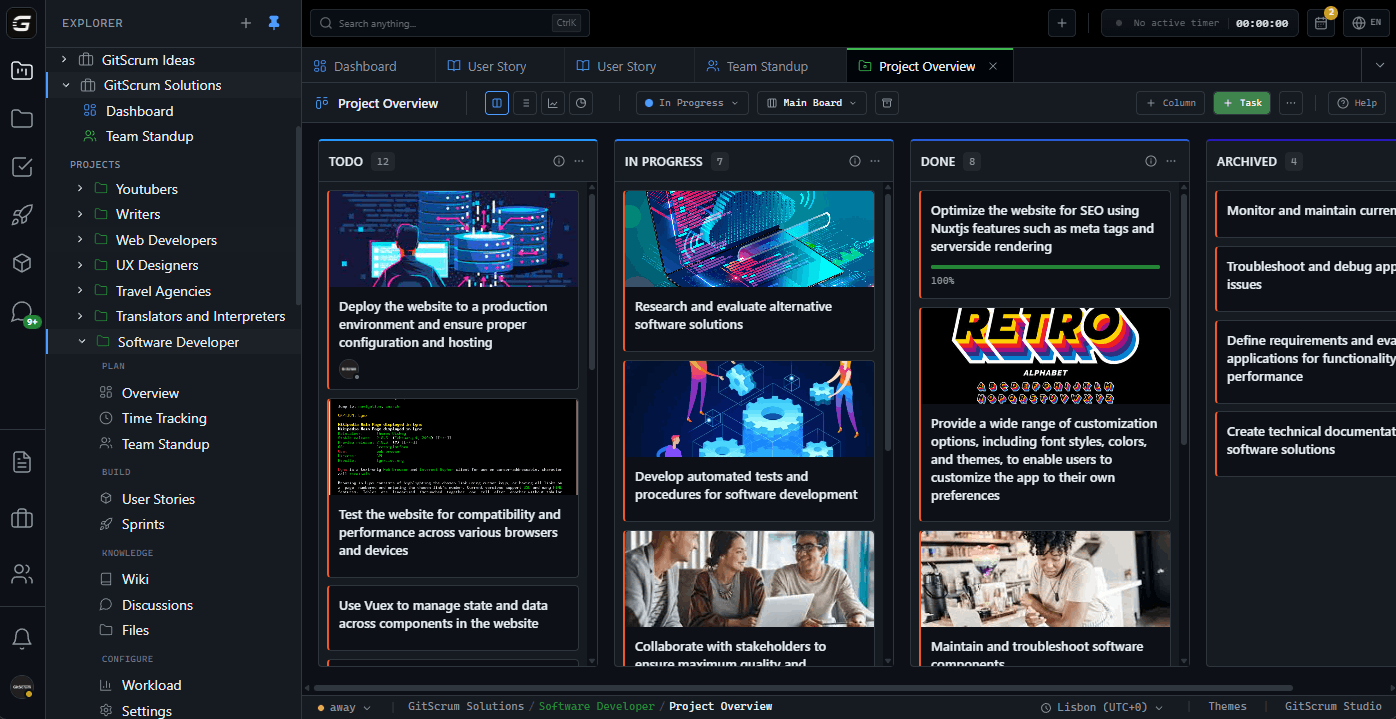
Dashboards show exactly where things stand without requiring anyone to explain it verbally. Managers can see blockers, progress, and completions in real-time.

Meetings can focus entirely on discussion, decision-making, and collaboration—the things that actually require human interaction. The hour that was 60% wasted on status becomes 100% productive collaboration time.

The GitScrum Advantage

One unified platform to eliminate context switching and recover productive hours.

01

problem.identify()

The Problem

Meeting time consumed by verbal status updates

Status rounds required because tools dont show real status

Verbal information contradicts what is in systems

No time left for strategic discussion

Information shared verbally quickly forgotten

Same status ritual repeated weekly without value

02

solution.implement()

The Solution

Project status visible in real-time dashboards

No verbal reporting required

Single source of truth everyone trusts

Full meeting time available for strategic discussion

Status always current and documented

Meetings focus on collaboration not updates

03

How It Works

1

Real-time Visibility

Dashboard shows current status automatically

2

Eliminate Updates

No need to verbally report what system shows

3

Focus Meetings

All meeting time for discussion and decisions

4

True Collaboration

Meetings become productive working sessions

04

Why GitScrum

GitScrum addresses Meeting Time Consumed by Status Updates That Integrated Tools Would Automate through Kanban boards with WIP limits, sprint planning, and workflow visualization

Problem resolution based on Kanban Method (David Anderson) for flow optimization and Scrum Guide (Schwaber and Sutherland) for iterative improvement

Capabilities

  • Kanban boards with WIP limits to prevent overload
  • Sprint planning with burndown charts for predictable delivery
  • Workload views for capacity management
  • Wiki for process documentation
  • Discussions for async collaboration
  • Reports for bottleneck identification

Industry Practices

Kanban MethodScrum FrameworkFlow OptimizationContinuous Improvement

Frequently Asked Questions

Still have questions? Contact us at customer.service@gitscrum.com

How much meeting time is typically spent on status updates?

Research on meeting productivity shows that 50-65% of meeting time in organizations with fragmented tools is spent on status reporting rather than discussion or decision-making. In a typical one-hour team meeting, 30-40 minutes go to people verbally recounting what they have been working on—information that should be visible in project management tools. This represents an enormous waste when aggregated across all teams and all meetings in an organization.

Why do verbal status updates remain unreliable?

Verbal status updates are filtered through human memory and presentation preferences. People summarize, emphasize what they think is important, and forget details. They may not mention blockers they consider minor. They present information in ways that make their work look productive. Studies show significant discrepancies between verbal status reports and actual documented progress—managers report that 30-40% of verbal updates contain inaccuracies or omissions compared to what is in systems. When tools are fragmented, there is no authoritative source to correct these discrepancies.

How do integrated dashboards transform meeting productivity?

Organizations with unified platforms and real-time dashboards report that status update portions of meetings shrink from 50%+ to near zero. When everyone can see current project status before and during the meeting, there is nothing to report—the information is already visible and trusted. This frees 30-40 minutes of every meeting hour for actual collaboration: discussing issues, making decisions, solving problems together. Teams report that meetings become shorter, more engaging, and more productive when status reporting is automated.

Ready to solve this?

Start free, no credit card required. Cancel anytime.

Works with your favorite tools

Connect GitScrum with the tools your team already uses. Native integrations with Git providers and communication platforms.

GitHubGitHub
GitLabGitLab
BitbucketBitbucket
SlackSlack
Microsoft TeamsTeams
DiscordDiscord
ZapierZapier
PabblyPabbly

Connect with 3,000+ apps via Zapier & Pabbly