Developer onboarding should focus on understanding the codebase, learning team practices, and starting to contribute.
Instead, it becomes an administrative marathon through tool provisioning. The typical onboarding checklist for a fragmented tool stack is extensive.
Project tracker—submit IT ticket, wait for license allocation, get invited by admin. Time tracking system—different IT ticket, different approval chain, different invitation process.
Documentation platform—check if existing license available, request if not, wait for procurement. CI/CD system—requires manager approval, security review, separate credentials.
Communication tools—easier but still separate accounts to create. Each system has its own learning curve that cannot even begin until access is granted.
The delays compound. One tool requires access to another for authentication.
Admin access depends on completing security training that lives in yet another system. License availability depends on budget approval that happens monthly.
A motivated new hire sits idle, reading documentation they cannot verify against actual systems, attending meetings about projects they cannot view. The business impact is significant.
Two weeks of salary paid for administrative waiting. Team members pulled away to chase access requests.
The excitement of a new role diminished by bureaucratic friction. Some candidates reject offers after experiencing this during the interview process.
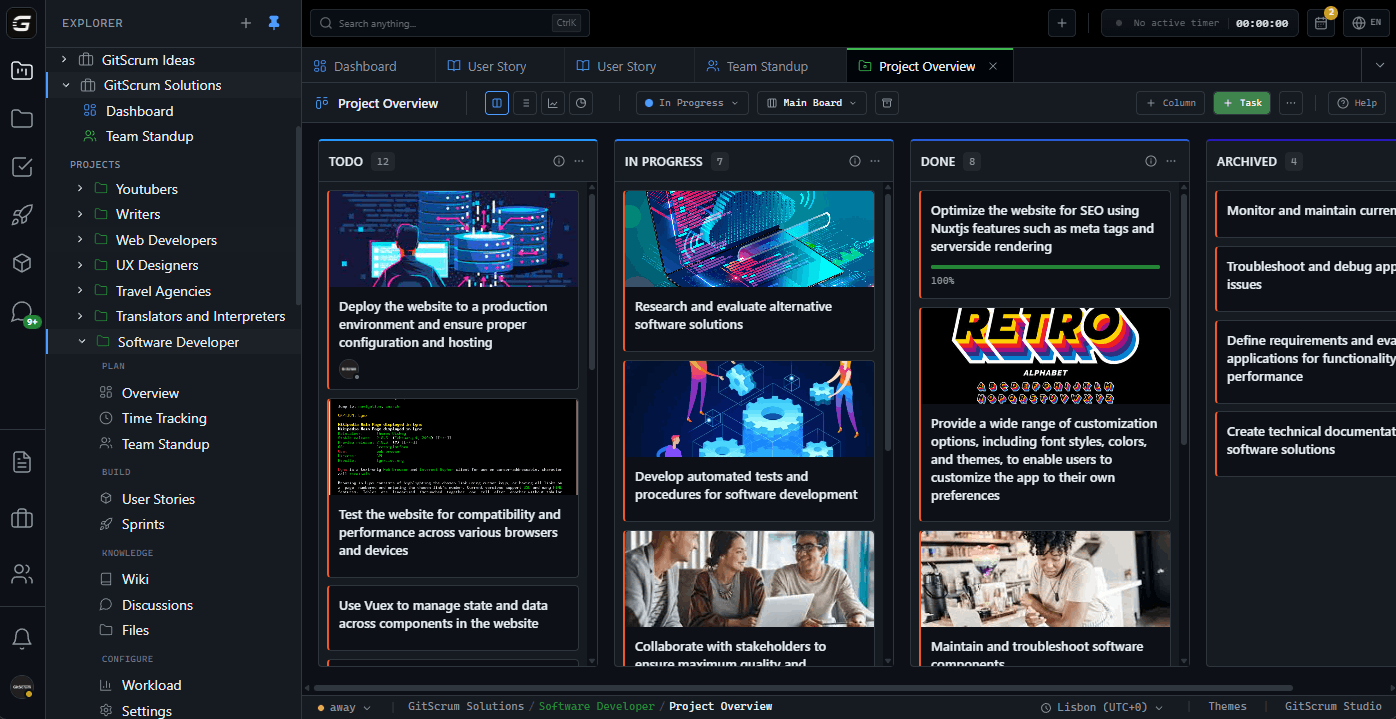
GitScrum consolidates onboarding to a single action. One account grants access to project management, time tracking, documentation, and collaboration.
One permission model, one security review, one setup process. New developers can be productive within hours, not weeks.
The GitScrum Advantage
One unified platform to eliminate context switching and recover productive hours.