GitScrum PRO Annual — 2,500+ SaaS apps via MCP

GitScrum logo
Solution

Legacy Code Fear 2026 | Safe Evolution Strategies

Critical code by devs who left—no docs, no tests. GitScrum enables safe legacy evolution with knowledge capture and change protocols. Free trial.

Legacy Code Fear 2026 | Safe Evolution Strategies

The billing module was written by Marcus.

Marcus was a senior engineer who understood the entire business domain deeply. He left for a startup in 2017.

His code works—most of the time. When it doesn't, nobody knows why.

The variable names are cryptic. The comments explain what the code does (poorly) but not why.

The business logic is embedded in 47 nested if-statements. There are no tests.

Every time someone touches it, something unexpected breaks. After three incidents, the team has an unofficial rule: don't touch the billing module.

Bug reports pile up. Feature requests get rejected.

The product works around limitations rather than fixing them. New engineers are warned away from the code.

It becomes organizational folklore—'here be dragons.' Meanwhile, that legacy code is often mission-critical. It handles payments, or authentication, or some other function that keeps the business running.

The fear of touching it isn't irrational—it's a response to real risk. The solution isn't just courage; it's building the knowledge and safety infrastructure to evolve legacy code responsibly.

The GitScrum Advantage

One unified platform to eliminate context switching and recover productive hours.

01

problem.identify()

The Problem

Critical code written by departed employees

No documentation explaining business logic

No tests to catch regression when changing

Fear of touching code leads to stagnation

Bug reports pile up because fixes feel too risky

02

solution.implement()

The Solution

Document discovered business logic as you learn it

Build tests around legacy code before changing

Track institutional knowledge about old systems

Create safe environments for experimenting with changes

Incremental improvements rather than risky rewrites

03

How It Works

1

Archeological Documentation

Every time someone investigates legacy code, they document what they learn in GitScrum. Variable meanings, business rules discovered, dependencies identified. Knowledge accumulates over time.

2

Characterization Tests

Before changing legacy code, write tests that capture current behavior—even if you don't fully understand why. These tests catch unintended changes regardless of understanding.

3

Knowledge Tracking

GitScrum tracks who has worked with which legacy components. When questions arise, you know who has context. Expertise is distributed, not concentrated in one person.

4

Safe Change Protocols

Legacy changes follow specific protocols: smaller changes, more review, staged rollouts. The process acknowledges risk and manages it rather than pretending it doesn't exist.

04

Why GitScrum

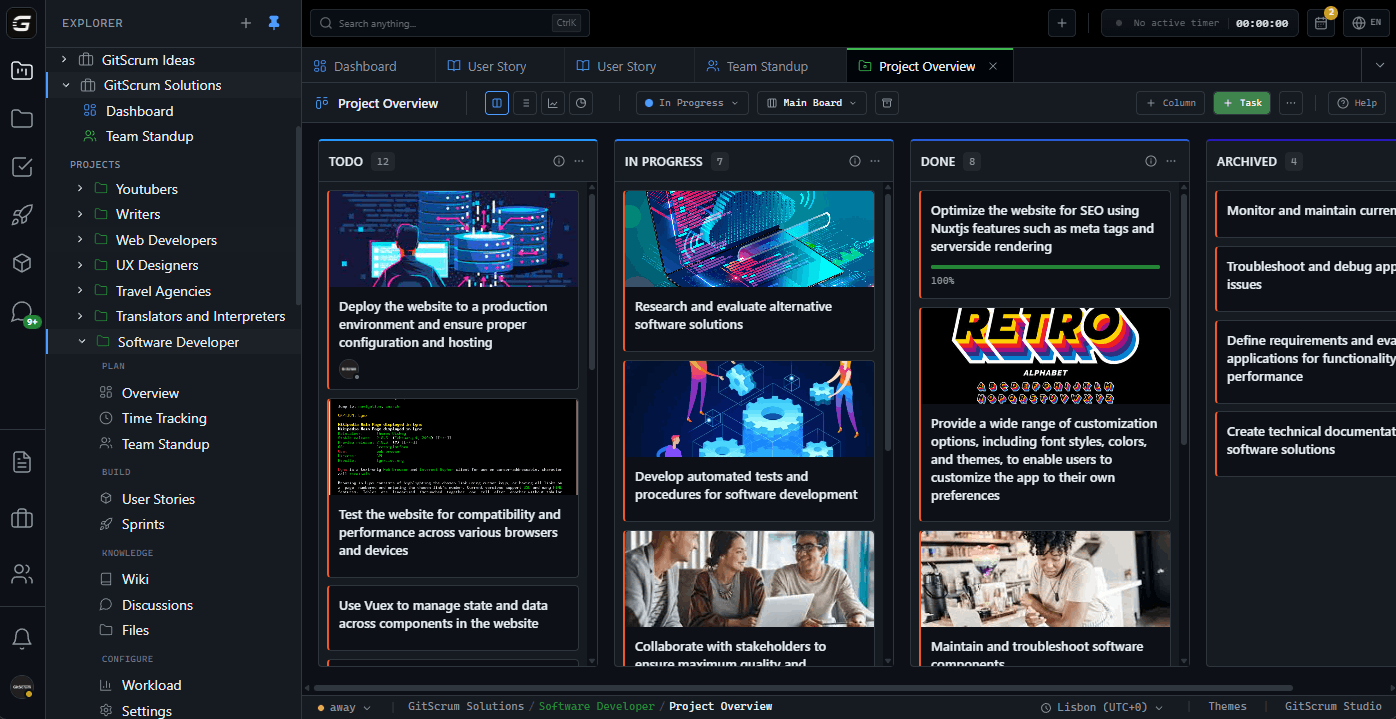
GitScrum addresses Nobody Wants to Touch the Legacy Code through Kanban boards with WIP limits, sprint planning, and workflow visualization

Problem resolution based on Kanban Method (David Anderson) for flow optimization and Scrum Guide (Schwaber and Sutherland) for iterative improvement

Capabilities

  • Kanban boards with WIP limits to prevent overload
  • Sprint planning with burndown charts for predictable delivery
  • Workload views for capacity management
  • Wiki for process documentation
  • Discussions for async collaboration
  • Reports for bottleneck identification

Industry Practices

Kanban MethodScrum FrameworkFlow OptimizationContinuous Improvement

Frequently Asked Questions

Still have questions? Contact us at customer.service@gitscrum.com

Should we just rewrite legacy code?

Usually not. Rewrites often fail, take longer than expected, and lose business logic embedded in the existing code. Incremental improvement is safer: understand, document, test, then carefully evolve.

How do we build tests for code we don't understand?

Characterization tests capture current behavior regardless of understanding. If the billing module returns $47.23 for input X, your test asserts that. You're testing behavior, not intent. Changes that break this behavior are caught.

What if the original developer is still reachable?

Great—schedule time to capture their knowledge in documentation. But don't depend on this; people forget, move on, become unavailable. The goal is making the code understandable without needing them.

How much time should we invest in documenting legacy code?

Document when you touch it—not as a separate project. Every bug investigation, every change request is an opportunity to capture knowledge. Over time, the most-touched code becomes the most-documented.

Ready to solve this?

Start free, no credit card required. Cancel anytime.

Works with your favorite tools

Connect GitScrum with the tools your team already uses. Native integrations with Git providers and communication platforms.

GitHubGitHub
GitLabGitLab
BitbucketBitbucket
SlackSlack
Microsoft TeamsTeams
DiscordDiscord
ZapierZapier
PabblyPabbly

Connect with 3,000+ apps via Zapier & Pabbly