







VS Code

GitScrum for VS Code, Google Antigravity, Cursor and Windsurf!

GitScrum logo
Solution

Permission Inconsistencies 2026 | 6 Tools 6 Models

Different permission models in 6 tools create confusion. Editor means different things in GitHub vs Confluence. One unified model eliminates translation overhead. Free trial.

Permission Inconsistencies 2026 | 6 Tools 6 Models

Permission models vary dramatically across tools.

GitHub has owner, admin, maintainer, contributor, and guest roles. Jira has project administrators, project leads, and various custom roles.

Confluence has space admins, editors, and viewers. Slack has workspace owners, admins, and members.

Figma has owners, editors, and viewers but with different meanings than Confluence. Even when two tools use the same word—'editor'—the actual capabilities differ.

An editor in Confluence can change page structure; an editor in Figma might only edit certain layers. The result is constant confusion about what you can actually do.

You join a project expecting full access, discover you cannot edit documentation. You have administrator rights in one tool but cannot change settings in another.

You can approve code changes but not close the related task. Each permission denial requires investigation: which tool, what permission level, who to contact for upgrade.

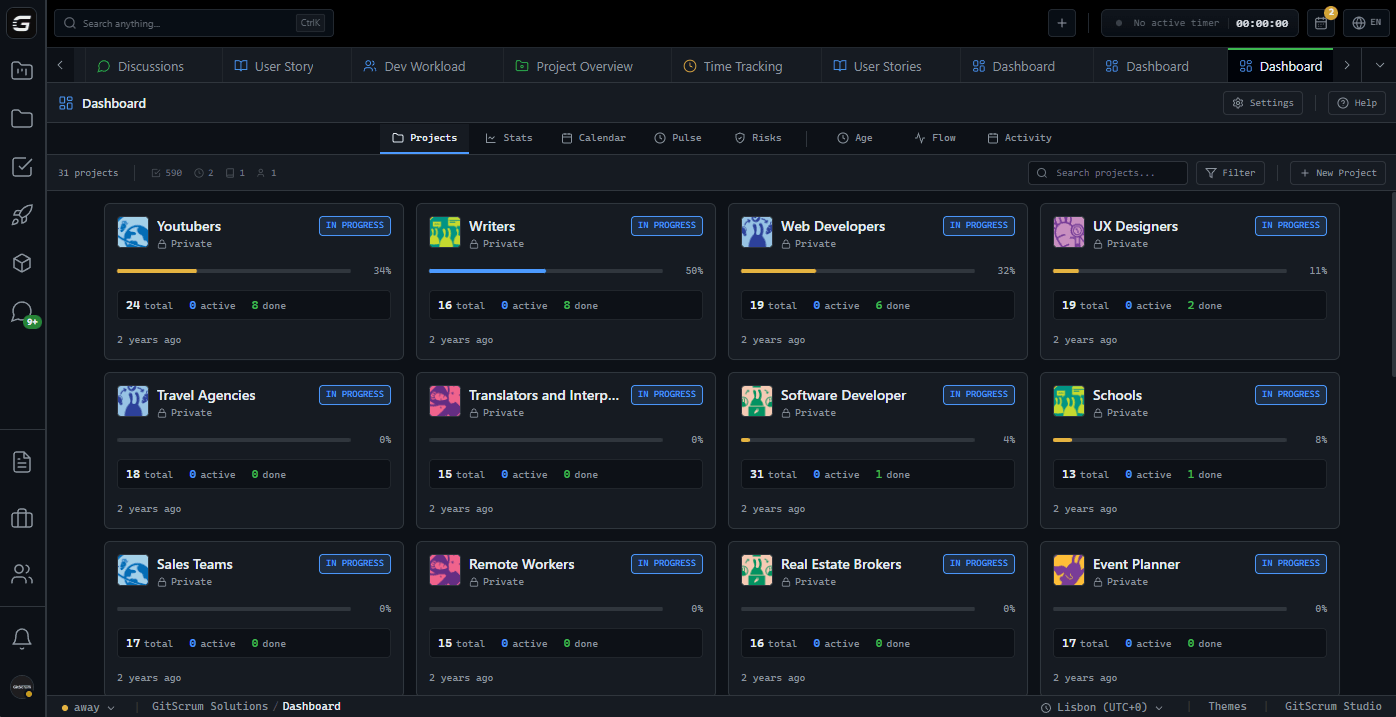
The mental model of 'your access to this project' becomes fragmented into six different mental models of 'your access in this specific tool.' Developers waste time navigating permission boundaries instead of doing work. GitScrum consolidates permissions into a consistent model across the platform.

Your role in a project applies uniformly to tasks, documentation, communication, and integrations. Admin means admin everywhere.

Editor means editor everywhere. No more translating between tool-specific permission terminologies.

The GitScrum Advantage

One unified platform to eliminate context switching and recover productive hours.

01

problem.identify()

The Problem

Each tool uses different permission terminology and models

Same word like 'editor' means different things in different tools

Unexpected permission denials despite having project access

Six different mental models for access levels

Cannot predict capabilities based on role name

Time wasted investigating which permissions you actually have

02

solution.implement()

The Solution

Consistent permission model across entire platform

Role names have uniform meaning everywhere

Project role applies to tasks, docs, communication, integrations

No translation needed between tool-specific terminologies

Predictable capabilities based on your assigned role

Single mental model for access and permissions

03

How It Works

1

Unified Permission Model

Single permission system replaces fragmented tool-specific models

2

Consistent Terminology

Role names mean the same thing across all platform features

3

Project-Wide Application

Your role grants consistent access to all project areas

4

Predictable Access

Know exactly what you can do based on your role without surprises

04

Why GitScrum

GitScrum addresses Permission Inconsistencies Across Tools Creating Confusion through Kanban boards with WIP limits, sprint planning, and workflow visualization

Problem resolution based on Kanban Method (David Anderson) for flow optimization and Scrum Guide (Schwaber and Sutherland) for iterative improvement

Capabilities

  • Kanban boards with WIP limits to prevent overload
  • Sprint planning with burndown charts for predictable delivery
  • Workload views for capacity management
  • Wiki for process documentation
  • Discussions for async collaboration
  • Reports for bottleneck identification

Industry Practices

Kanban MethodScrum FrameworkFlow OptimizationContinuous Improvement

Frequently Asked Questions

Still have questions? Contact us at customer.service@gitscrum.com

Why do permission inconsistencies cause problems?

When each tool uses different terminology and models, developers cannot predict what they can do. Being an 'editor' in one tool means something different than 'editor' in another. This leads to unexpected permission denials, wasted time investigating access levels, and constant confusion about actual capabilities. You might be a project admin in one tool but unable to change settings in another tool for the same project.

Why not just learn each tool's permission model?

Learning six different permission models is cognitive overhead that compounds over time. Each model uses different terminology, has different capability boundaries, and changes independently. The mental effort to track 'what can I do in this specific tool' across six tools is significant—and it is effort spent on permission navigation rather than actual work.

How does a unified platform solve permission inconsistency?

A consolidated platform has one permission model. Admin means admin everywhere. Editor means editor everywhere. Your role in a project applies uniformly to tasks, documentation, communication, and integrations. No more translating between tool-specific terminologies or encountering surprise denials. Predictable, consistent access based on your actual project role.

Ready to solve this?

Start free, no credit card required. Cancel anytime.

Works with your favorite tools

Connect GitScrum with the tools your team already uses. Native integrations with Git providers and communication platforms.

GitHubGitHub
GitLabGitLab
BitbucketBitbucket
SlackSlack
Microsoft TeamsTeams
DiscordDiscord
ZapierZapier
PabblyPabbly

Connect with 3,000+ apps via Zapier & Pabbly