Offshore Reality Typical offshore setup: ├─ US/Europe: Product, PM, Design ├─ Offshore: Development, QA ├─ 8-12 hour timezone gap ├─ Limited overlap hours ├─ Cultural differences ├─ Communication barriers Why offshore projects fail: ├─ 10% - Talent issues ├─ 90% - Communication issues The Communication Gap Offshore communication problem: ├─ US PM writes spec (brief) ├─ Offshore lead interprets ├─ Developers interpret again ├─ Work starts ├─ 2 weeks later: 'Not what we wanted' ├─ Blame offshore team ├─ Repeat cycle Lost in translation: ├─ Implicit assumptions ├─ US business context ├─ Edge cases not specified ├─ 'Obvious' things not stated ├─ Cultural communication styles Traditional Tool Failure How tools make it worse: ├─ US PM in Jira ├─ Offshore manager filters/translates ├─ Developers see filtered version ├─ Manager reports upward (filtered) ├─ US PM sees optimistic reports ├─ Reality disconnect grows 'Status: Green' Reality: Everything is burning.
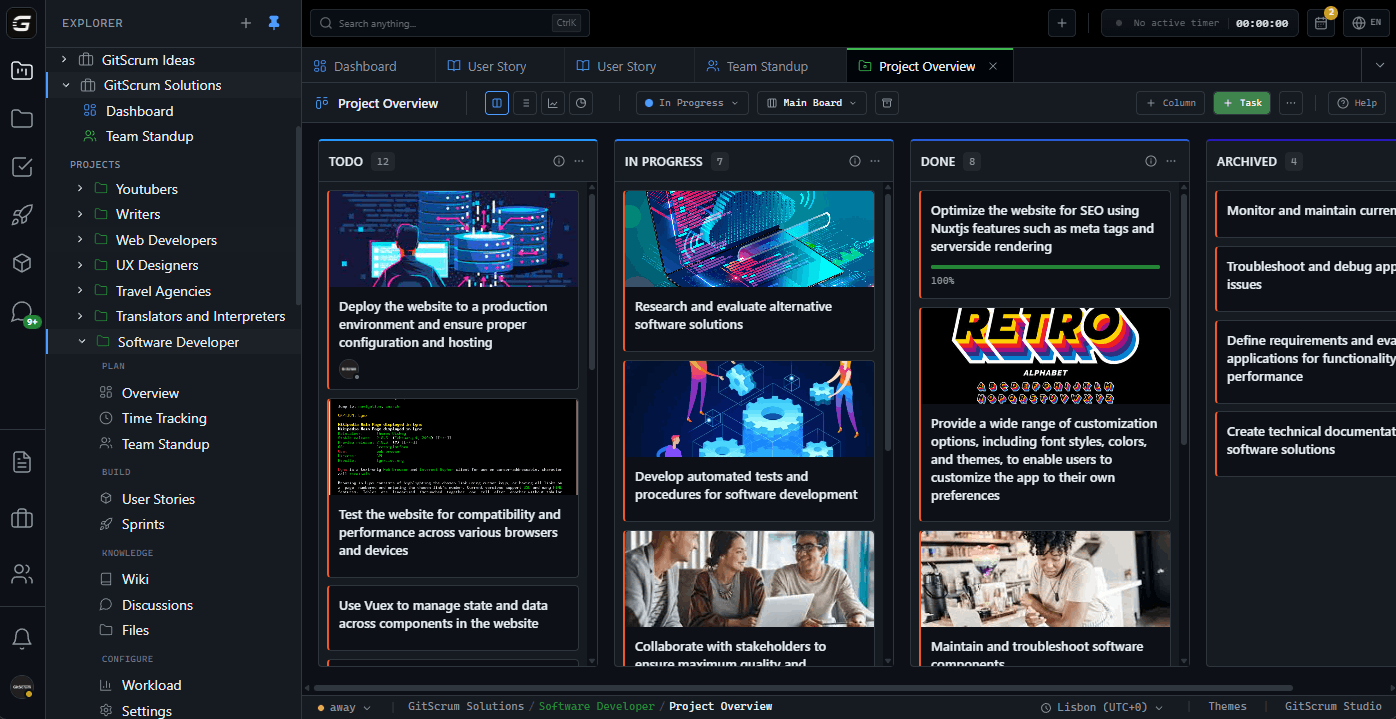
GitScrum for Offshore Teams Transparency by design: ├─ US PM creates tasks ├─ Offshore devs see same tasks ├─ No middleman filtering ├─ Git commits show real progress ├─ Board shows actual status ├─ No hidden reality Same view for everyone. Same information.
No translation layer. Task Specification Best Practice Offshore-ready task: ├─ Clear acceptance criteria ├─ UI/UX mockups linked ├─ Edge cases listed ├─ 'Out of scope' explicitly stated ├─ API contracts defined ├─ Test cases as checklist GitScrum task structure: ├─ Description: Full context ├─ Checklist: Acceptance criteria ├─ Links: Design, API docs ├─ Comments: Questions answered ├─ Attachments: Screenshots, specs 'Build what you understood' becomes 'Build what is specified.' Git Integration as Progress Proof Offshore progress visibility: ├─ Developer commits code ├─ Commit references task ├─ Task shows commits ├─ US PM sees actual progress ├─ Not 'manager said 80%' ├─ Actual code delivered No more: ├─ 'We're almost done' (for 3 weeks) ├─ 'Just testing now' (no code yet) ├─ 'Minor adjustments' (complete rebuild) Board as Truth Layer Offshore board transparency: ├─ Backlog: What's coming ├─ In Progress: Who's working on what ├─ Blocked: What's stuck (and why) ├─ Review: Ready for US feedback ├─ Done: Completed and verified US PM morning check: ├─ What moved overnight?
├─ What's blocked? ├─ Any surprises?
├─ No meeting needed Reducing Feedback Cycles Old feedback cycle: ├─ Week 1: Offshore builds ├─ Week 2: Offshore tests ├─ Week 3: US reviews ├─ Week 4: 'Not what we wanted' ├─ Repeat GitScrum feedback cycle: ├─ Day 1: Task created with specs ├─ Day 2: Dev asks clarifying questions ├─ Day 2: PM answers in comments ├─ Day 3-4: Dev builds ├─ Day 5: PR references task ├─ Day 5: US reviews actual code ├─ Day 6: Feedback implemented ├─ Week 1: Feature done correctly Async Communication Offshore async workflow: ├─ US PM ends day: Tasks ready ├─ Offshore wakes up: Check board ├─ Questions? Comment on task ├─ Build, commit, push ├─ Update task status ├─ US PM wakes up: See progress ├─ Answer questions ├─ Repeat 12-hour timezone gap becomes: ├─ 2 async cycles per day ├─ Continuous progress ├─ No waiting for meetings Documentation Prevents Rework Offshore documentation: ├─ Wiki: Project context ├─ Wiki: Architecture decisions ├─ Wiki: Coding standards ├─ Wiki: Business rules ├─ Linked from tasks ├─ Always accessible 'Ask the US team' becomes: ├─ 'Check the wiki' ├─ Available 24/7 ├─ No waiting for overlap hours Blaming Prevention When offshore work is wrong: ├─ Check task specification ├─ Were acceptance criteria clear?
├─ Were questions asked? ├─ Were questions answered?
├─ All visible in task history Accountability both directions: ├─ US: Was spec complete? ├─ Offshore: Did they ask if unclear?
├─ Evidence in the task ├─ No he-said-she-said Pricing for Offshore Augmentation Typical offshore setup: ├─ US: 5 (PM, architect, leads) ├─ Offshore: 15 developers ├─ Total: 20 users ├─ GitScrum: $162.20/month Compared to: ├─ Jira: $350/month (Standard) ├─ Monday.com: $320/month ├─ Plus: Integration costs ├─ Plus: Training costs $8.90/user/month. 2 users free forever.
Same price US and offshore. Onboarding Offshore Teams Offshore onboarding: ├─ Day 1: GitScrum account ├─ Day 1: Connect GitHub ├─ Day 1: Wiki with context ├─ Day 2: Pick first task ├─ Day 2: Ask questions in task ├─ Day 3: Start coding ├─ Commits link automatically No 2-week 'learning Jira'.
Real Offshore Experience 'We blamed our India team for 6 months of failed deliveries. Then we looked at our specs - they were 2 sentences per feature.
No acceptance criteria. No edge cases.
'Smart people will figure it out.' They couldn't read our minds. Now every task in GitScrum has full spec, checklist, and design links.
Questions answered in comments. Git commits show progress.
Our offshore team went from 'disaster' to 'best performers'. The tool didn't change their talent.
It fixed our communication.' - VP Engineering, US Startup Code Review Integration Offshore code review: ├─ PR created ├─ PR links to task ├─ US lead sees PR ├─ Reviews during US hours ├─ Comments in GitHub ├─ Task updated automatically ├─ Offshore fixes overnight ├─ Merged next morning 24-hour code review cycle. Time Tracking for Client Billing Offshore time tracking: ├─ Built into GitScrum ├─ Time per task ├─ Time per developer ├─ Export for billing ├─ Transparent to client ├─ No separate tool Agency billing clients: ├─ Offshore hours tracked ├─ Task-level detail ├─ Client can verify ├─ No disputes Sprint Planning Cross-Timezone Offshore sprint planning: ├─ PM creates sprint backlog ├─ Offshore lead assigns ├─ Async capacity discussion ├─ Comments for concerns ├─ Sprint starts ├─ No 2 AM planning meetings Daily standup async: ├─ Each person updates task status ├─ Comments for blockers ├─ Board is the standup ├─ No meeting needed Building Trust Remotely Offshore trust equation: ├─ Trust = Visibility x Consistency ├─ Visibility: Board shows truth ├─ Consistency: Daily commits ├─ Git doesn't lie ├─ Board doesn't hide ├─ Trust builds over time Micromanagement unnecessary when: ├─ Progress visible automatically ├─ Code shows actual work ├─ Tasks show actual status Start Free Today 1.
Sign up (US account) 2. Invite offshore team 3.
Connect GitHub repos 4. Write clear task specs 5.
Let Git prove progress Bridge the offshore gap. Communication, not talent.
The GitScrum Advantage
One unified platform to eliminate context switching and recover productive hours.