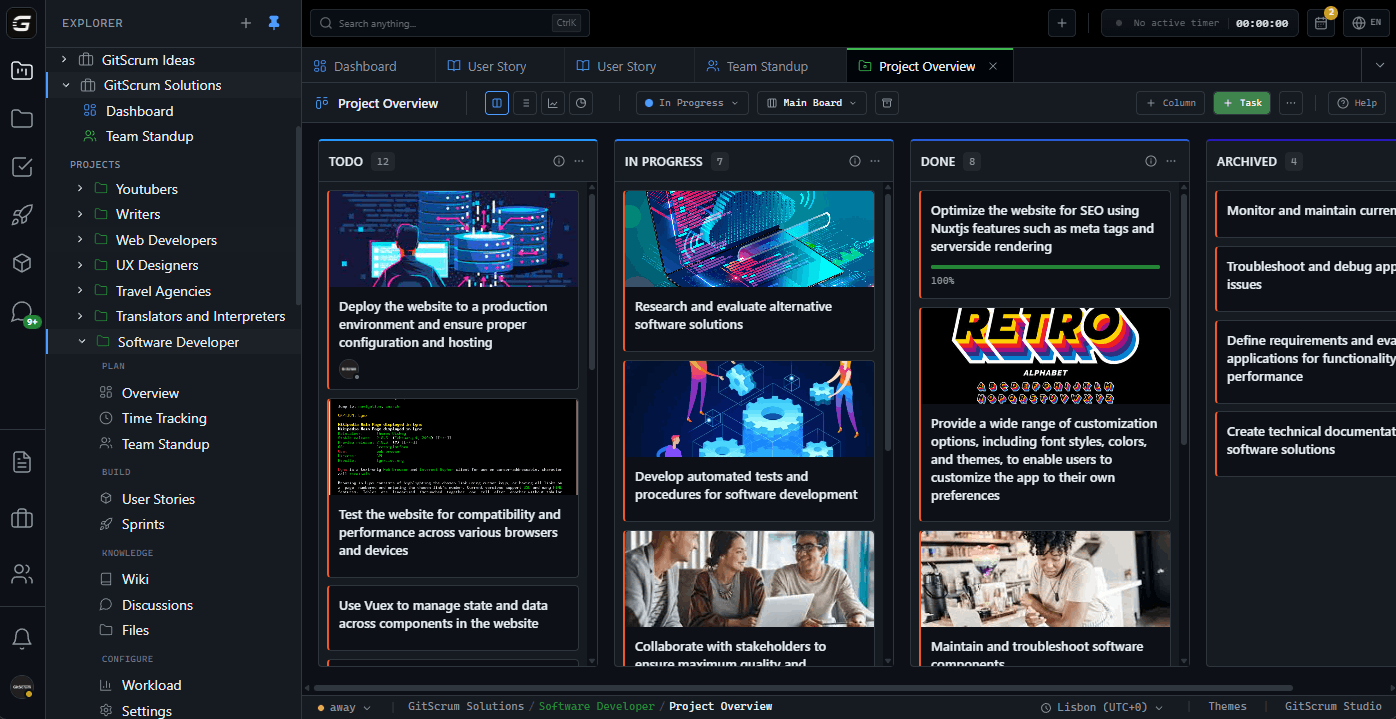
Startup Reality Founding phase: ├─ Team: 2-5 people ├─ Runway: 12-18 months ├─ Mission: Find product-market fit ├─ Reality: Everything is urgent ├─ Budget: Every dollar counts ├─ Process: Whatever works ├─ Goal: Ship, learn, iterate The startup equation: ├─ Speed > Process ├─ Shipping > Planning ├─ Learning > Perfection ├─ Iteration > Documentation Yet you still need to coordinate.
The Startup PM Paradox Need: ├─ Know who's doing what ├─ Track what shipped ├─ Don't duplicate effort ├─ Remember decisions ├─ Onboard hire 3 eventually Can't afford: ├─ 2-hour sprint planning ├─ Daily 30-minute standups ├─ Tool configuration days ├─ $500/month PM tools ├─ Process for process sake Startups die from: ├─ Moving too slow ├─ Not: Not enough process Enterprise Tools for Startups? Common mistake: ├─ 'Let's use Jira, it scales' ├─ Week 1: Configuration hell ├─ Week 2: Still configuring ├─ Week 3: Nobody uses it ├─ Week 4: Back to Slack chaos ├─ Cost: $17.50/user × 5 = $87.50/month ├─ Value: Zero.
Overkill. Jira is designed for 50-person teams.
Not 5-person startups. GitScrum for Startups Designed for speed: ├─ Setup: 10 minutes ├─ Learning curve: 30 minutes ├─ Daily overhead: 2 minutes ├─ Price: 2 users FREE ├─ When you grow: $8.90/user ├─ Git integration: Automatic ├─ Wiki: For decisions that matter Ship, don't configure.
The Free Founding Duo Plan 2 users free forever: ├─ Full features ├─ Git integration ├─ Boards ├─ Sprints ├─ Time tracking ├─ Wiki ├─ No credit card ├─ No trial expiration ├─ No feature limits Perfect for co-founders. $0 until you need person 3.
Startup-Speed Setup Day 1 workflow: ├─ 9:00: Sign up (2 min) ├─ 9:02: Create project (1 min) ├─ 9:03: Create board (1 min) ├─ 9:04: Add 5 tasks (5 min) ├─ 9:09: Connect GitHub (2 min) ├─ 9:11: Invite co-founder (1 min) ├─ 9:12: Done. Start shipping.
├─ Total: 12 minutes ├─ Not: 12 hours MVP Sprint 2-week MVP board: ├─ Backlog: 20 ideas ├─ This Sprint: 8 core tasks ├─ In Progress: 2-3 max ├─ Done: Accumulating ├─ Daily: Move cards ├─ Ship: Day 14 ├─ Learn: Day 15+ Simple Kanban. No sprint rituals.
Just ship. Git Integration: Why It Matters Startup reality: ├─ Code IS the product ├─ Commits = progress ├─ PR merged = task done ├─ Without Git integration: │ ├─ Task board says 'in progress' │ ├─ Code is actually merged │ ├─ Board lies ├─ With GitScrum: │ ├─ Commit references task 23 │ ├─ Task updates automatically │ ├─ Truth in one place Code-first PM.
Founding Team Communication Small team patterns: ├─ No daily standup (waste of time) ├─ Board check: Morning, 2 min ├─ Questions: Task comments ├─ Decisions: Wiki page ├─ Chat: Slack (for quick stuff) ├─ Source of truth: GitScrum 'What should I work on?' Check the board. 'Why did we decide X?' Check the wiki.
Pivot-Ready Documentation Startup pivots: ├─ Week 1: Build feature A ├─ Week 3: Data says pivot to B ├─ Week 4: Start over ├─ Danger: Lose context GitScrum approach: ├─ Wiki: Why we tried A ├─ Wiki: What we learned ├─ Wiki: Why we're trying B ├─ Tasks: Archived (not deleted) ├─ History: Preserved ├─ Future: Reference exists Pivot with context. First Hire Onboarding Hire 3 joins: ├─ Day 1: Get GitScrum access ├─ Board: See current sprint ├─ Wiki: Read architecture decisions ├─ Git: See code history ├─ Task: Assigned first issue ├─ No: 3-day onboarding process ├─ Context: Self-service New hire productive in hours, not weeks.
Investor Updates Monthly investor email: ├─ What we shipped: │ └─ Check Done column ├─ Current focus: │ └─ Check Sprint column ├─ Velocity: │ └─ Check sprint history ├─ Data: From the tool ├─ Not: Fabricated from memory Board tells the story. Burn Rate Consciousness Startup math: ├─ Runway: 18 months ├─ Monthly burn: $30K ├─ Tool costs matter: Yes Tool comparison: ├─ Jira: $87.50/mo (5 users) ├─ Linear: $50/mo (5 users) ├─ Asana: $150/mo (5 users, Business) ├─ GitScrum: $26.70/mo (5 users, 2 free) Savings: $60-120/month Annual: $720-1,440 Not nothing for a startup.
Y Combinator Advice YC wisdom: ├─ 'Write code and talk to users' ├─ Not: 'Configure project management tools' ├─ Simple tools > Complex tools ├─ Shipping > Planning ├─ Learning > Process GitScrum alignment: ├─ 10 min setup (not days) ├─ Git-first (code-centric) ├─ Wiki for decisions (minimal docs) ├─ Board for coordination (visual) ├─ 2 users free (cost-conscious) Built for YC-style velocity. Remote Startup Team Distributed founding team: ├─ CEO: San Francisco ├─ CTO: Berlin ├─ Dev: Buenos Aires ├─ 9-hour timezone spread ├─ Overlap: 3 hours ├─ Sync meetings: Painful GitScrum async: ├─ Board: Single source of truth ├─ Wiki: Decisions documented ├─ Git: Progress visible ├─ No: 'What are you working on?' Slack ├─ Check board.
Know instantly. Timezone-agnostic coordination.
Pre-PMF to Post-PMF Growth path: ├─ Pre-PMF (2 founders): │ └─ Free tier. Full features.
├─ Early team (5 people): │ └─ $26.70/month ├─ Growth (15 people): │ └─ $115.70/month ├─ Scale (50 people): │ └─ $427.20/month ├─ Same tool throughout ├─ No migration needed ├─ Process evolves, tool stays Grow without tool migration. Technical Decisions Wiki Document what matters: ├─ 'Why PostgreSQL over MongoDB' ├─ 'Auth strategy: Clerk' ├─ 'Deployment: Vercel' ├─ 'API design: REST, not GraphQL' ├─ 'Mobile: React Native later' Why document: ├─ New hire asks: Check wiki ├─ Founder forgets: Check wiki ├─ Investor asks: Check wiki ├─ Pivot evaluation: Check wiki 15 minutes documenting now.
Hours saved later. Real Startup Experience 'YC W24.
Three technical co-founders. Tried Linear first - good but $30/month for 3 people and we wanted that money for AWS.
Tried Notion - too heavy, became a documentation graveyard. GitScrum: 2 users free (saved $20), third user $8.90.
Git integration means our commits update task status automatically. Wiki has our 10 key technical decisions.
Board is dead simple. Setup took 15 minutes on day 1, haven't thought about it since.
We just ship. That's the point.' - YC W24 Founder Startup PM Anti-Patterns Don't do: ├─ 2-hour sprint planning (overkill) ├─ Daily 30-min standups (waste) ├─ Story points (premature optimization) ├─ Complex workflows (you're 5 people) ├─ Burndown charts (not useful yet) ├─ Resource planning (you have 3 devs) Do: ├─ Simple kanban board ├─ 2-minute morning board check ├─ Git commits link to tasks ├─ Wiki for key decisions ├─ Ship weekly minimum ├─ Talk to users Process should be invisible.
Comparing Startup Options Startup-relevant tools: ├─ GitHub Projects: Free but limited ├─ Linear: Good but $10/user ├─ Notion: Flexible but heavy ├─ Trello: Free tier but no Git ├─ GitScrum: 2 free + Git + Wiki GitScrum wins for startups: ├─ Git integration native ├─ Wiki included ├─ 2 users free (founders) ├─ Simple by default ├─ Scales when you need ├─ $8.90 when you grow Start Free Today 1. Sign up (2 minutes, no credit card) 2.
Create project for your startup 3. Add 10 tasks for this week 4.
Connect GitHub repo 5. Invite co-founder 6.
Ship. 2 users free forever.
Stop configuring. Start shipping.
The GitScrum Advantage
One unified platform to eliminate context switching and recover productive hours.