GitScrum PRO Annual — 2,500+ SaaS apps via MCP

GitScrum logo
Solution

PM Tool to Reduce Meetings 2026 | 5h/Week Saved Per Dev

Calendar 80% meetings because info isn't visible. Real-time dashboards replace status meetings. Async standups save 5 hours/week per dev. Free trial.

PM Tool to Reduce Meetings 2026 | 5h/Week Saved Per Dev

Why teams have too many meetings: Information Gap Meetings compensate for poor visibility.

When status isn't clear, you schedule a meeting. When priorities aren't visible, you schedule a meeting.

When blockers aren't surfaced, you schedule a meeting. Sync Culture Organizations default to synchronous communication.

Even when async would work better. The culture becomes: 'Let's schedule a meeting' for everything.

Tool Fragmentation Information scattered across tools means no single source of truth. So meetings become the aggregation point.

Everyone comes together to share what they know. How GitScrum eliminates unnecessary meetings: 1.

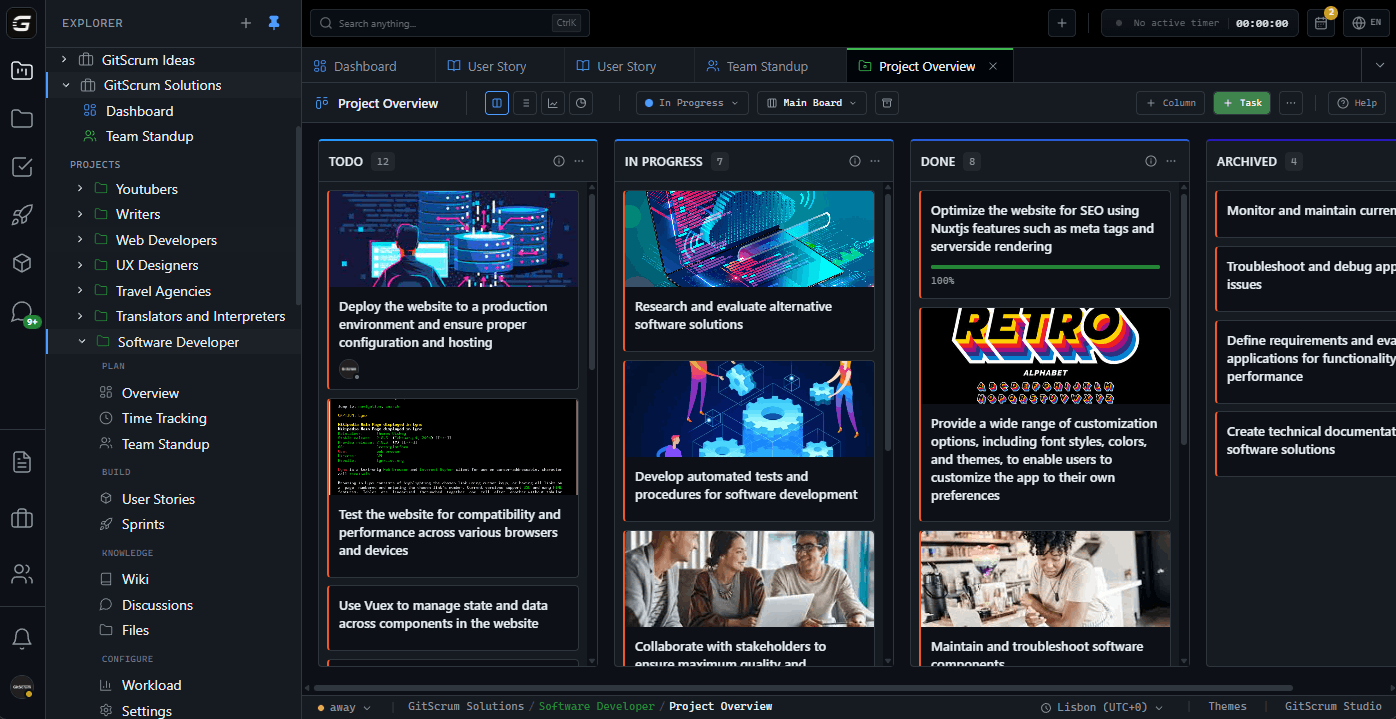
Real-Time Visibility Dashboards show exactly what's happening. Sprint progress, task status, blockers—all visible without asking.

The 'What's the status?' meeting becomes unnecessary. 2.

Async Standup Daily standup doesn't need to be a meeting. Team members post updates when they start their day.

Everyone sees updates in their timezone. Comment on blockers async.

Video standup takes 15 minutes. Async takes 2.

3. Automated Progress Tracking GitHub commits, PR merges, deployments—all automatically update task status.

No manual status updates. No 'Can you move your ticket?' messages.

Progress reflects reality. 4.

Contextual Communication Comments live on tasks. Decisions documented where they're made.

No more 'What did we decide in that meeting?' The discussion is attached to the work. 5.

Self-Service Reporting Managers and stakeholders can check progress themselves. No need to interrupt developers.

No status meetings required. The dashboard is always current.

Meeting Audit Results: Typical team before GitScrum: - Daily standup: 15min × 5 days = 1.25 hours/week - Sprint planning: 2 hours/sprint - Backlog grooming: 1 hour/sprint - Retrospective: 1 hour/sprint - Client status: 1 hour/week - Ad-hoc status: 2 hours/week Total: ~8 hours/week in meetings After GitScrum async workflow: - Async standup: 10min × 5 days = 50 min/week - Sprint planning: 1 hour/sprint (focused) - Backlog grooming: async with comments - Retrospective: 30min (focused) - Client status: self-service portal - Ad-hoc status: eliminated Total: ~3 hours/week Savings: 5 hours/week per developer.

The GitScrum Advantage

One unified platform to eliminate context switching and recover productive hours.

01

problem.identify()

The Problem

Calendar filled with status update meetings

Daily standups take 30+ minutes

No visibility without meetings

Sync culture drains productivity

Status requests interrupt deep work

Information scattered, meetings aggregate

Remote teams drowning in video calls

No record of decisions made in meetings

02

solution.implement()

The Solution

Real-time dashboards eliminate status meetings

Async standup posts replace daily calls

Self-service visibility for all stakeholders

Contextual comments document decisions

Automated progress from GitHub activity

Meeting-free sprint updates

5+ hours/week saved per developer

Deep work time protected

03

How It Works

1

Replace Standup with Async Posts

Enable async standups. Each morning, team members spend 2 minutes posting: what they did yesterday, what they're doing today, any blockers. Everyone reads at their convenience. No 15-minute meeting required.

2

Connect GitHub for Auto-Progress

Link your repos. When developers commit, open PRs, or merge—task status updates automatically. No manual updates. No 'Can you move your ticket?' pings. The board reflects reality.

3

Enable Stakeholder Self-Service

Give managers and clients read access to dashboards. They check status themselves. Sprint progress, burndown, milestone dates—all visible. No status meeting needed. No interrupting developers.

4

Document Decisions on Tasks

Discuss in task comments, not meetings. Decisions are attached to the work they affect. Searchable forever. New team members can understand context. No more 'What did we decide?'

04

Why GitScrum

GitScrum addresses Project Management Tool to Reduce Meetings through Kanban boards with WIP limits, sprint planning, and workflow visualization

Problem resolution based on Kanban Method (David Anderson) for flow optimization and Scrum Guide (Schwaber and Sutherland) for iterative improvement

Capabilities

  • Kanban boards with WIP limits to prevent overload
  • Sprint planning with burndown charts for predictable delivery
  • Workload views for capacity management
  • Wiki for process documentation
  • Discussions for async collaboration
  • Reports for bottleneck identification

Industry Practices

Kanban MethodScrum FrameworkFlow OptimizationContinuous Improvement

Frequently Asked Questions

Still have questions? Contact us at customer.service@gitscrum.com

Won't we lose important collaboration without meetings?

Real collaboration happens when solving problems together, not in status updates. GitScrum eliminates status meetings, not collaboration. Creative discussions, pair programming, architectural decisions—those still benefit from synchronous time. But 'What's everyone working on?' doesn't need a meeting.

How do async standups work across time zones?

Each person posts when they start their day. A bot aggregates posts into a digest. By the time you wake up, you see everyone's update from their yesterday. No overlap needed. No awkward 6am meetings for some team members.

What about remote teams that feel disconnected?

Disconnection comes from lack of visibility, not lack of meetings. When you can see what your teammates are working on, read their updates, and comment async—you feel more connected, not less. Meetings create an illusion of connection. Shared context creates real connection.

How do we ensure accountability without standups?

Async standups are still standups—just not synchronous. Everyone posts their update. Managers can see who posted and who didn't. Blockers are visible. Accountability is the same. The difference: it takes 2 minutes instead of 15.

Ready to solve this?

Start free, no credit card required. Cancel anytime.

Works with your favorite tools

Connect GitScrum with the tools your team already uses. Native integrations with Git providers and communication platforms.

GitHubGitHub
GitLabGitLab
BitbucketBitbucket
SlackSlack
Microsoft TeamsTeams
DiscordDiscord
ZapierZapier
PabblyPabbly

Connect with 3,000+ apps via Zapier & Pabbly