Organizations require approvals for many types of requests—project scope changes, budget allocations, time off, expense reimbursements, code deployments, access requests, vendor contracts.
Each type of approval typically lives in its own system. Budget approvals happen in the finance system.
Project change requests go through the project management tool. Time off requests route through HR software.
Code reviews and merge approvals live in the code repository. Access requests have their own ticketing workflow.
A manager might need to approve five related items—a budget increase for a project, the scope change that requires the budget, the contractor hours that enable the work, the code deployment that implements it, and the access grant for the new contractor. Each approval happens in isolation in a different system.
The manager sees the expense approval without knowing it relates to a specific project initiative. They approve the project scope change without seeing the budget implications.
They grant access without full context of why it is needed. Worse, approvals can get stuck in separate queues.
The budget might be approved while the scope change sits in a different backlog. Work proceeds in a partially-approved state, creating risk and confusion.
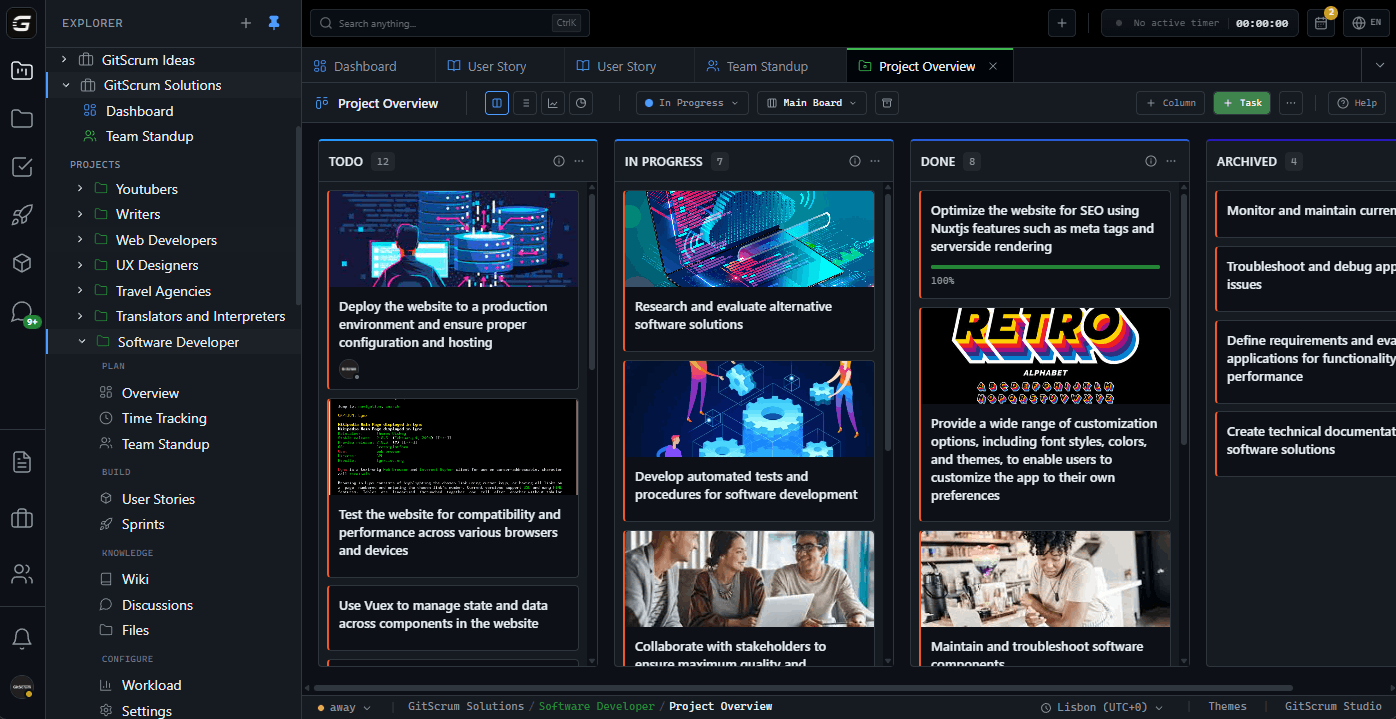
The approvers waste time context-switching between systems, often approving the same logical change multiple times in different formats. GitScrum integrates approval workflows within project context.
Related approvals link together so reviewers see the complete picture. One approval queue with full project visibility instead of fragmented workflows across disconnected systems.
The GitScrum Advantage
One unified platform to eliminate context switching and recover productive hours.