GitScrum PRO Annual — 2,500+ SaaS apps via MCP

GitScrum logo
Solution

Resource Allocation Politics vs Priority 2026 | Data

The VP's pet project gets five engineers. The critical infrastructure work gets one. Not because infrastructure isn't important—but because the VP is louder. Resources flow to who argues best in meetings, who has the most senior sponsor, who played golf with the CEO. Actual business priority is secondary. GitScrum makes resource allocation visible and ties it to measurable outcomes, making political allocation harder to hide.

Resource Allocation Politics vs Priority 2026 | Data

Everyone knows how it works but nobody says it out loud.

The project that gets resources isn't necessarily the most important one. It's the one with the best advocate.

The executive who's most persistent. The team that's best at presenting.

The initiative that sounds sexiest in the board meeting. Meanwhile, the boring but critical work starves.

Infrastructure upgrades. Technical debt.

Security hardening. Operational improvements.

These don't have executive champions. They don't make good slides.

They don't sound exciting in all-hands meetings. So they get the leftover resources—usually one person trying to do what needs three.

When these starved projects fail or cause incidents, everyone acts surprised. But the failure was predictable from the resource allocation.

We chose to fund the VP's feature and underfund the database migration. The incident was a consequence of that choice.

The GitScrum Advantage

One unified platform to eliminate context switching and recover productive hours.

01

problem.identify()

The Problem

Resources flow to who argues best, not what matters most

Executive pet projects overfunded, critical work underfunded

No visible connection between allocation and outcomes

Political skills matter more than business priority

Preventable failures from predictably starved projects

02

solution.implement()

The Solution

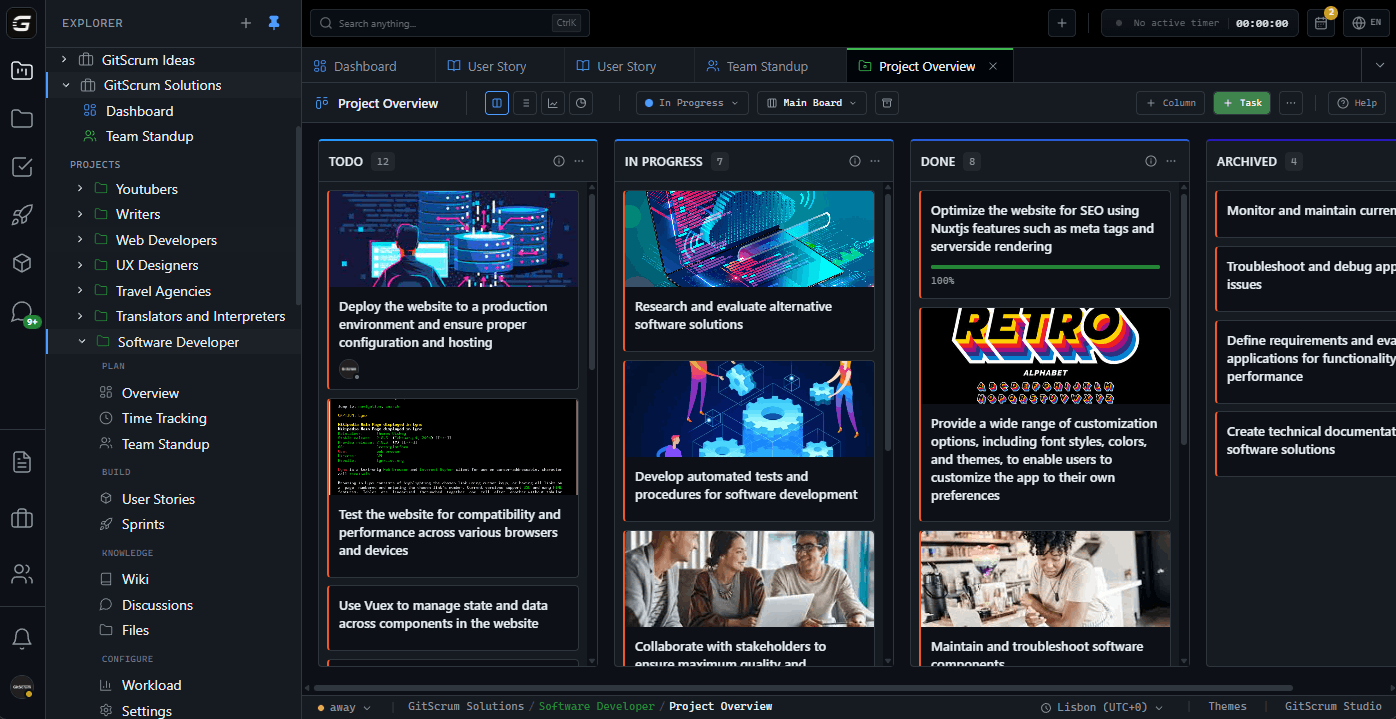
Visible resource allocation across all initiatives

Outcome tracking tied to resource investment

Priority scoring based on business criteria

Resource request justification requirements

Historical allocation vs results analysis

03

How It Works

1

Visible Allocation

GitScrum shows resource allocation across all initiatives: 'VP's Project: 5 engineers (25% of capacity). Infrastructure: 1 engineer (5% of capacity). Customer Features: 10 engineers (50%).' The distribution is visible, not hidden in spreadsheets.

2

Priority Scoring

Each initiative is scored on business criteria: revenue impact, risk mitigation, strategic alignment, customer demand. 'Infrastructure scores 8.5/10 (high risk mitigation). VP's Project scores 6.2/10 (moderate revenue impact).' The scores inform discussion.

3

Outcome Tracking

Resources are connected to outcomes: 'VP's Project: 5 engineers, 6 months, $0 revenue generated.' 'Customer Features: 10 engineers, 6 months, $2.1M new ARR.' The relationship between investment and return is visible.

4

Historical Analysis

Over time, patterns emerge: 'Projects sponsored by VP X average 40% over budget and 60% under target outcomes. Projects from Team Y average 15% under budget and 110% of target outcomes.' Political allocation becomes quantified and discussable.

04

Why GitScrum

GitScrum addresses Resource Allocation Based on Politics Not Priority through Kanban boards with WIP limits, sprint planning, and workflow visualization

Problem resolution based on Kanban Method (David Anderson) for flow optimization and Scrum Guide (Schwaber and Sutherland) for iterative improvement

Capabilities

  • Kanban boards with WIP limits to prevent overload
  • Sprint planning with burndown charts for predictable delivery
  • Workload views for capacity management
  • Wiki for process documentation
  • Discussions for async collaboration
  • Reports for bottleneck identification

Industry Practices

Kanban MethodScrum FrameworkFlow OptimizationContinuous Improvement

Frequently Asked Questions

Still have questions? Contact us at customer.service@gitscrum.com

Won't executives resist having their allocations made visible?

Some will. But the visibility benefits everyone long-term—including executives. When allocation is visible, executives who make good decisions are recognized. The resistance usually comes from those whose allocations wouldn't survive scrutiny.

How do you score strategic initiatives that don't have immediate ROI?

Multiple criteria beyond ROI: strategic alignment score, risk mitigation score, capability building score, customer satisfaction impact. Not everything is measured in dollars, but everything can be measured against explicit criteria.

What about confidential projects that can't be visible to everyone?

Visibility can be tiered. Leadership sees everything. Teams see their area and aggregates. The key is that someone with authority sees all allocations, even if individual contributors don't see confidential projects.

How do we change the culture around political allocation?

Visibility is the first step. When political allocation is visible and tied to outcomes, it becomes harder to sustain. The historical analysis shows which sponsors' projects consistently underperform. Culture shifts when data makes patterns undeniable.

Ready to solve this?

Start free, no credit card required. Cancel anytime.

Works with your favorite tools

Connect GitScrum with the tools your team already uses. Native integrations with Git providers and communication platforms.

GitHubGitHub
GitLabGitLab
BitbucketBitbucket
SlackSlack
Microsoft TeamsTeams
DiscordDiscord
ZapierZapier
PabblyPabbly

Connect with 3,000+ apps via Zapier & Pabbly