
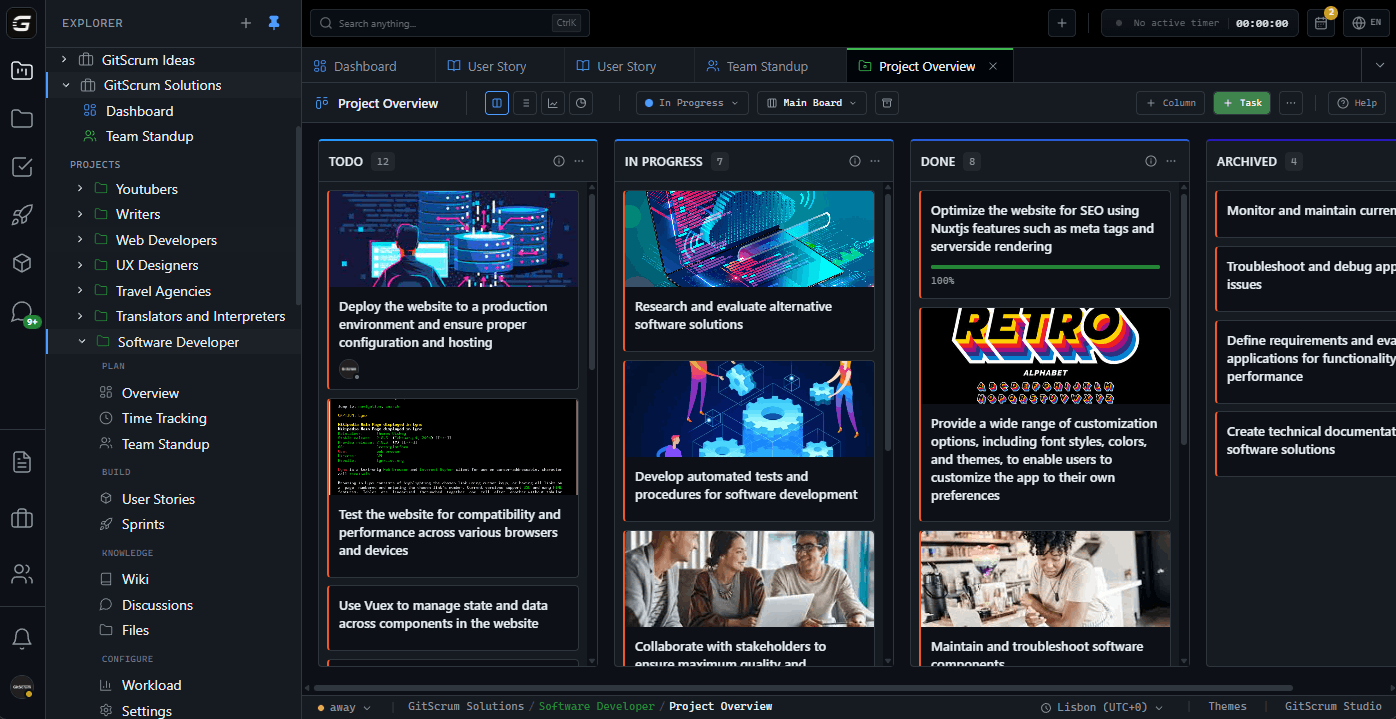
VS Code

GitScrum for VS Code, Google Antigravity, Cursor and Windsurf!

GitScrum logo
Solution

Prevent Scope Creep Software Development 2026 | Auto Detect

'Just one more feature' turned into 40 unpaid hours. Scope creep detected in real-time. Alerts at 10% and 20% thresholds. Change requests require approval. Every scope change logged and billable. Free trial.

Prevent Scope Creep Software Development 2026 | Auto Detect

Scope creep—the gradual expansion of project requirements without corresponding adjustments to timeline, budget, or resources—is the silent killer of software projects.

It starts innocently: "just one more small feature" turns into 40 hours of unpaid work. GitScrum provides automated scope creep detection through Sprint Health analysis, quantifying exactly how many tasks were added mid-sprint and their impact on delivery.

Combined with structured Change Requests that require client approval before scope changes hit your backlog, you gain complete visibility and control over project boundaries.

The GitScrum Advantage

One unified platform to eliminate context switching and recover productive hours.

01

problem.identify()

The Problem

"Just one more small feature" requests that never stop

No visibility into how much scope changed since sprint start

Clients expect extra work without extra payment

Team commits to unrealistic deliverables mid-sprint

No formal process for evaluating change requests

02

solution.implement()

The Solution

Sprint Health automatically detects scope creep—tasks added after sprint start are flagged and quantified

Real-time alerts when scope change exceeds 10% or 20% of original sprint commitment

Change Requests with client portal: every scope change requires formal submission and approval

Automatic cost estimation for change requests based on hourly rates and estimated effort

Complete audit trail linking every scope change to who requested it and when

03

How It Works

1

Define Sprint Scope

During sprint planning, commit to specific tasks. GitScrum timestamps every task in the sprint at start date.

2

Automatic Detection

Any task added after sprint start is flagged as 'scope change'. Sprint Health calculates the percentage impact.

3

Risk Alerts

When scope changes exceed 10%, you get a warning. At 20%+, it's marked as high-risk with recommendation to protect sprint.

4

Change Request Workflow

New requests go through Change Request form—client sees estimated hours and cost before you commit.

5

Approval & Billing

Client approves or rejects. Approved changes auto-generate billable items linked to the original request.

04

Why GitScrum

GitScrum addresses How to Prevent Scope Creep in Software Development Projects through Kanban boards with WIP limits, sprint planning, and workflow visualization

Problem resolution based on Kanban Method (David Anderson) for flow optimization and Scrum Guide (Schwaber and Sutherland) for iterative improvement

Capabilities

  • Kanban boards with WIP limits to prevent overload
  • Sprint planning with burndown charts for predictable delivery
  • Workload views for capacity management
  • Wiki for process documentation
  • Discussions for async collaboration
  • Reports for bottleneck identification

Industry Practices

Kanban MethodScrum FrameworkFlow OptimizationContinuous Improvement

Frequently Asked Questions

Still have questions? Contact us at customer.service@gitscrum.com

How does GitScrum detect scope creep automatically?

Sprint Health compares tasks at sprint start vs current state. Any task created after the sprint start date is flagged as a scope change. The system calculates what percentage of total tasks these additions represent and triggers alerts at 10% (warning) and 20% (critical) thresholds.

Can clients submit change requests directly?

Yes. Client Flow includes a Change Request portal where clients submit structured requests. Each request includes description, urgency, and triggers automatic hour/cost estimation based on your project rates. You review and approve before anything enters your sprint.

What happens when a change request is approved?

Approved changes automatically create tasks linked to the original request. Time tracked against these tasks is flagged as billable scope change. When you generate invoices, these hours appear separately from original project scope.

How do I protect my sprint from scope creep?

Three layers of protection: 1) Sprint Health alerts warn you when scope changes exceed thresholds, 2) Change Request workflow requires formal approval before new work enters sprint, 3) Recommendations suggest moving non-critical additions to backlog instead of current sprint.

Can I see scope creep trends across projects?

Sprint KPIs track scope change percentage for every sprint. Over time, you can identify which clients or project types have the highest scope creep rates and adjust your estimates or contracts accordingly.

Ready to solve this?

Start free, no credit card required. Cancel anytime.

Works with your favorite tools

Connect GitScrum with the tools your team already uses. Native integrations with Git providers and communication platforms.

GitHubGitHub
GitLabGitLab
BitbucketBitbucket
SlackSlack
Microsoft TeamsTeams
DiscordDiscord
ZapierZapier
PabblyPabbly

Connect with 3,000+ apps via Zapier & Pabbly