GitScrum PRO Annual — 2,500+ SaaS apps via MCP

GitScrum logo
Solution

Technical Debt Tracking 2026 | Visible Not Invisible

Tech debt invisible until codebase breaks. GitScrum: debt labels, dedicated backlog, 10-20% sprint allocation tracking. $8.90/user. 2 free. Free trial.

Technical Debt Tracking 2026 | Visible Not Invisible

Every development team accumulates technical debt.

Shortcuts taken to meet deadlines, deprecated dependencies never updated, TODO comments that become permanent fixtures. The problem isn't that technical debt exists—it's that it's invisible.

There's no accounting for it. It doesn't appear in sprint planning.

It's not prioritized against features. One day the codebase is slow, buggy, and hard to change, and nobody knows how it got that way.

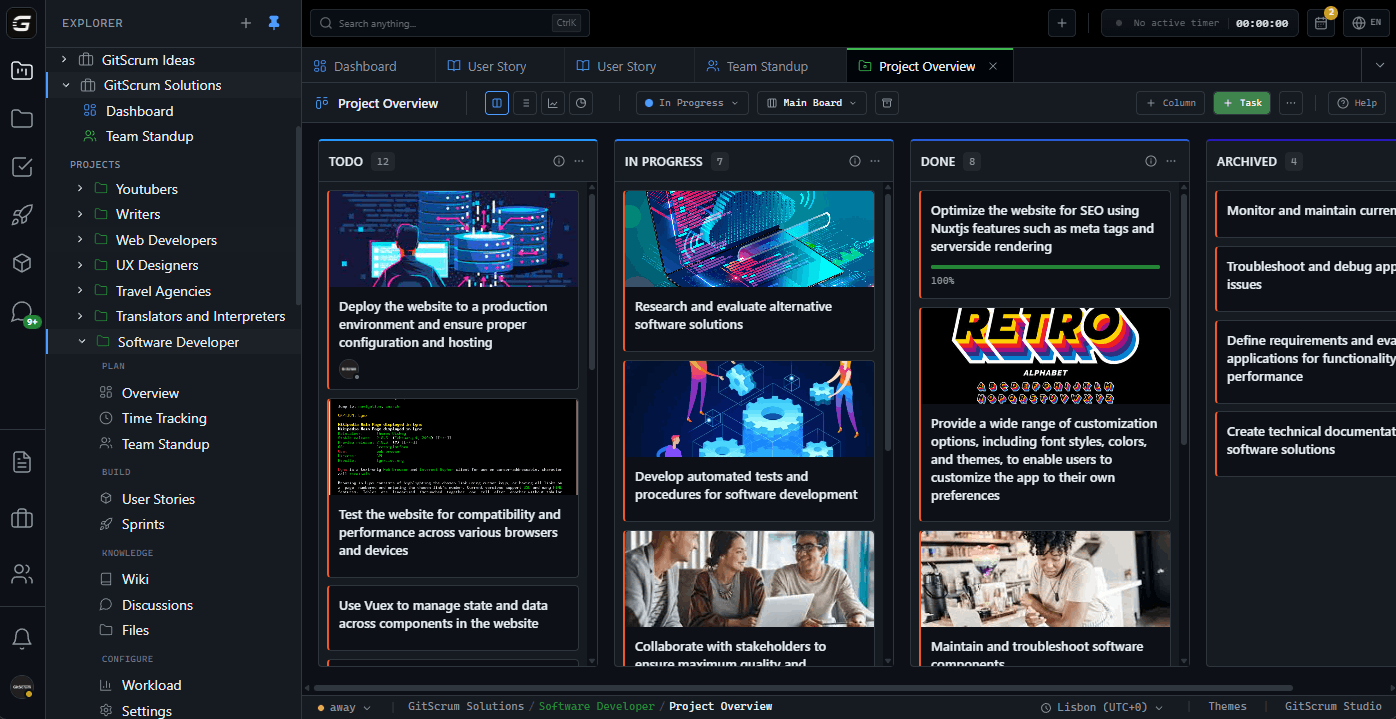
Making technical debt visible is the first step to managing it. GitScrum provides the tools: label tasks as 'Tech Debt' to distinguish from features.

Create a dedicated backlog view filtered by debt. Track what percentage of sprint capacity goes to debt reduction.

Make debt part of the planning conversation, not an afterthought that never gets addressed. When tech debt is visible and tracked, teams can make informed tradeoffs: 'We'll ship this feature faster with a shortcut, but we're adding 3 points of debt we need to pay down next sprint.'

The GitScrum Advantage

One unified platform to eliminate context switching and recover productive hours.

01

problem.identify()

The Problem

Technical debt accumulates without tracking—invisible until it causes major problems

No way to distinguish tech debt work from feature work in planning

Debt never gets prioritized because it's not visible alongside features

No metrics on how much sprint capacity goes to debt vs new features

Shortcuts become permanent because there's no system to track payback

02

solution.implement()

The Solution

Label system categorizes tasks as 'Tech Debt' for visibility and filtering

Dedicated backlog view shows all accumulated technical debt in one place

Sprint planning includes tech debt allocation—10-20% capacity budgeted

Reports show ratio of feature work vs debt paydown per sprint

Task linking connects debt created to features that caused it for context

03

How It Works

1

Create Tech Debt Label

Create a 'Tech Debt' label (use a distinctive color like orange or red). Apply this label to any task that represents debt: refactoring, dependency updates, fixing shortcuts, addressing TODO comments. The label makes debt instantly recognizable on boards.

2

Log Debt When Created

When taking shortcuts to meet deadlines, immediately create a tech debt task. 'Refactor payment processing to proper service pattern.' Link it to the feature that created the debt. The debt is acknowledged and tracked, not forgotten.

3

Maintain Debt Backlog

Create a filtered backlog view showing only 'Tech Debt' labeled tasks. Review regularly. Prioritize debt items by impact: Which shortcuts are causing the most pain? Which will compound fastest if ignored? This is your debt ledger.

4

Allocate Sprint Capacity

During sprint planning, budget 10-20% capacity for tech debt paydown. This isn't negotiable 'if we have time'—it's a commitment. Pull highest-priority debt items into the sprint alongside features. Debt reduction becomes routine, not emergency.

5

Track Debt Metrics

After each sprint, review: How many debt tasks completed? What's the ratio of feature work to debt work? Is the debt backlog growing or shrinking? Metrics reveal whether you're keeping up with debt or falling further behind.

04

Why GitScrum

GitScrum addresses Tracking Technical Debt in Software Development through Kanban boards with WIP limits, sprint planning, and workflow visualization

Problem resolution based on Kanban Method (David Anderson) for flow optimization and Scrum Guide (Schwaber and Sutherland) for iterative improvement

Capabilities

  • Kanban boards with WIP limits to prevent overload
  • Sprint planning with burndown charts for predictable delivery
  • Workload views for capacity management
  • Wiki for process documentation
  • Discussions for async collaboration
  • Reports for bottleneck identification

Industry Practices

Kanban MethodScrum FrameworkFlow OptimizationContinuous Improvement

Frequently Asked Questions

Still have questions? Contact us at customer.service@gitscrum.com

How much sprint capacity should go to technical debt?

10-20% is typical for healthy teams. Teams drowning in debt may need 30-40% temporarily to catch up. The key is consistent allocation, not 'we'll do debt if we have time' (you never have time). Make it a budget line item: 'We're committing 20% of sprint to debt paydown.' Adjust based on debt backlog trend—growing backlog means you need more allocation.

How do we prioritize which technical debt to address first?

Prioritize by pain and compound risk. Which debt causes daily friction for developers? Which will get worse fastest if ignored? Debt in frequently-changed code matters more than debt in stable, rarely-touched modules. Security-related debt and deprecated dependencies that will break upgrades are usually high priority.

Should we track debt that's outside our control (legacy systems, third-party issues)?

Yes, but categorize it differently. Label as 'External Debt' or 'Legacy Debt.' It's still debt that affects your work, but prioritization may differ. You can track it for visibility and make informed decisions: 'We're spending 15% of effort working around legacy system X—worth investing in migration?'

How do we prevent tech debt from being ignored in favor of features?

Make it visible and make it mandatory. Debt label on the board is visible. Sprint commitment includes debt allocation by policy, not choice. Track debt ratio metrics and review in retrospectives. If debt backlog is growing, that's a red flag discussed in planning. Visibility + accountability = debt gets addressed.

How do we estimate tech debt tasks?

Same as feature tasks—effort points or time estimates. Some debt is well-scoped ('Update library X to version Y'). Some is exploratory ('Refactor payment module'—may need spike first to estimate). When uncertain, timebox: 'We'll spend 5 points on payment refactoring this sprint and reassess.' Don't let uncertainty prevent inclusion.

Ready to solve this?

Start free, no credit card required. Cancel anytime.

Works with your favorite tools

Connect GitScrum with the tools your team already uses. Native integrations with Git providers and communication platforms.

GitHubGitHub
GitLabGitLab
BitbucketBitbucket
SlackSlack
Microsoft TeamsTeams
DiscordDiscord
ZapierZapier
PabblyPabbly

Connect with 3,000+ apps via Zapier & Pabbly