







VS Code

GitScrum for VS Code, Google Antigravity, Cursor and Windsurf!

GitScrum logo
Solution

Unified Project Search 2026 | Eliminate Information Silos

Search 5 tools to find one discussion? GitScrum: one search box queries all tasks, docs, discussions, history. No more silos. $8.90/user. 2 free. Free trial.

Unified Project Search 2026 | Eliminate Information Silos

Knowledge workers spend an estimated 20% of their time searching for information.

When that information is scattered across multiple disconnected systems, the problem compounds exponentially. Each tool has its own search interface, its own indexing approach, its own relevance algorithms.

A search term that works perfectly in one system returns nothing in another. Worse, there is no way to know which system contains the information you seek.

A decision about architecture might have originated in a Slack conversation, been refined in a Confluence document, resulted in Jira tickets, and generated discussion in PR comments. To reconstruct the full picture, you must search all these systems and mentally stitch together fragments from each.

This fragmentation has severe consequences. People give up searching and reinvent solutions that already exist.

Historical decisions get relitigated because nobody can find the original rationale. New team members cannot discover institutional knowledge trapped in system-specific silos.

Duplicate work happens because people cannot find existing resources. A unified platform changes this fundamentally.

One search box queries all project data—tasks, documents, discussions, decisions, files, and history. The full context of any topic is immediately accessible.

Search becomes a tool for leverage rather than a source of frustration.

The GitScrum Advantage

One unified platform to eliminate context switching and recover productive hours.

01

problem.identify()

The Problem

Information scattered across multiple disconnected systems

Each tool has separate search with different capabilities

No way to know which system contains needed information

Time wasted searching multiple systems sequentially

Historical decisions and rationale become unfindable

Institutional knowledge trapped in system-specific silos

02

solution.implement()

The Solution

Single search queries all project data simultaneously

Unified results from tasks documents and discussions

Full context immediately accessible from one interface

Historical decisions and rationale easily discoverable

Institutional knowledge accessible to everyone

Search becomes efficient leverage tool

03

How It Works

1

Unified Index

All project data indexed in single searchable repository

2

Single Search

One search box queries tasks documents discussions and files

3

Contextual Results

Results show full context and relationships between items

4

Instant Access

Navigate directly to any piece of project information

04

Why GitScrum

GitScrum addresses Unified Search Across All Project Data Eliminating Information Silos through Kanban boards with WIP limits, sprint planning, and workflow visualization

Problem resolution based on Kanban Method (David Anderson) for flow optimization and Scrum Guide (Schwaber and Sutherland) for iterative improvement

Capabilities

  • Kanban boards with WIP limits to prevent overload
  • Sprint planning with burndown charts for predictable delivery
  • Workload views for capacity management
  • Wiki for process documentation
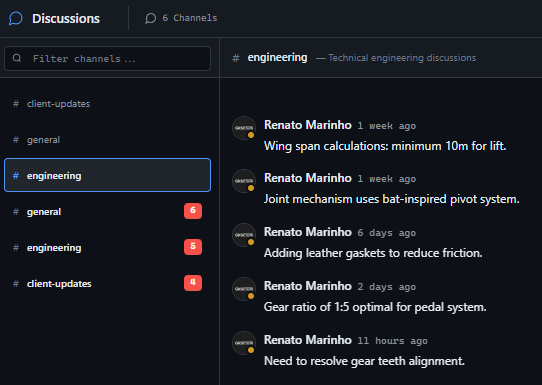
  • Discussions for async collaboration
  • Reports for bottleneck identification

Industry Practices

Kanban MethodScrum FrameworkFlow OptimizationContinuous Improvement

Frequently Asked Questions

Still have questions? Contact us at customer.service@gitscrum.com

How much time do employees spend searching for information?

Studies consistently show that knowledge workers spend 20-30% of their workday searching for information. When information is fragmented across multiple systems, this percentage increases significantly. Workers report spending 5-10 hours per week just searching, with a significant portion of those searches failing to find the needed information. Unified search can reduce this search time by 50-70%, recovering 3-7 hours of productive time per employee per week.

Why is searching multiple systems so inefficient?

Each search adds cognitive overhead and time. Users must remember which system might contain the information, context-switch to that tool, formulate a query appropriate for that system's search capabilities, evaluate results, and decide whether to continue or try another system. With 5-10 systems to search, this sequential process multiplies. There is also no guarantee the information will be found even after searching all systems—it might exist under different keywords or in an unexpected location.

What productivity gains come from unified search?

Organizations implementing unified search report dramatic improvements: 60-80% reduction in time spent searching, 40-50% reduction in duplicate work from finding existing resources, 30-40% improvement in decision quality from accessing complete historical context, and significant improvements in new employee onboarding speed. The cumulative effect is often equivalent to recovering 5-10% of total workforce productivity.

Ready to solve this?

Start free, no credit card required. Cancel anytime.

Works with your favorite tools

Connect GitScrum with the tools your team already uses. Native integrations with Git providers and communication platforms.

GitHubGitHub
GitLabGitLab
BitbucketBitbucket
SlackSlack
Microsoft TeamsTeams
DiscordDiscord
ZapierZapier
PabblyPabbly

Connect with 3,000+ apps via Zapier & Pabbly