
VS Code

GitScrum for VS Code, Google Antigravity, Cursor and Windsurf!

GitScrum logo
Solution

Approval Workflow Bottleneck 2026 | SLA Queue Delegation

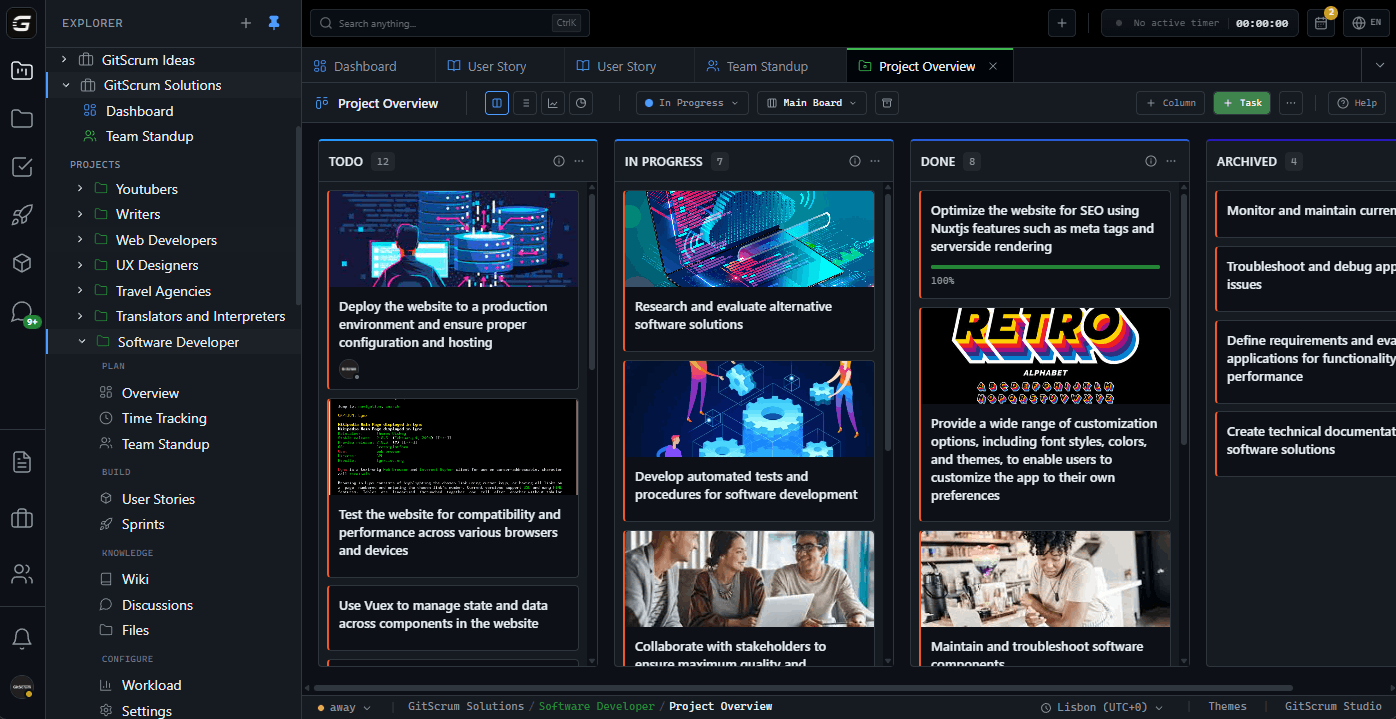
How do teams fix approval bottlenecks in 2026? GitScrum approval dashboard shows queue with SLA tracking. Smart delegation when approvers OOO. Risk-based tiers auto-approve low-risk. Free trial.

Approval Workflow Bottleneck 2026 | SLA Queue Delegation

Approval workflows exist for good reasons: compliance, quality gates, risk management.

But they've metastasized. What started as 'major releases need sign-off' became 'everything needs three approvals.' The approvers don't have time—they're senior because they're busy.

So approvals pile up. People work around the system: 'just ship it and get approval retroactively.' Or they wait, and momentum dies.

The context fades between feature completion and approval. By the time it ships, nobody remembers why it mattered.

Urgent requests get expedited—but then everything becomes urgent. The approval workflow that was supposed to ensure quality is now just friction that either gets bypassed or blocks value delivery.

The GitScrum Advantage

One unified platform to eliminate context switching and recover productive hours.

01

problem.identify()

The Problem

Approvals queue up for overloaded approvers

Delegation unclear when approvers unavailable

Approval requests lost in email noise

Context lost while waiting for approval

Workarounds undermine the approval purpose

02

solution.implement()

The Solution

Approval queue visibility with SLA tracking

Delegation chains for approver availability

Contextual approval requests with all needed info

Tiered approval based on risk level

Approval metrics to identify bottlenecks

03

How It Works

1

Approval Dashboard

GitScrum shows approval status across all pending releases: 'Release 4.2: Waiting on Sarah (24h), Mike (approved), Legal (not started). SLA: 12h remaining.' Bottlenecks are visible before they cause delays.

2

Smart Delegation

When approvers are unavailable, delegation is automatic: 'Sarah is OOO. Delegation chain: Tom → Jessica. Tom notified, 4h SLA.' No hunting for backup approvers, no delays discovering someone is on vacation.

3

Contextual Requests

Approval requests include everything needed to decide: 'Release 4.2: Security review (passed), QA report (attached), Risk assessment (low), Customer impact (3,000 users), Rollback plan (documented).' Approvers can approve without hunting for context.

4

Risk-Based Tiers

Not all releases need the same approval: 'Tier 1 (cosmetic): Auto-approve after QA. Tier 2 (feature): Single approval. Tier 3 (infrastructure): Full approval chain.' Low-risk changes flow fast, high-risk changes get scrutiny.

04

Why GitScrum

GitScrum addresses Approval Workflows Slowing Delivery through Kanban boards with WIP limits, sprint planning, and workflow visualization

Problem resolution based on Kanban Method (David Anderson) for flow optimization and Scrum Guide (Schwaber and Sutherland) for iterative improvement

Capabilities

  • Kanban boards with WIP limits to prevent overload
  • Sprint planning with burndown charts for predictable delivery
  • Workload views for capacity management
  • Wiki for process documentation
  • Discussions for async collaboration
  • Reports for bottleneck identification

Industry Practices

Kanban MethodScrum FrameworkFlow OptimizationContinuous Improvement

Frequently Asked Questions

Still have questions? Contact us at customer.service@gitscrum.com

Won't faster approvals compromise quality?

Slow approvals don't ensure quality—they ensure delay. Quality comes from the approval criteria being clear and the approver having context. Fast, informed approvals beat slow, distracted rubber-stamps.

How do we get overloaded approvers to respond faster?

Make approval easier: contextual requests mean less research needed. Tiered approval means they only see high-risk items. Delegation means they're not the bottleneck when unavailable. Reduce the burden, not just the deadline.

What if approvers disagree?

Escalation paths should be clear before conflict happens. 'Sarah and Tom disagree → Jessica decides within 4h.' Having the escalation defined prevents approval stalemates.

How do we handle compliance requirements for certain approvals?

Compliance requirements should define the tier, not the process for all releases. 'SOX-relevant changes require CFO sign-off. Non-SOX changes follow standard approval.' Compliance is met while non-compliance changes flow faster.

Ready to solve this?

Start free, no credit card required. Cancel anytime.

Works with your favorite tools

Connect GitScrum with the tools your team already uses. Native integrations with Git providers and communication platforms.

GitHubGitHub
GitLabGitLab
BitbucketBitbucket
SlackSlack
Microsoft TeamsTeams
DiscordDiscord
ZapierZapier
PabblyPabbly

Connect with 3,000+ apps via Zapier & Pabbly