
Asana built its reputation on beautiful task management.
Timelines, boards, calendars—multiple views that adapt to different work styles. Marketing teams love it.
Operations teams swear by it. But development teams?
They struggle. Where Asana Works Well: Task Organization: Sections, subtasks, dependencies.
Clean hierarchies for organizing work. Collaboration: Comments, mentions, file attachments.
Teams stay coordinated. Cross-Team Visibility: Portfolio views show projects across departments.
Leadership gets oversight. Where Asana Fails Developers: No GitHub Integration: Native GitHub integration doesn't exist.
You're connecting through Zapier ($20+/month), third-party apps, or manual updates. PRs don't link to tasks.
Commits don't update status. Weak Sprint Support: Asana added 'Sprints' but they feel like relabeled date ranges.
No burndown charts. No velocity tracking.
No capacity planning based on historical data. No Developer UX: No dark mode.
No keyboard-first navigation. No Cmd+K command palette.
Developers feel like visitors in a tool designed for PMs. Time Tracking Requires Plugins: Native time tracking exists but limited.
Serious tracking needs Harvest or Toggl integration—more cost, more context switching. Why Development Teams Choose GitScrum: GitHub-Native: Connect repos in two clicks.
PRs link to tasks automatically. Commits update card status.
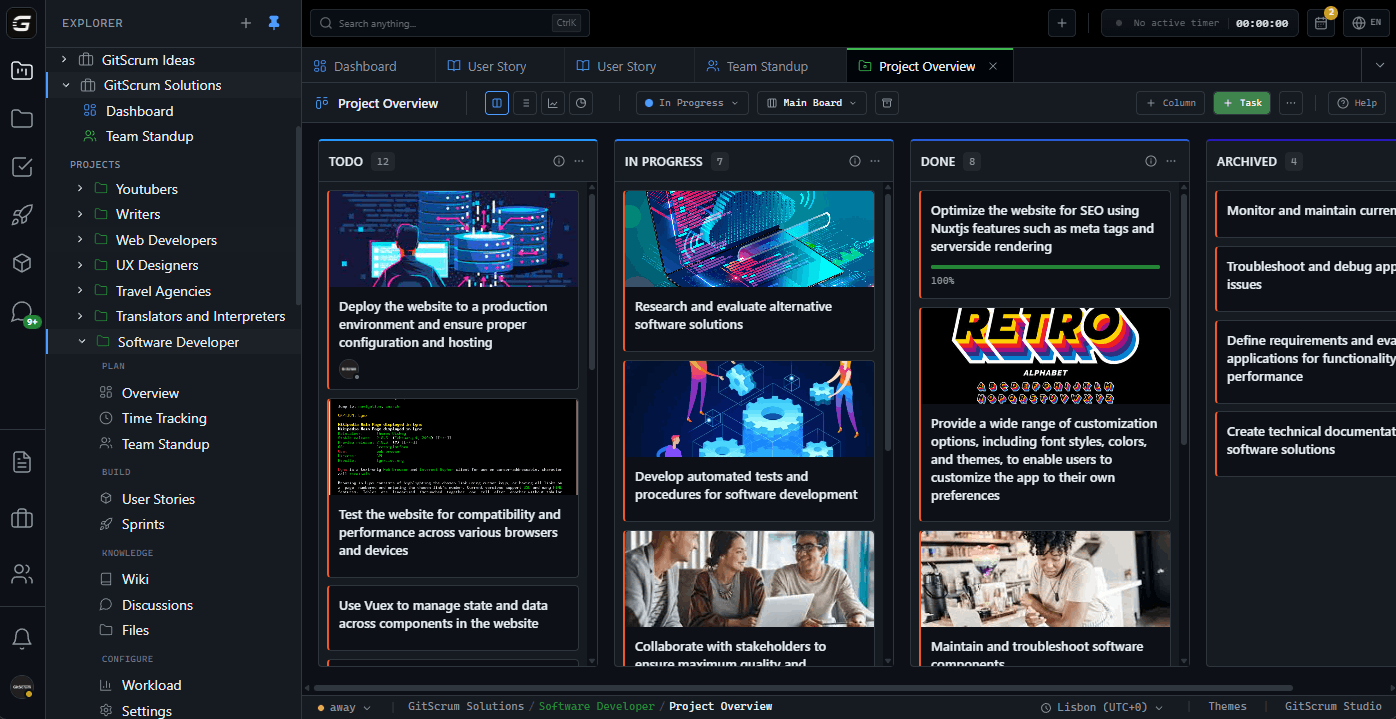
Branch names sync with task IDs. Sprint-First: Burndown charts generate from sprint progress.
Velocity tracking across iterations. Capacity planning with actual data.
Developer UX: Dark mode native. Cmd+K command palette.
Sub-100ms response times. Built by developers, for developers.
Time Tracking Built-In: One-click timers. Billable rates per project.
Export for invoicing. No third-party tools.
Pricing: $8.90/user/month vs Asana's $10.99/user. All features included.
2 users free forever.
The GitScrum Advantage
One unified platform to eliminate context switching and recover productive hours.