The Backlog Problem Every development team has the same backlog disease: Symptom 1: Infinite Growth - New items added weekly - Old items never removed - Backlog becomes a graveyard of ideas - 500+ items nobody will ever touch Symptom 2: Priority Paralysis - Everything is 'high priority' - Priorities set months ago, never updated - Urgent items buried below old requests - No clear top 10 to work on next Symptom 3: Grooming Theater - Weekly 2-hour grooming meetings - Estimating items that won't be built for years - Debating requirements for features nobody wants - Time spent grooming > time spent building Symptom 4: Disconnection from Reality - Backlog items don't match GitHub issues - PRs reference tickets that can't be found - Work happens outside the backlog - Tracking becomes administrative fiction Why Traditional Backlog Management Fails 1.
Backlogs aren't connected to code - Jira ticket exists, but where's the branch? - PR merged, but is the ticket closed?
- Manual linking that nobody maintains 2. Too many items to manage - Psychological burden of 400-item backlog - 'We'll get to it eventually' (you won't) - Old items pollute search results 3.
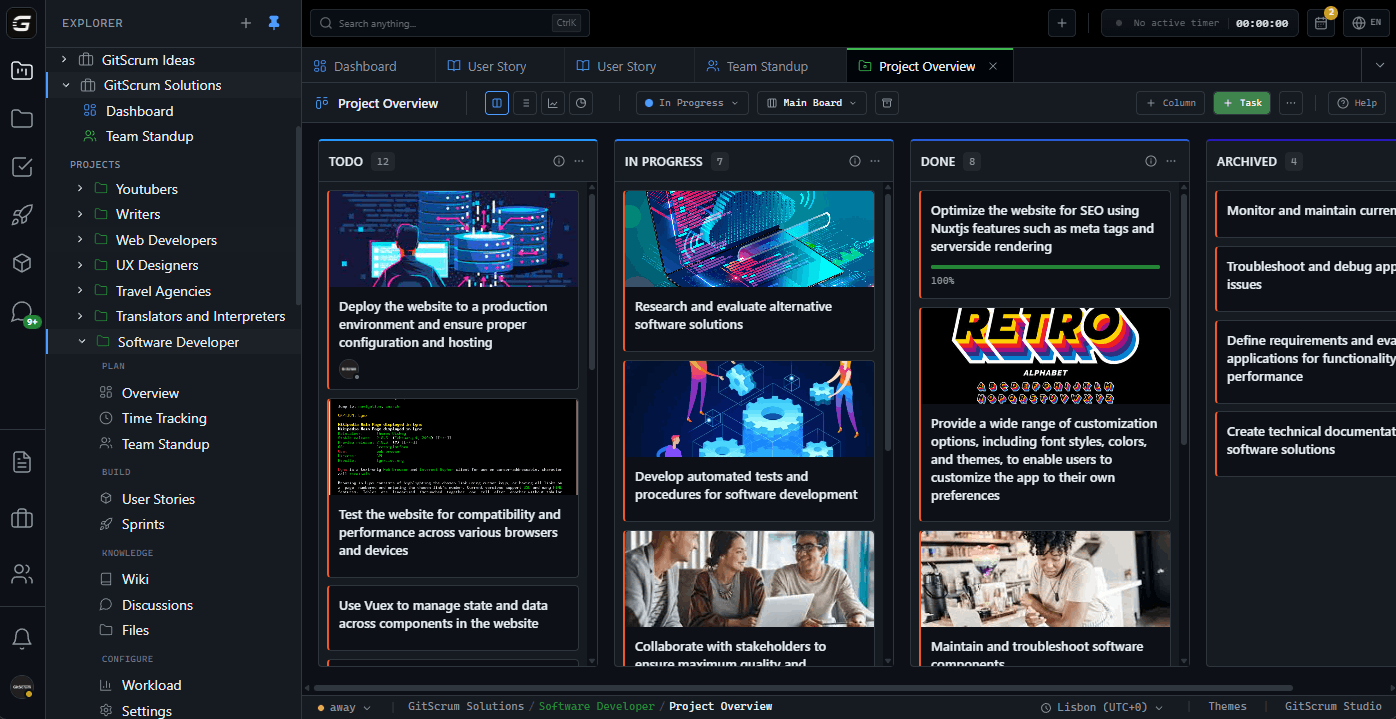
Grooming optimizes for wrong things - Story point debates waste engineering time - Detailed specs for items that change - Premature design for uncertain futures 4. No forcing function for cleanup - Easy to add, hard to remove - Nobody wants to delete someone's idea - Stale items become permanent fixtures The GitScrum Approach: Connected Backlog GitScrum treats backlog as living connection to your code: GitHub Sync: - Issues from GitHub repos auto-import - PR links update status automatically - Closed issues close backlog items - Two-way sync keeps everything aligned This means: - Backlog reflects actual repository state - No duplicate tracking in two systems - Developers work in GitHub, managers see in GitScrum Smart Prioritization: - Drag-and-drop ordering - Visual priority lanes - Quick assign to sprints - Bulk operations for cleanup Healthy Backlog Practices: - Archive items older than 6 months - Limit active backlog to 50-100 items - Only groom what's in next 2 sprints - Let old ideas die gracefully Backlog Workflow in GitScrum Incoming work: 1.
Developer creates GitHub issue 2. Issue appears in GitScrum backlog 3.
PM/Lead prioritizes in backlog view 4. Issue assigned to upcoming sprint During development: 1.
Developer creates branch for issue 2. Commits link to issue 3.
PR created and reviewed 4. PR merged closes issue 5.
GitScrum task auto-completes Backlog health: 1. Weekly: Review top 20 items 2.
Monthly: Archive stale items 3. Quarterly: Backlog zero (aggressive cleanup) 4.
Ongoing: Limit WIP, focus on throughput Traditional vs GitScrum Backlog | Aspect | Traditional | GitScrum | |--------|-------------|----------| | Source of items | Manual entry | GitHub sync + manual | | Connection to code | Manual linking | Automatic | | Status updates | Manual | From PR activity | | Typical size | 200-500+ items | 50-100 active | | Grooming time | 2-4 hours/week | 30-60 min/week | | Stale item handling | Accumulate forever | Archive automatically | Backlog Features in GitScrum Views: - List view: Compact, sortable, filterable - Board view: Kanban-style by status - Sprint view: What's planned for each sprint - Archive view: Historical items, searchable Filtering: - By repository - By assignee - By label/tag - By age (created/updated) - By sprint assignment Bulk Operations: - Multi-select items - Assign to sprint en masse - Change priority of multiple items - Archive selected items - Tag multiple items GitHub Integration: - Auto-import issues - Sync labels/tags - Link PRs to items - Close on merge - Two-way comment sync Grooming Made Efficient Traditional grooming: - 2-hour meeting every week - Go through entire backlog - Estimate everything - Debate endlessly - Accomplish little GitScrum grooming: - 30-minute focused session - Only review items for next 2 sprints - Quick drag-drop prioritization - Skip estimation theater - Decide: do now, do later, or delete Time saved: 1.5 hours/week x 50 weeks = 75 hours/year For a 5-person team: 375 hours/year of engineering time recovered Backlog Zero Philosophy The goal isn't to complete every backlog item. The goal is to complete the right items.
Backlog zero principles: 1. If it's been in backlog 6+ months, it's not important 2.
If nobody assigned it, nobody wants it 3. Ideas are cheap; archived ideas can return 4.
Active backlog should fit in one screen 5. Saying no to items is saying yes to focus GitScrum supports this: - Auto-archive suggestions for old items - Clear metrics on backlog health - Easy archive workflow - Searchable archive for resurrection Integration with Sprint Planning Backlog -> Sprint flow: 1.
View prioritized backlog 2. Select items for next sprint 3.
Drag to sprint column 4. Sprint auto-populated 5.
Capacity visible From sprint planning: 1. Review sprint candidates 2.
Check team capacity 3. Confirm sprint scope 4.
Start sprint 5. Backlog items become sprint tasks Real-Time Backlog Health Dashboard shows: - Total active items - Items added this week - Items completed this week - Average item age - Items without assignees - Items older than 3 months Health indicators: - Green: Active backlog < 50, average age < 30 days - Yellow: Active backlog 50-100, average age 30-60 days - Red: Active backlog > 100, average age > 60 days Pricing for Development Teams - 2 users: FREE forever - 3+ users: $8.90/user/month - All backlog features included - Full GitHub integration - Unlimited items and archives 5-person team: $26.70/month - Complete backlog management - GitHub auto-sync - Sprint planning integration - Bulk operations 10-person team: $71.20/month - Everything above - Team dashboards - Advanced filtering - Backlog health metrics The Bottom Line Traditional backlogs become graveyards of ideas.
GitScrum backlogs stay connected to actual code. When your backlog reflects reality: - Grooming takes 30 minutes, not 2 hours - Items don't duplicate across systems - Old items archive, don't accumulate - Sprint planning is drag-and-drop simple GitScrum: Backlog management that respects your time.
2 users free. $8.90/user/month.
Spend time building, not grooming.
The GitScrum Advantage
One unified platform to eliminate context switching and recover productive hours.