The Backlog Problem Every team's backlog: ├─ Created: With good intentions ├─ Month 1: 50 items, prioritized ├─ Month 6: 150 items, somewhat ordered ├─ Year 1: 350 items, chaos begins ├─ Year 2: 500+ items, nobody scrolls past 50 ├─ Reality: Graveyard of ideas Backlog grooming becomes: ├─ 2-hour sessions ├─ 'What is this ticket?
Not signal. Why Backlogs Grow Uncontrolled Root causes: ├─ Fear of losing ideas │ └─ 'What if we need it later?' ├─ No archival policy │ └─ Items never expire ├─ Multiple entry points │ └─ Slack, email, meetings → backlog ├─ No ownership │ └─ Everyone adds, nobody cleans ├─ Vague items │ └─ 'Improve performance' (from 2020) ├─ No prioritization framework │ └─ Everything P1 Backlog Management Principles Healthy backlog: ├─ Max 100-150 items ├─ Top 30 items: Ready to work ├─ 30-60: Prioritized, needs refinement ├─ 60-100: Ideas, not committed ├─ Beyond 100: Archive ├─ Nothing older than 6 months ├─ No duplicates ├─ Clear ownership Backlog is commitment queue.
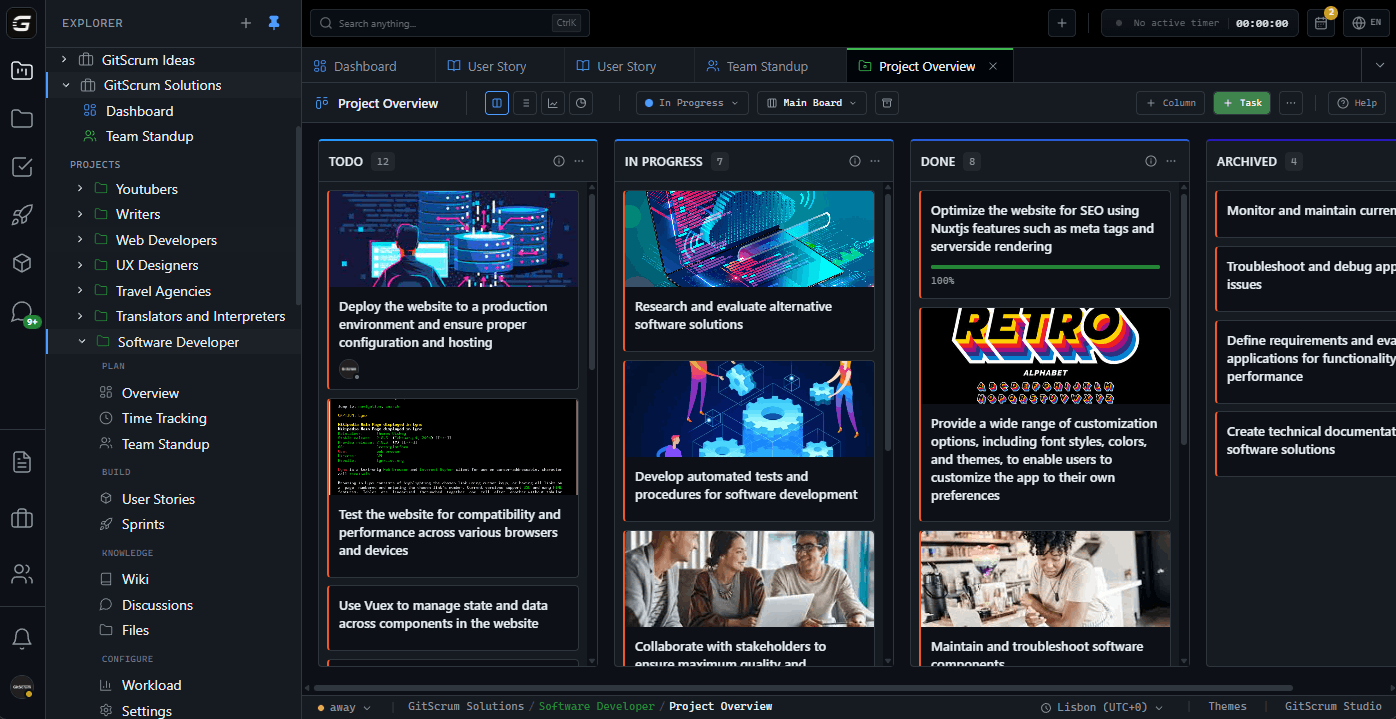
Not idea graveyard. GitScrum Backlog Approach Backlog structure: ├─ View: Prioritized list │ └─ Drag to reorder ├─ Sections: │ ├─ This Sprint: 15 items │ ├─ Next Sprint: 20 items │ ├─ Backlog: 50 items │ └─ Archive: Old items (hidden) ├─ Filters: │ ├─ By type (bug, feature, debt) │ ├─ By age (last 30/60/90 days) │ ├─ By author │ └─ Stale items (no activity 90+ days) Prioritization Made Simple Drag-and-drop priority: ├─ Most important: Top of list ├─ Stakeholder request?
Drag to position ├─ Bug critical? Move to top ├─ Nice-to-have?
Lower in list ├─ No complex scoring needed ├─ Visual = obvious Alternative: Labels ├─ P0: Critical (3-5 items) ├─ P1: High (10-15 items) ├─ P2: Medium (20-30 items) ├─ P3: Low (rest) ├─ Rule: If everything P1, nothing P1 Backlog Grooming Workflow Efficient grooming: ├─ Duration: 45 min/week ├─ Agenda: │ ├─ Review top 20 (10 min) │ │ └─ Still correct priority? │ ├─ Refine next 10 (15 min) │ │ └─ Ready for sprint?
│ ├─ New items (10 min) │ │ └─ Quick triage │ ├─ Stale review (10 min) │ │ └─ Archive or revive? ├─ Output: Clean, prioritized backlog Not 2-hour archaeological digs.
Stale Item Management Auto-detection: ├─ Filter: Items with no activity 90+ days ├─ Review each: │ ├─ Still relevant? → Update, keep │ ├─ Completed elsewhere?
→ Close │ ├─ Never going to do? → Archive │ ├─ Duplicate?
→ Merge/close ├─ Goal: Nothing older than 6 months in active backlog Backlog isn't forever. Ideas have shelf life.
Archiving vs Deleting GitScrum philosophy: ├─ Archive: Out of active backlog, searchable ├─ Delete: Gone forever ├─ Recommendation: Archive, don't delete │ └─ 'What was that idea from 2022?' │ └─ Search archive, find it ├─ Active backlog: Clean ├─ Archive: Historical record Peace of mind. No fear of losing ideas.
Duplicate Detection Common duplicates: ├─ 'Fix login bug' (3 tickets) ├─ 'Improve dashboard performance' (5 tickets) ├─ 'Add dark mode' (7 tickets over 3 years) GitScrum approach: ├─ Search before adding ├─ Merge duplicate tickets ├─ Link related items ├─ Single source of truth One idea, one ticket. Backlog Item Structure Good backlog item: ├─ Title: Clear, specific │ └─ 'Add OAuth login with Google' ├─ Description: Context, requirements ├─ Acceptance criteria: When is it done?
├─ Size: T-shirt (S/M/L) or hours ├─ Type: Feature/Bug/Tech Debt ├─ Priority: P0-P3 or position ├─ Requester: Who wants this? ├─ Created: Date Bad backlog item: ├─ Title: 'Improve performance' ├─ Description: (empty) ├─ Acceptance criteria: (empty) ├─ Size: Unknown ├─ Type: Unknown ├─ Priority: High (everything is) ├─ Requester: Unknown ├─ Created: 2019 Backlog Entry Points Controlled intake: ├─ Source: Slack channel │ └─ Request form → Backlog ├─ Source: Customer support │ └─ Filtered bugs → Backlog ├─ Source: Team ideas │ └─ Weekly ideation → Backlog ├─ Source: Stakeholder requests │ └─ PM triages → Backlog if valid Not: Everyone adds anything anytime.
Backlog as Sprint Source Sprint planning flow: ├─ Pre-sprint: Backlog groomed ├─ Top 20-30 items: Ready ├─ Planning meeting: │ └─ Select from top of backlog │ └─ Fit to capacity │ └─ Move to sprint ├─ Sprint board: Active work ├─ Backlog: Source queue Backlog feeds sprints. Sprints don't ignore backlog.
Backlog + Git Integration Connect to code: ├─ Backlog item: 'Add OAuth' ├─ Branch: feature/oauth-login ├─ Commits: Reference backlog item ├─ PR merged: Item completed ├─ No 'is this done?' questions Code proves completion. Backlog Metrics Healthy backlog metrics: ├─ Total items: <150 ├─ Items >6 months old: 0 ├─ Items ready for sprint: 20+ ├─ Grooming time/week: <1 hour ├─ Duplicate rate: <5% ├─ Clear ownership: 100% Unhealthy backlog metrics: ├─ Total items: 500+ ├─ Items >6 months old: 300+ ├─ Items ready for sprint: 5 ├─ Grooming time/week: 3+ hours ├─ Duplicate rate: 30%+ ├─ Clear ownership: 20% Team Backlog vs Product Backlog Large organizations: ├─ Product backlog: All potential work ├─ Team backlog: Allocated to this team ├─ Sprint backlog: This sprint's work GitScrum structure: ├─ Project = Product ├─ Boards = Team views ├─ Sprint = Sprint backlog ├─ Filter: By team, by product area Scale without chaos.
Backlog Bankruptcy Sometimes needed: ├─ Backlog: 800 items ├─ Reality: Never reviewing bottom 600 ├─ Solution: Backlog bankruptcy ├─ Process: │ └─ Archive everything >6 months │ └─ Keep top 100 items │ └─ Review remaining for duplicates │ └─ Start fresh with discipline ├─ Fear: 'What if we lose something?' ├─ Reality: If it was important, it'll come back Fresh start beats eternal scrolling. Comparing Backlog Tools Jira: ├─ Backlog: Powerful but complex ├─ Grooming: Query-based ├─ Issue: Encourages backlog bloat ├─ Price: $8.15+/user Linear: ├─ Backlog: Clean, fast ├─ Grooming: Efficient ├─ Issue: Opinionated workflow ├─ Price: $8/user Asana: ├─ Backlog: List-based ├─ Grooming: Manual ├─ Issue: Not dev-focused ├─ Price: $10.99+/user GitScrum: ├─ Backlog: Simple, Git-connected ├─ Grooming: Quick filters, archive ├─ Advantage: Code connection ├─ Price: $8.90/user, 2 free Getting Started 1.
Sign up GitScrum ($8.90/user, 2 free) 2. Import or create backlog 3.
Archive items >6 months old 4. Prioritize top 50 5.
Establish grooming rhythm (weekly) 6. Set backlog entry rules 7.
Review stale items monthly Clean backlog. Clear priorities.
The GitScrum Advantage
One unified platform to eliminate context switching and recover productive hours.