Blockchain Development Is Different Smart contract reality: ├─ Immutable once deployed ├─ Bugs = financial loss ├─ Security audits mandatory ├─ Gas optimization critical ├─ Multi-chain deployment ├─ Testnet → Mainnet process ├─ Upgrade patterns complex ├─ Governance considerations You can't hotfix a smart contract.
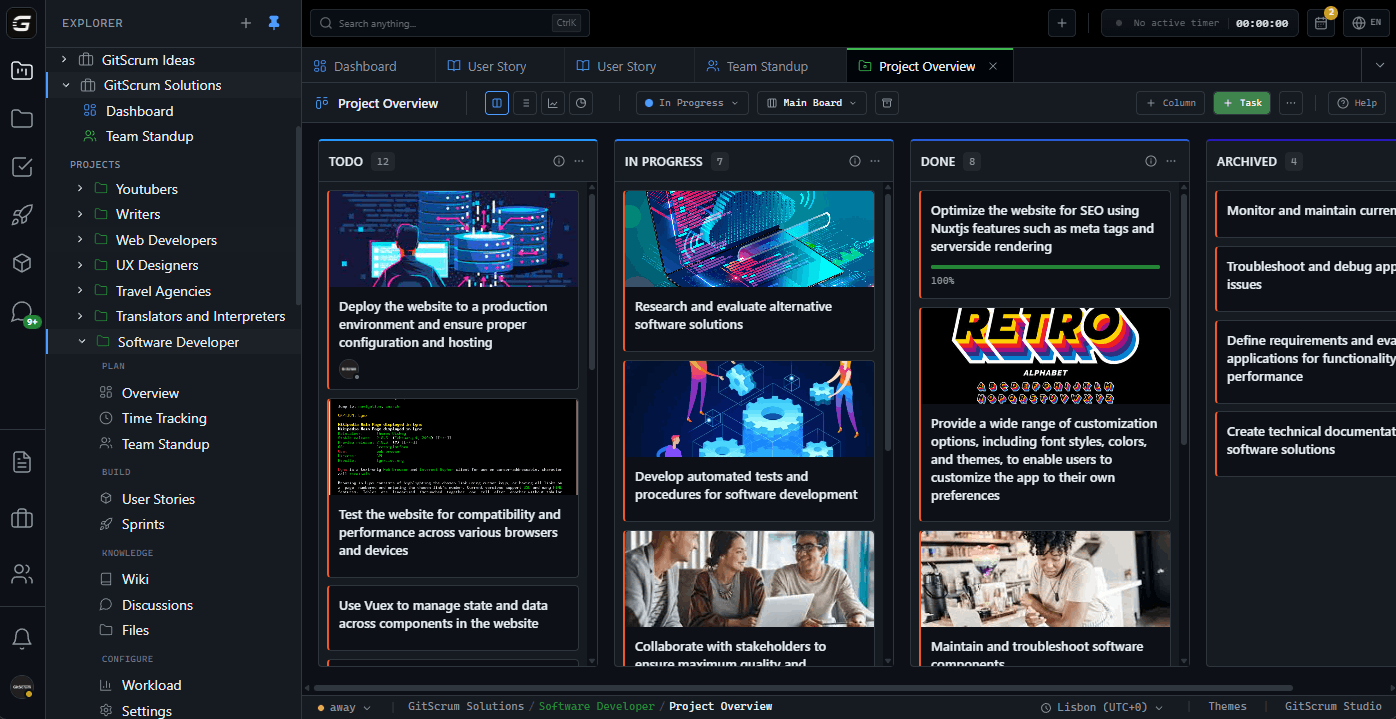
Done means done forever. Why Traditional PM Fails Blockchain 'Deployed to production': ├─ Traditional: Push fix tomorrow ├─ Blockchain: Deployed = permanent ├─ Bug = funds at risk ├─ 'Move fast break things' = disaster Traditional tools don't understand: ├─ Security review gates ├─ Audit requirements ├─ Testnet phases ├─ Gas optimization tasks ├─ Upgrade mechanisms GitScrum for Blockchain Teams Blockchain-aware tracking: ├─ Security checklist per contract ├─ Audit task gates ├─ Testnet → Mainnet workflow ├─ Gas optimization tracking ├─ Multi-chain deployment visibility ├─ Git-linked to contract repos Move deliberately, ship securely.
Smart Contract Development Workflow Contract lifecycle: ├─ Design (spec + architecture) ├─ Implementation (Solidity/Rust/Move) ├─ Unit tests ├─ Integration tests ├─ Security review (internal) ├─ Testnet deployment ├─ External audit ├─ Mainnet deployment ├─ Verification + monitoring GitScrum tracks each phase: ├─ Task per contract ├─ Checklist per phase ├─ Security gates enforced ├─ Audit status visible ├─ Deployment chain clear Security Audit Tracking Audit workflow: ├─ Code freeze for audit ├─ Submit to auditor ├─ Findings received ├─ Critical/High/Medium/Low categorized ├─ Fixes implemented ├─ Re-audit if critical ├─ Audit report published ├─ Mainnet deployment approved GitScrum approach: ├─ Audit task with checklist ├─ Findings as linked tasks ├─ Critical = blocker ├─ Fix tasks linked to findings ├─ Re-audit tracked ├─ Approval documented 'Contract X blocked pending Audit finding 3 fix.' Testnet to Mainnet Pipeline Deployment phases: ├─ Local development ├─ Testnet (Goerli, Sepolia, etc.) ├─ Staging testnet (optional) ├─ Mainnet deployment ├─ Each phase = separate task GitScrum tracking: ├─ Task checklist per environment ├─ [x] Local tests pass ├─ [x] Goerli deployed ├─ [x] Integration verified ├─ [ ] Audit complete ├─ [ ] Mainnet deployment Clear deployment pipeline. Multi-Chain Development DeFi reality: ├─ Ethereum mainnet ├─ Arbitrum ├─ Optimism ├─ Polygon ├─ Base ├─ Sometimes: Solana, Avalanche Each chain needs: ├─ Deployment task ├─ Chain-specific testing ├─ Gas configuration ├─ Bridge integration ├─ Monitoring setup GitScrum handles: ├─ Label per chain ├─ Filter by chain ├─ Cross-chain dependencies ├─ Deployment status per chain 'Deployed on Ethereum, pending Arbitrum deployment.' Gas Optimization Tracking Gas matters: ├─ High gas = user cost ├─ Optimization = user savings ├─ Before: 500k gas ├─ After: 200k gas ├─ 60% reduction GitScrum approach: ├─ Gas optimization tasks ├─ Before/after metrics in description ├─ Linked to specific functions ├─ Regression prevention ├─ Wiki documents patterns 'mint() gas reduced from 200k to 80k (60% savings).' Upgrade Pattern Management Proxy upgrade workflow: ├─ Implementation contract v2 ├─ Security review ├─ Testnet upgrade test ├─ Governance proposal (if DAO) ├─ Timelock execution ├─ Mainnet upgrade ├─ Verification GitScrum tracking: ├─ Upgrade epic with phases ├─ Governance tasks included ├─ Timelock tracking ├─ Rollback plan in wiki ├─ Not 'just a deployment' Upgrades are critical paths.
DeFi Protocol Coordination DeFi complexity: ├─ Core contracts ├─ Oracle integration ├─ DEX integration ├─ Bridge integration ├─ Frontend dApp ├─ Subgraph (The Graph) ├─ All must align GitScrum approach: ├─ Multiple repos, one board ├─ Contract tasks ├─ Frontend tasks ├─ Subgraph tasks ├─ Dependencies visible ├─ Release coordination See the whole protocol. NFT Project Management NFT launch: ├─ Contract development ├─ Metadata system ├─ Minting website ├─ Reveal mechanism ├─ Marketplace integration ├─ Royalty configuration ├─ Launch coordination GitScrum tracking: ├─ Contract tasks (ERC721/1155) ├─ Frontend tasks (mint site) ├─ Metadata tasks (IPFS/Arweave) ├─ Launch milestone ├─ Post-launch tasks Clear launch pipeline.
Security Checklist Approach Contract security checklist: ├─ Reentrancy protection ├─ Integer overflow (pre-0.8) ├─ Access control ├─ Input validation ├─ Gas griefing prevention ├─ Flash loan considerations ├─ Oracle manipulation ├─ Upgrade safety GitScrum implementation: ├─ Security checklist per contract ├─ Each item = checkbox ├─ 'Contract X: 8/10 security items' ├─ Unchecked = not ready for audit ├─ Wiki has full security guide Pricing for Blockchain Teams Solo dev (indie project): $0 (free) 2-person team: $0 (free) 5-person team: $26.70/month 10-person protocol team: $71.20/month 20-person team: $160.20/month $8.90/user/month. 2 users free forever.
All features included: ├─ Git integration ├─ Checklists (security, deployment) ├─ Wiki (security docs, runbooks) ├─ Sprint tracking ├─ No blockchain-specific pricing Compared to Other Tools Jira: ├─ Generic software PM ├─ No blockchain concepts ├─ Heavy overhead ├─ Security gates manual Linear: ├─ Better UX ├─ Still generic ├─ No audit workflow ├─ No multi-chain concept GitScrum: ├─ Git-native (contract repos) ├─ Checklists for security ├─ Multi-repo for protocols ├─ Lightweight for velocity ├─ Adapt workflow to blockchain Real Blockchain Experience 'Every PM tool treats deployment as "done". In blockchain, deployment is the beginning of permanent.
We needed security gates, audit tracking, testnet-to-mainnet pipelines. GitScrum doesnt have blockchain features built-in, but the checklist system and Git integration let us build the workflow we need.
Security review = checklist. Audit = blocker task.
Mainnet = only after audit complete. The flexibility matters more than blockchain-specific features.' - Smart Contract Lead, DeFi Protocol Daily Workflow Development phase: ├─ Check board: Security items pending?
├─ Code commits link to tasks ├─ Test results in task comments ├─ Gas measurements recorded ├─ 10 minutes, back to coding Audit phase: ├─ Audit task blocks deployment ├─ Findings create linked tasks ├─ Fixes commit to same task ├─ Re-audit if critical findings ├─ Clear completion criteria Deployment phase: ├─ Testnet checklist complete? ├─ Audit complete?
├─ Mainnet deployment task ├─ Verification tasks ├─ Monitoring setup Incident Response Blockchain incident: ├─ Bug discovered ├─ Pause mechanism (if exists) ├─ Assessment task created ├─ Fix development ├─ Emergency audit ├─ Upgrade execution ├─ Post-mortem GitScrum tracks: ├─ Incident task (P0) ├─ All hands on deck visible ├─ Fix progress tracked ├─ Audit status clear ├─ Post-mortem in wiki Documentation in Wiki Blockchain documentation: ├─ Contract architecture ├─ Security considerations ├─ Deployment runbooks ├─ Upgrade procedures ├─ Incident response ├─ Audit reports GitScrum wiki: ├─ All docs in one place ├─ Linked from tasks ├─ Searchable ├─ Version history ├─ Not scattered in Notion/GitHub Start Free Today 1. Sign up (30 seconds) 2.
Connect contract repos 3. Create security checklists 4.
Ship contracts, not status meetings Blockchain-aware project management.
The GitScrum Advantage
One unified platform to eliminate context switching and recover productive hours.