The Coding Reality What developers actually do: - Write code - Review code - Debug code - Test code - Deploy code - Document code What PM tools track: - Tasks - Due dates - Assignees - Status fields - Priority dropdowns The disconnect: - Code exists in Git - PM tool knows nothing about Git - Two separate worlds - Manual synchronization - Context lost between them Git-Native Means Something Not just 'integrates with GitHub'.
Not just 'can link to commits'. Git-native means: - Task creates branch automatically - Commits reference task ID - PRs show in task context - Merge updates task status - History preserved forever One workflow.
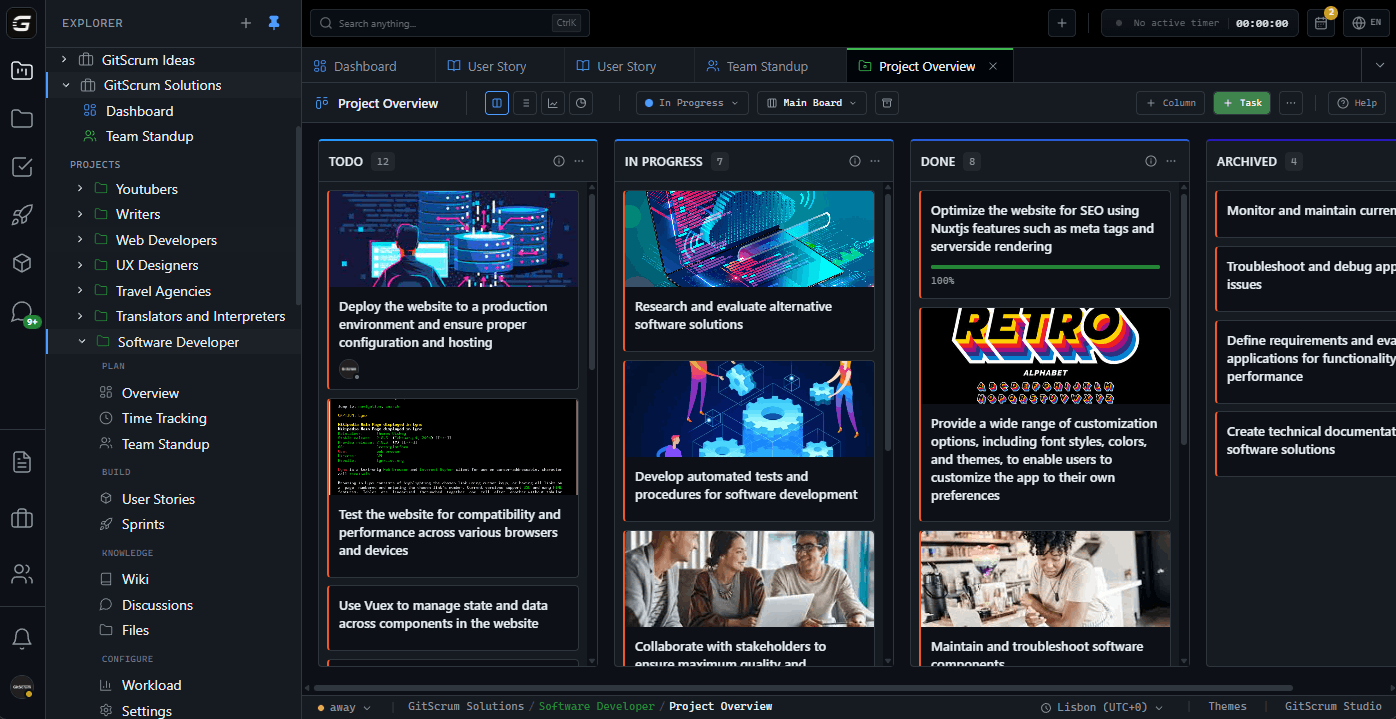
Code and tasks unified. The IDE Inspiration Where developers are productive: - VSCode, IntelliJ, Vim - Dark interface - Keyboard shortcuts - Fast response - Information dense - No friction Where PM tools fail: - Light interfaces - Mouse-heavy - Slow loading - Sparse layouts - Modal hell - Click click click GitScrum: - Dark mode native - Keyboard-first (Cmd+K, J/K, single keys) - Fast interface - Dense information - Minimal modals - IDE-inspired feel Feels like your editor, not your enemy.
Code-Aware Task Structure Generic task: - Title - Description - Assignee - Due date Coding task: - Title - Description with code context - Linked branch(es) - Related commits - PR status - Deployment state - Test results (if integrated) GitScrum understands: - Code lives somewhere - That somewhere is Git - Tasks should connect there Branch-to-Task Workflow Create task: 'Add user authentication' Task ID: GS-123 In terminal: git checkout -b gs-123-add-auth GitScrum links: - Branch to task automatically - Branch name contains task ID - All commits on branch linked Develop, commit, push: - Commits visible in task - Progress tracked automatically - No manual updates needed Create PR: - PR linked to task - Review status visible - Approvals tracked Merge: - Task auto-updates status - History preserved - Done means deployed Code Context Preservation 6 months later: 'Why does auth work this way?' Without GitScrum: - Search Git history - Read commit messages - Maybe find Slack discussion - Piece together context - Still uncertain With GitScrum: - Find task GS-123 - See original requirements - Read discussion/decisions - View all commits - See PR review comments - Full context in one place Documentation for future developers. Multiple Repositories Modern projects: - Frontend repo - Backend repo - Infrastructure repo - Mobile repo - Shared libraries Generic PM tools: - One repo?
Good luck. GitScrum: - Connect multiple repos - Tasks can span repos - Unified view - Cross-repo dependencies visible Real-world architecture supported.
Code Review Integration Task: 'Refactor payment module' Branch: gs-456-refactor-payment PR created: - Appears in task - Reviewers assigned - Status: Awaiting review Review happens: - Comments visible - Requested changes tracked - Approvals logged Merged: - Task moves to Done - All context preserved - Ready for next task Code review is part of coding. PM tool should understand that.
Technical Debt Tracking Coding reality: - Features ship with shortcuts - 'TODO: refactor later' comments - Performance issues noted - Security improvements needed Tracking debt: - Create tech-debt task type - Link to affected code areas - Track accumulation over time - Prioritize in sprints Debt visible. Debt manageable.
Not lost in code comments. Release Tracking What's in v2.3.0?
- Feature: User dashboard (GS-100) - Feature: Email notifications (GS-115) - Fix: Login timeout (GS-122) - Fix: Data sync issue (GS-130) GitScrum: - Tag tasks with release - Release view shows all work - Know what shipped when - Release notes auto-generated Deployment Awareness Where is GS-123? - Developed (branch exists) - PR merged (in main) - Staging (deployed there) - Production (live) Deployment tracking: - See where code lives - Know what's deployed - Track rollout progress Not just 'Done' - actually shipped.
Developer-Focused Features Built for how coders work: Keyboard shortcuts: - Cmd+K: Everything - J/K: Navigate - E: Edit - M: Move - C: Comment Dark mode: Default, not option Speed: 2-second interactions Minimal fields: Title + description enough Git integration: First-class, not afterthought For Coding Teams Small team (2-5): - Free for 2 users - All features included - Git integration - Perfect for startups Medium team (5-20): - $8.90/user/month - Scales with you - No enterprise complexity Larger teams: - Same simple pricing - Same features - Permissions when needed Pricing for coders, not corporations. Why Coding Teams Choose GitScrum Built by developers: - We write code daily - We hated existing tools - We built what we needed Code-native: - Git integration deep - IDE-inspired interface - Developer workflow first Simple but powerful: - No bloat - No ceremony - Everything you need - Nothing you don't Free to start: - 2 users FREE forever - All features - No credit card - No trial limits $8.90/user/month to grow.
Track code, not bureaucracy.
The GitScrum Advantage
One unified platform to eliminate context switching and recover productive hours.