Deep work, as defined by Cal Newport, is professional activity performed in a state of distraction-free concentration that pushes cognitive capabilities to their limit.
For developers, deep work is when the most valuable and creative programming happens: designing elegant architectures, solving complex algorithmic problems, debugging subtle issues, and writing clean, maintainable code. Cognitive residue directly undermines the ability to enter deep work state.
When a developer carries mental fragments from a Slack conversation they did not fully resolve, a Jira ticket they glanced at, or a meeting that just ended, these residues occupy working memory and prevent full engagement with the current task. The brain cannot commit 100% of its resources to the programming challenge at hand because part of it is still processing the incomplete items.
In fragmented tool environments, cognitive residue accumulates constantly. Each tool switch, each notification glance, each incomplete interaction adds another fragment to the mental backlog.
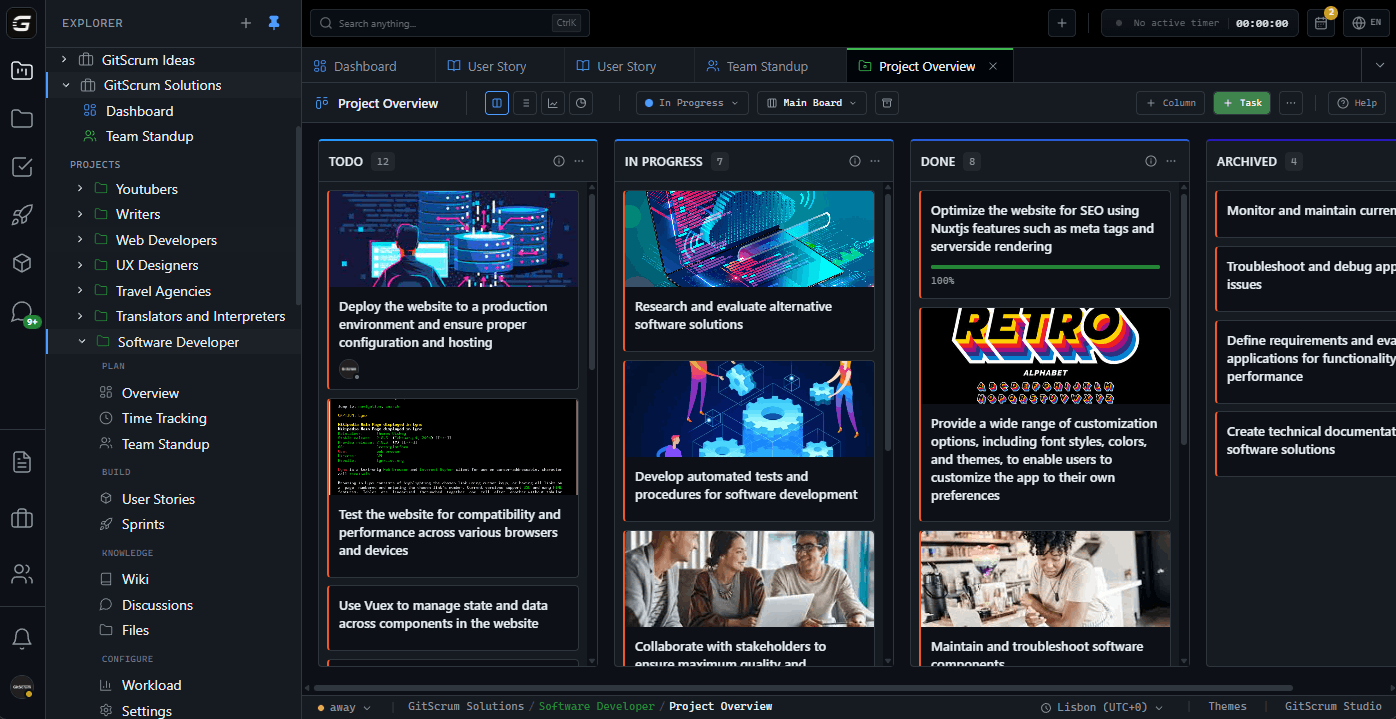
By mid-morning, many developers carry so much residue that achieving deep work becomes nearly impossible. GitScrum reduces cognitive residue by consolidating interactions into complete, contextualized workflows.
When discussions, tasks, and updates happen in one place with clear resolution states, fewer mental loops remain open. Notification batching ensures developers can complete current work before encountering new inputs.
The result: clearer pathways into deep work state.
The GitScrum Advantage
One unified platform to eliminate context switching and recover productive hours.