VS Code

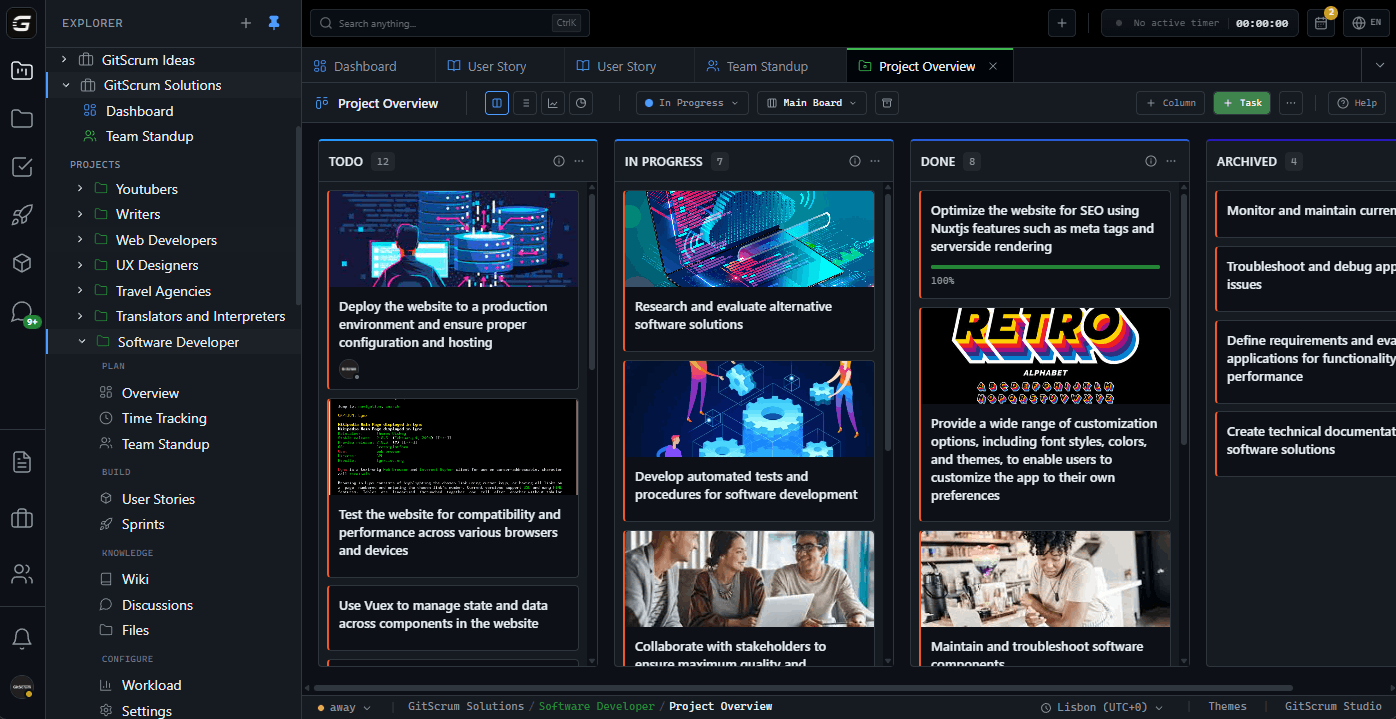
GitScrum for VS Code, Google Antigravity, Cursor and Windsurf!

GitScrum logo
Solution

Dev Code Quality Sentiment 2026 | Toxic Code Map

Devs know which code causes pain before metrics show it. Labels like 'painful' or 'legacy-nightmare' build a map of toxic areas. Fix before burnout. Free trial.

Dev Code Quality Sentiment 2026 | Toxic Code Map

Developers know which code areas cause pain long before metrics show problems.

GitScrum captures this institutional knowledge: labels like 'painful', 'frustrating', or 'needs-love' let developers tag problematic areas, building a map of code quality sentiment. Standup blockers document recurring friction—when the same module keeps blocking progress, it surfaces patterns that warrant refactoring investment.

Task comments create a permanent record of developer frustrations and suggestions, preserving context for prioritization decisions. The ProfileMetrics disengagement score tracks whether certain project areas correlate with decreased activity, potentially indicating code quality issues driving developers away from maintenance work.

This qualitative data complements quantitative metrics to identify truly toxic code areas.

The GitScrum Advantage

One unified platform to eliminate context switching and recover productive hours.

01

problem.identify()

The Problem

Teams lack visibility into bottlenecks and delays

Manual coordination wastes time and creates errors

No unified view of work across teams and stages

Blockers remain hidden until they cause major delays

Metrics and reporting require manual data gathering

02

solution.implement()

The Solution

Automated workflows eliminate manual coordination overhead

Real-time dashboards provide instant visibility into work status

Unified boards show all work across teams in one place

Blocker tracking surfaces hidden delays before they escalate

Built-in metrics provide automatic reporting without manual effort

03

How It Works

1

Sentiment Labels

Create labels like 'painful', 'frustrating', 'legacy-nightmare' for developers to tag problematic code areas

2

Standup Blockers

Blocker patterns in standups reveal recurring friction points—modules that repeatedly block progress need attention

3

Comment Discussions

Task comments capture developer frustrations and suggestions, preserving qualitative feedback for decision making

4

Engagement Tracking

Monitor disengagement scores to see if certain project areas correlate with decreased developer activity

04

Why GitScrum

GitScrum addresses Developer Sentiment Toward Code Quality Areas through Kanban boards with WIP limits, sprint planning, and workflow visualization

Problem resolution based on Kanban Method (David Anderson) for flow optimization and Scrum Guide (Schwaber and Sutherland) for iterative improvement

Capabilities

  • Kanban boards with WIP limits to prevent overload
  • Sprint planning with burndown charts for predictable delivery
  • Workload views for capacity management
  • Wiki for process documentation
  • Discussions for async collaboration
  • Reports for bottleneck identification

Industry Practices

Kanban MethodScrum FrameworkFlow OptimizationContinuous Improvement

Frequently Asked Questions

Still have questions? Contact us at customer.service@gitscrum.com

How does GitScrum help with developer sentiment toward code quality areas?

GitScrum provides integrated tools including labels, standups, discussions, dashboards, tasks that work together to address this challenge. The unified platform eliminates the need for multiple disconnected tools and manual coordination.

How quickly can teams see results?

Most teams see immediate improvements in visibility and coordination within the first sprint. Quantifiable productivity gains typically appear within 2-4 weeks as teams adapt to the streamlined workflows.

Ready to solve this?

Start free, no credit card required. Cancel anytime.

Works with your favorite tools

Connect GitScrum with the tools your team already uses. Native integrations with Git providers and communication platforms.

GitHubGitHub
GitLabGitLab
BitbucketBitbucket
SlackSlack
Microsoft TeamsTeams
DiscordDiscord
ZapierZapier
PabblyPabbly

Connect with 3,000+ apps via Zapier & Pabbly