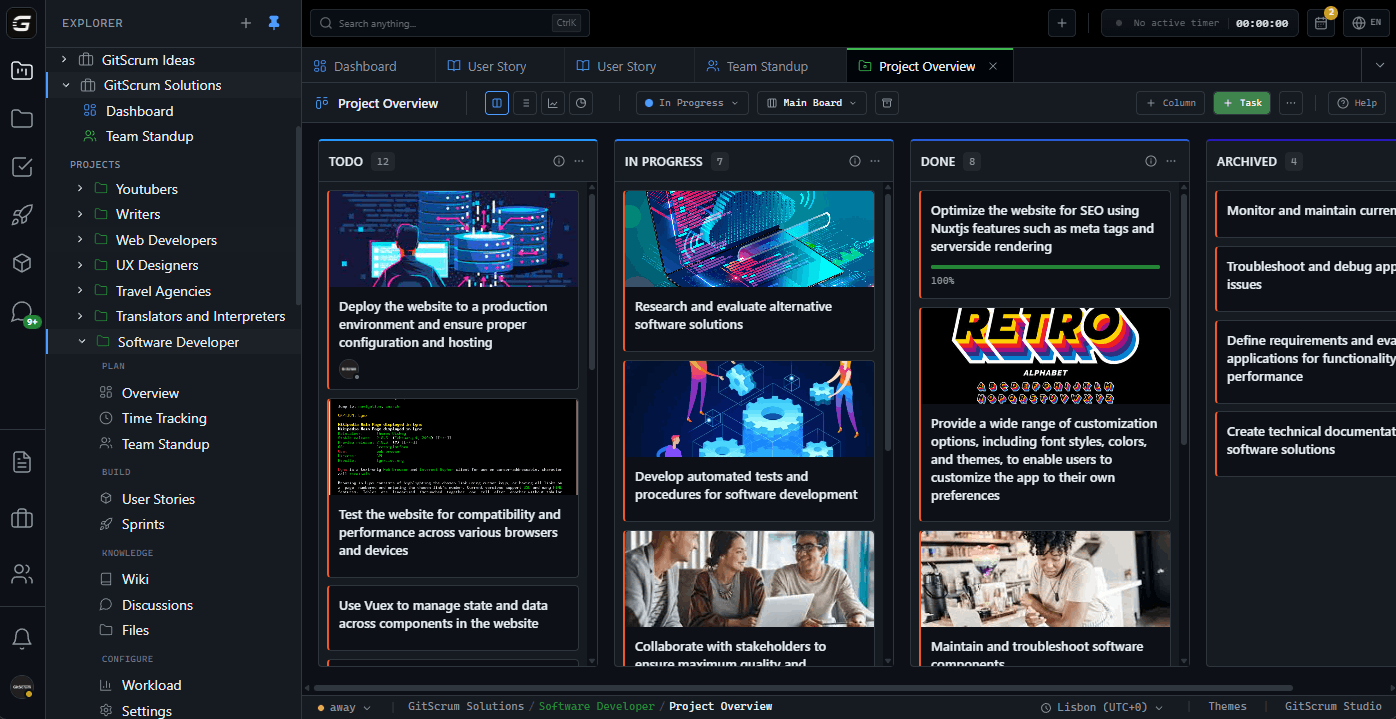
The Great PM Migration Something happened in 2024-2025.
Teams stopped accepting: - Jira's complexity tax - Monday's pricing inflation - Asana's feature bloat - Generic tools for specific needs The exodus is real: 'We spent 3 months trying to optimize Jira. Then switched to a simpler tool in 1 day.
Why didn't we do this years ago?' - Engineering Manager, 25-person team 'Monday.com was perfect until they changed pricing. Our bill went from $400 to $700/month.
No new features. Just pricing updates.' - CTO, 40-person startup 'We needed GitHub integration that actually works.
Most tools just webhook notifications. Found tools that make Git central, not peripheral.' - Tech Lead, remote team What's Growing (And Why) Fastest growing PM categories: 1.
Developer-specific tools - Built for code teams, not generic - GitHub/GitLab native integration - Dark mode, keyboard shortcuts - No legacy enterprise baggage 2. Async-first platforms - Remote teams need different features - Less meeting coordination - Better notification control - Timezone-aware design 3.
Fair-pricing alternatives - Predictable costs - Generous free tiers - No 'contact sales' gatekeeping - Features included, not upsold Growth Drivers Why teams switch NOW: 1. Post-pandemic workflow clarity - Teams know what they actually need - Remote work patterns established - Tool bloat became obvious - Budget scrutiny increased 2.
Developer tool convergence - GitHub became the center - Everything integrates with Git - PM tools need to be Git-native - Manual sync is unacceptable 3. SaaS pricing backlash - Per-seat pricing fatigue - 'Enterprise' tier resentment - Hidden cost discovery - Budget predictability demand 4.
Complexity rejection - Jira admin burnout - Onboarding friction - Feature overload paralysis - 'Simple' became premium Fastest Growing Tools - Analysis 1. Linear Growth: Very high Why: Beautiful, fast, dev-focused Weakness: No free tier, limited features 2.
Height Growth: High Why: AI features, modern UX Weakness: Newer, less proven 3. Plane Growth: High (open source) Why: Self-hosted option, free Weakness: Requires infrastructure 4.
GitScrum Growth: High Why: GitHub-native, time tracking, pricing Strength: Complete feature set at fair price 5. Shortcut (formerly Clubhouse) Growth: Moderate Why: Good balance, API-first Weakness: Less integrated Why Teams Choose GitScrum GitScrum growth factors: 1.
GitHub Integration Depth Not just 'connected' - actually integrated: - Commits auto-link to tasks - PRs update task status automatically - Branch names from task IDs - Repository dashboard in PM tool - No manual status updates needed Other 'integrated' tools: Webhook notifications. GitScrum: Your Git activity IS your project status.
2. Time Tracking Included Unique among growing tools: Tool Time tracking Cost ---- ------------- ---- Linear No - Height No - Plane Basic Free Shortcut No - GitScrum Full Included Agencies and consultancies need time tracking.
GitScrum: No extra tool, no extra cost. 3.
Pricing Transparency GitScrum pricing: Users Cost Features ----- ---- -------- 2 FREE forever All 5 $26.70/mo All 10 $71.20/mo All 25 $204.70/mo All No 'Standard' vs 'Premium' vs 'Enterprise'. No 'Contact us for pricing'.
No per-feature pricing. 4.
Complete Feature Set Why teams don't need multiple tools: Need GitScrum ---- -------- Sprint planning Yes Kanban boards Yes Time tracking Yes GitHub integration Yes, deep Wiki/docs Yes Client portals Yes Discussions Yes Mobile app Yes GitScrum alone vs GitScrum + Notion + Toggl + separate client tool. Migration Patterns Where teams come from: From Jira (40% of migrations): - Reason: Complexity, admin burden - Timeline: Often 2-3 year Jira stint - Trigger: New project or team frustration - Result: Same day productivity From Monday.com (25% of migrations): - Reason: Pricing increases, dev mismatch - Timeline: 1-2 years on Monday - Trigger: Price hike or team scaling - Result: 50%+ cost savings From Asana (20% of migrations): - Reason: Git integration lacking - Timeline: Variable - Trigger: Development team needs - Result: Better git workflow From Spreadsheets (15% of migrations): - Reason: Finally ready to professionalize - Timeline: Often startup growing up - Trigger: Team size increase - Result: Immediate structure Migration Ease How fast can you switch?
From Jira: 1. Export issues as CSV 2.
Import to GitScrum (5 minutes) 3. Connect GitHub repositories 4.
Configure boards 5. Working same day No 3-month migration project.
No consultant fees. No training bootcamp.
From Monday/Asana: 1. Export project structure 2.
Import to GitScrum 3. Set up integrations 4.
Done From spreadsheets: 1. Create project 2.
Add tasks (import or manual) 3. Invite team 4.
Never look back Real Migration Stories Story 1: Startup (12 developers) Before: Jira + Confluence + Trello Pain: 3 tools, no integration, complex setup After: GitScrum alone Result: One tool, 60% time savings on admin Cost change: $500/mo to $89/mo Story 2: Agency (8 developers, multiple clients) Before: Monday.com + Toggl Pain: Time tracking separate, expensive After: GitScrum Result: Unified billing, client portals Cost change: $300/mo to $53/mo Story 3: Remote team (20 developers) Before: Asana + GitHub Projects Pain: No real integration between tools After: GitScrum Result: Git is project management Cost change: $450/mo to $160/mo Growth Trajectory What's accelerating GitScrum growth: 1. Word of mouth - Developer communities sharing - 'What do you use?' discussions - Reddit, HackerNews mentions 2.
Jira migration wave - Atlassian price increases - Cloud-only transition friction - Teams ready for change 3. Remote work permanence - Async tools becoming standard - GitHub-centric workflows - Cost optimization pressure 4.
Feature completeness - No need for tool stack - One solution vs three - Simplified vendor management Why Not Other Growing Tools? Linear: - Beautiful, fast, developer-loved - But: No time tracking - But: No free tier for teams - But: Less complete feature set - Best for: Pure software teams, budget available Plane: - Open source, self-hosted option - But: Requires infrastructure management - But: Less polished - But: Feature gaps - Best for: Teams wanting self-hosted Height: - Modern, AI features - But: Newer, less proven - But: Limited integrations - But: Pricing can escalate - Best for: Teams betting on AI PM future Shortcut: - Good API, developer friendly - But: Less integrated overall - But: No time tracking - But: Smaller ecosystem - Best for: API-first teams GitScrum: - GitHub-native, complete, affordable - Time tracking included - Client portals for agencies - 2 users free forever - Best for: Development teams wanting complete solution 2025 Growth Prediction Trends favoring GitScrum: 1.
GitHub ecosystem dominance - More teams GitHub-centric - Integration depth matters more - Native tools win over connectors 2. Pricing pressure continues - Budgets not expanding - Per-user costs scrutinized - 'Free tier' importance growing 3.
Tool consolidation - Teams want fewer tools - All-in-one beating best-of-breed - Vendor fatigue real 4. Developer experience priority - Slow tools rejected - Complex tools rejected - Developer happiness matters Join the Growth Why teams switching to GitScrum: - GitHub integration that actually works - Time tracking without extra tool - Pricing that makes sense - Features without complexity GitScrum: Where development teams are moving.
2 users free. $8.90/user/month.
Join the fastest growing alternative.
The GitScrum Advantage
One unified platform to eliminate context switching and recover productive hours.