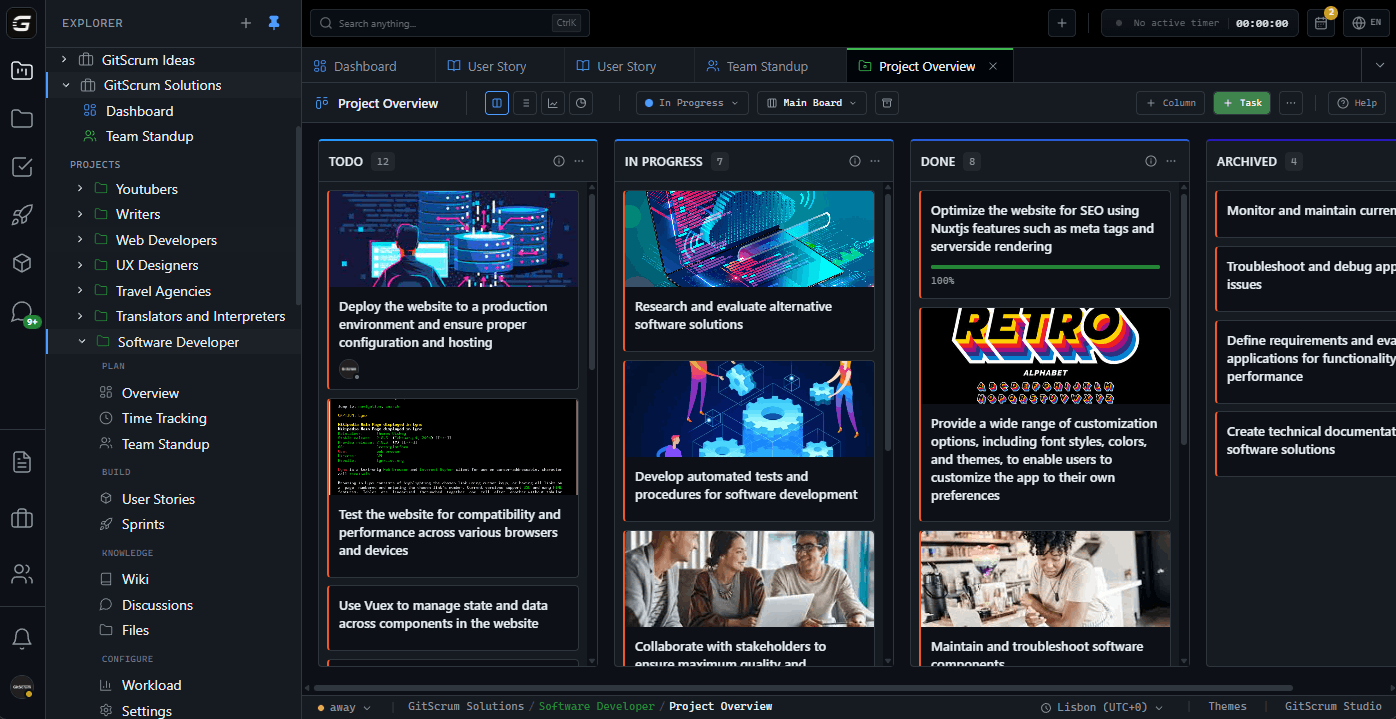
Approval delays seem minor individually but compound into massive productivity losses.
A developer blocked waiting for stakeholder approval doesn't just lose that time—they context switch to other work, then must context switch back when approval arrives. The true cost includes the original wait time, the context switch overhead, and the ramp-up time to resume work.
Without quantification, this hidden cost never gets addressed. GitScrum enables approval delay cost measurement through converging metrics.
Time tracking captures effort invested in tasks before they hit approval bottlenecks—showing how much developer time is held hostage by pending approvals. Blocker duration tracking shows exactly how many hours tasks spend blocked with duration badges ('26h blocked') visible in standups.
The daysblocked metric accumulated across all blocked tasks reveals total approval wait time per sprint. Velocity analysis compares sprints with high versus low approval delays, correlating approval bottlenecks with delivery outcomes.
The pending approvals dashboard aggregates total value locked in approval queues—proposals, change requests, and invoices awaiting action. Export data enables calculation of average approval wait time multiplied by developer hourly rate for business case construction.
Sprint retrospective data documents approval-related blockers sprint over sprint, tracking whether the problem improves. The recommendation engine flags when approval-blocked tasks exceed thresholds, creating visibility before costs accumulate.
The GitScrum Advantage
One unified platform to eliminate context switching and recover productive hours.