The OSS Coordination Problem Typical OSS project chaos: ├─ 500+ open issues (unorganized) ├─ Contributors ask 'what should I work on?
Why GitHub Projects Falls Short GitHub Projects limitations: ├─ Board-only (limited views) ├─ No velocity tracking ├─ Poor cross-repo coordination ├─ Limited automation ├─ Contributor can't see big picture ├─ Maintainer stuck in triage mode Result: Another tool to maintain, not a solution. What OSS Projects Need 1.
Issue organization (not just labels) 2. Roadmap visibility (releases, milestones) 3.
Contributor guidance ('good first issues') 4. PR-to-issue linking (automatic) 5.
Release planning (what's in v2.3?) 6. Cross-repo view (monorepo or multi-repo) 7.
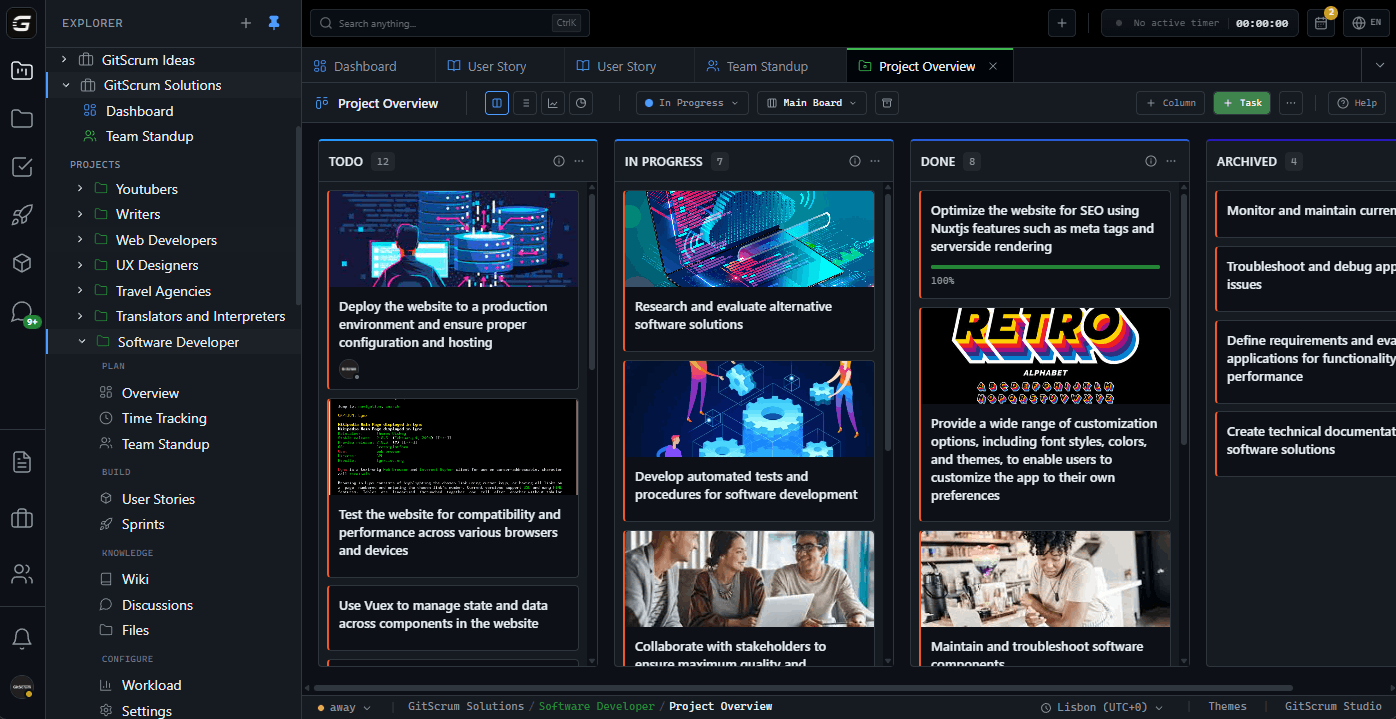
Maintainer sanity (reduced triage burden) GitScrum for OSS Git-native coordination: ├─ Syncs with GitHub Issues ├─ Issues stay in GitHub (contributor familiarity) ├─ Board view for organization ├─ Roadmap for planning ├─ Velocity for release prediction ├─ Free for 2 maintainers Contributors work in GitHub. Maintainers coordinate in GitScrum.
Contributor Experience Contributors see: ├─ Clear 'help wanted' issues ├─ 'Good first issue' tagged ├─ What's planned for next release ├─ What's being worked on (avoid duplicates) ├─ PR guidelines in wiki ├─ Roadmap transparency Contributors work in GitHub: ├─ Fork, branch, PR ├─ Standard OSS workflow ├─ No new tool to learn ├─ Issue auto-closes with PR merge Maintainer Experience Maintainers see: ├─ Organized issue board ├─ Priority visibility ├─ What's blocked/waiting ├─ Release scope at glance ├─ Contributor activity ├─ Velocity trends Reduced triage: ├─ Bulk organize issues ├─ Drag-drop prioritization ├─ Release assignment easy ├─ Less time in GitHub issue list ├─ More time reviewing PRs Release Planning OSS release workflow: ├─ v2.3 planned features ├─ What's merged for v2.3 ├─ What's still in progress ├─ What slipped to v2.4 ├─ Changelog generation GitScrum approach: ├─ Sprint = Release version ├─ Issues assigned to sprint ├─ Done = merged to release branch ├─ Filter: 'What's in v2.3?' ├─ Release notes from task list Clear release scope. No 'what went into this release?' confusion.
Good First Issues Pipeline New contributor funnel: ├─ 'Good first issue' label in GitHub ├─ Syncs to GitScrum board ├─ Maintainer ensures quality of GFIs ├─ Contributor picks from list ├─ PR links to issue automatically ├─ Issue closes on merge Result: ├─ Contributor knows where to start ├─ Maintainer curates GFI queue ├─ Less 'what can I work on?' questions ├─ Better contributor retention Cross-Repository Coordination Many OSS projects: ├─ Core library repo ├─ CLI tool repo ├─ Documentation repo ├─ Website repo ├─ Plugin repos GitScrum supports: ├─ Multiple repos, one board ├─ Cross-repo dependencies visible ├─ Release coordination across repos ├─ One place to see everything 'v2.3 needs updates in core AND docs' visible in one view. Async-First Coordination OSS reality: ├─ Contributors across timezones ├─ Maintainers with day jobs ├─ No daily standups ├─ Async communication essential GitScrum async: ├─ Board is the standup ├─ Comments on tasks (not Slack) ├─ Wiki for documentation ├─ No real-time requirements ├─ Check in when you can Sponsor/Funding Visibility OSS sustainability: ├─ Sponsors want to see roadmap ├─ 'What are we funding?' ├─ Progress visibility builds trust ├─ Companies evaluate project health GitScrum provides: ├─ Public roadmap option ├─ Milestone progress visible ├─ Activity demonstrates momentum ├─ Professional project appearance Sponsors can see where funds go.
Maintainer Burnout Prevention Burnout causes: ├─ Endless issue triage ├─ No help visible ├─ Contributors don't know how to help ├─ Same questions repeated ├─ Release stress GitScrum helps: ├─ Organized issues = less triage ├─ Clear GFIs = more help ├─ Wiki = less repeated questions ├─ Release planning = less stress ├─ Delegation visible Share the load. Prevent burnout.
Pricing for OSS Solo maintainer: $0 (free) 2 maintainers: $0 (free) 3 core team: $8.90/month 5 core team: $26.70/month 10 core team: $71.20/month Most OSS projects: Free (2 maintainers handles most projects) $8.90/user/month for larger teams. 2 users free forever.
Compared to Alternatives GitHub Projects: ├─ Free ├─ Limited features ├─ Board only ├─ No velocity ├─ Poor coordination Linear (OSS discount): ├─ Doesn't sync with GitHub Issues ├─ Contributors must use Linear ├─ Breaks OSS workflow Jira: ├─ Way too heavy ├─ No GitHub sync ├─ Kills OSS velocity ├─ Enterprise overhead GitScrum: ├─ GitHub sync ├─ Contributors stay in GitHub ├─ Maintainers get coordination ├─ Free for 2 users ├─ Scales if needed Best of both worlds. Migration Path Current state: ├─ 500+ GitHub Issues ├─ Some labels, mostly chaos ├─ Release planning in head Migration: ├─ Connect GitHub repo (5 minutes) ├─ Issues sync automatically ├─ Organize on board ├─ Create release milestones ├─ Contributors still use GitHub No disruption to contributors.
Maintainer gains organization. Real OSS Experience 'We had 800 open issues and no way to prioritize.
Contributors kept asking what to work on. GitHub Projects didn't scale.
Linear required everyone to use Linear. GitScrum syncs with GitHub so contributors never change workflow, but we finally have organization.
The 2 free users meant we could try it without budget approval.' - OSS Project Maintainer Daily Workflow Maintainer morning: ├─ Check board: anything blocked? ├─ Review new issues (bulk organize) ├─ Check PRs needing review ├─ Update release scope if needed ├─ 15 minutes, back to coding Weekly: ├─ Release planning check ├─ GFI queue refresh ├─ Roadmap update if needed ├─ Velocity review Monthly: ├─ Release retrospective ├─ Contributor thank-yous ├─ Roadmap communication Documentation in Wiki OSS documentation needs: ├─ Contributing guidelines ├─ Architecture overview ├─ Development setup ├─ Release process ├─ Governance GitScrum wiki: ├─ Markdown-based ├─ Searchable ├─ Version history ├─ Links from tasks ├─ One place for project docs Less 'how do I contribute?' questions.
Start Free Today 1. Sign up (30 seconds) 2.
Connect GitHub repo 3. Issues sync automatically 4.
Organize your OSS project 2 maintainers free forever. Coordinate without overhead.
The GitScrum Advantage
One unified platform to eliminate context switching and recover productive hours.