The Mobile Development Complexity Mobile teams juggle unique challenges: 1.
Two platforms, one product - iOS and Android feature parity - Platform-specific bugs - Different release timelines - Shared and separate code 2. App store gatekeeping - Review delays (1-7 days) - Rejection handling - Guidelines changes - Emergency hotfix limitations 3.
Version fragmentation - Multiple iOS versions in production - Android device variety - API level support - Backwards compatibility 4. Release coordination - Backend API changes - Feature flags - Staged rollouts - Version forcing Generic PM tools treat mobile like web.
It's not. The Platform Parity Problem Your users expect feature parity.
Your reality: Feature: Push notification improvements iOS status: In Review (submitted 3 days ago) Android status: Released 2 days ago iOS blocker: Apple rejection - privacy description needed Android issue: Samsung devices showing double notifications Backend: API ready, waiting for both clients Marketing: 'When can we announce this?' Two platforms = two timelines = coordination nightmare. Traditional PM shows one ticket: 'Push notification improvements - In Progress' No platform visibility.
No submission tracking. No coordination.
The App Store Submission Reality App store releases aren't like web deploys: Release 2.5.0 Submission Timeline: Day 1: iOS submitted to App Store Day 2: Android submitted to Play Store Day 3: Android approved, holding for iOS Day 4: iOS 'In Review' Day 5: iOS rejected - screenshot outdated Day 6: iOS resubmitted with new screenshot Day 7: iOS 'In Review' again Day 8: iOS approved Day 9: Coordinated release triggered Total time: 9 days for what would be 1 day on web. Your PM tool needs to understand this reality.
The Hotfix Limitation Production bug on web: Deploy fix in minutes. Production bug on mobile: 1.
Fix code 2. Build new version 3.
Submit to stores 4. Wait 1-7 days for review 5.
Users need to update Critical bug? Apple expedited review takes 24-48 hours.
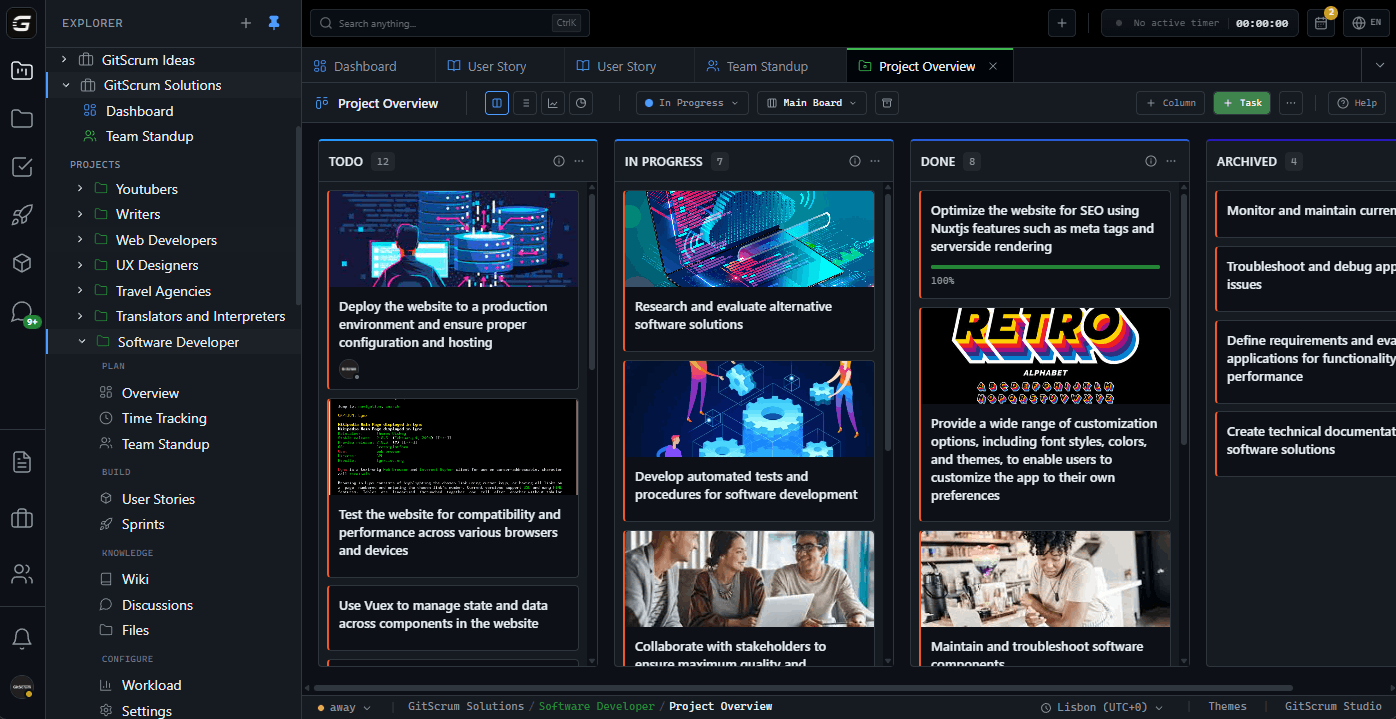
Still not 'minutes.' You need to track: - Hotfix submission status - Which versions are affected - User update rates - Force update decisions GitScrum: Built for Mobile Teams GitScrum understands mobile development: 1. Platform-Aware Tracking - iOS and Android columns/statuses - Platform-specific tasks under features - Parity tracking dashboard - Cross-platform bug visibility 2.
Release Train Management - Multi-platform release coordination - App store submission tracking - Review status visibility - Rejection handling workflow 3. Version Management - Track what's in each version - Minimum version requirements - Update rate monitoring - Feature flag coordination 4.
Backend Coordination - API dependency tracking - Backend ready vs client ready - Feature flag states - Staged rollout coordination Platform Parity Dashboard See iOS vs Android at a glance: Feature Parity Status: Feature iOS Android Notes ------- --- ------- ----- Dark mode Released Released Parity Biometric login Released Released Parity Widget support Released In Dev Android Q4 Push improvements In Review Released Waiting iOS Offline mode In Dev In Dev Sprint 45 Parity Score: 85% Android ahead: 2 features iOS ahead: 0 features Know where you stand across platforms. Release Train View Coordinate multi-platform releases: Release 2.6.0 Train: Scheduled release: Dec 15 iOS Track: Build: 2.6.0 (234) Status: Submitted Dec 10 Review: In Progress Estimated approval: Dec 12-14 Android Track: Build: 2.6.0 (567) Status: Approved Dec 11 Holding: Waiting for iOS Staged rollout ready: Yes Backend Track: API version: 2.6.0 Status: Deployed to production Feature flags: Ready Marketing: Press release: Drafted Trigger: On coordinated release Coordination Status: Waiting iOS review One view for entire release coordination.
App Store Submission Tracking Track submissions like tasks: App Store Submissions: iOS Submissions: 2.6.0 (234) - In Review Submitted: Dec 10, 2:30 PM Last update: Dec 11, 9:00 AM Reviewer notes: None yet Expected: Dec 12-14 2.5.1 (230) - Rejected Dec 5 Reason: Guideline 4.2 - Minimum functionality Resolution: Story 456 - Add onboarding Resubmit: 2.5.2 Android Submissions: 2.6.0 (567) - Approved Dec 11 Review time: 4 hours Staged rollout: 10% started Crash rate: 0.1% (acceptable) Full rollout: Pending iOS Submission history and current status visible. Platform-Specific Bug Tracking Mobile bugs often affect one platform: Bug 789: Crash on launch Platforms affected: iOS: Not affected Android: Affected (Samsung only) Device specifics: Samsung Galaxy S21, S22, S23 Android 13+ Repro rate: 5% of Samsung users Crash-free rate impact: 99.9% -> 99.4% Root cause: Samsung One UI animation conflict Fix: Story 790: Disable animation on Samsung Status: In development Target: Hotfix 2.5.2 Tracking: Submitted to Play Store: Pending User impact: 12,000 users affected Platform and device-level bug tracking.
Backend-Client Coordination Mobile features often need backend changes: Feature: New payment methods Backend: API endpoint: /v2/payments/methods Status: Deployed to staging Production deploy: Dec 10 iOS: Depends on: Backend production Status: Ready for testing App Store submit: After backend deploy Android: Depends on: Backend production Status: In development Blocker: Waiting for API documentation Feature flag: Name: newpaymentmethods Status: OFF in production Enable after: Both clients released Dependency tracking across stack. Version Support Matrix Track what versions support what: Version Support Matrix: Feature Min iOS Min Android API Version ------- ------- ----------- ----------- Core app 14.0 API 26 v1 Biometric 14.0 API 28 v1 Widget 16.0 API 31 v2 New payments 15.0 API 29 v2.1 User distribution: iOS 17+: 65% iOS 16: 25% iOS 15: 8% iOS 14: 2% Android 14+: 40% Android 13: 35% Android 12: 20% Android 11-: 5% Minimum version recommendations: Consider dropping iOS 14 (2% users) Consider dropping API 26 (3% users) Version planning with data.
Staged Rollout Management Mobile releases need careful rollout: Release 2.6.0 Rollout: Android (Play Store): Day 1: 5% rollout Crash rate: 0.2% (above baseline) ANR rate: 0.1% (normal) Decision: Investigate crashes Day 2: Holding at 5% Crash investigation: Memory leak found Hotfix: 2.6.1 in development Day 3: 2.6.1 submitted Day 4: 2.6.1 approved, restart rollout 5% rollout resumed Crash rate: 0.05% (excellent) Day 5: 25% rollout Day 7: 100% rollout iOS (App Store): Phased release: 7-day automatic Day 1: 1% Day 2: 2% ... Pause available: Yes Rollout tracking with quality gates.
Crash Tracking Integration Connect crashes to tasks: Crash Dashboard: Top Crashes This Week: 1: NullPointerException - HomeFragment Occurrences: 2,340 Affected users: 1,200 First seen: v2.5.0 Linked story: 567 (In Progress) 2: EXCBADACCESS - PaymentVC Occurrences: 890 Affected users: 445 First seen: v2.4.0 Linked story: 568 (Ready for QA) 3: ANR - SyncService Occurrences: 567 Affected users: 300 First seen: v2.3.0 Linked story: None (Create?) Crash-free rate: 99.2% (target: 99.5%) Crashes linked to work items automatically. Feature Flag Coordination Mobile feature flags are complex: Feature Flag: darkmodev2 Platform status: iOS: Implemented in 2.5.0 Android: Implemented in 2.5.0 Backend: Not required Rollout status: iOS production: 25% of users Android production: 50% of users Monitoring: iOS crash rate with flag: 0.1% iOS crash rate without flag: 0.1% Android crash rate with flag: 0.3% (investigating) Android crash rate without flag: 0.1% Decision: Hold Android at 50% until crash investigated Linked story: 789 - Investigate dark mode crashes Next milestone: 100% rollout after stability Feature flags tracked with platform awareness.
QA Test Matrix Mobile QA is complex: QA Test Matrix - Release 2.6.0: Test Devices: iOS Android Phone (small) iPhone SE Pixel 7a Phone (regular) iPhone 14 Galaxy S23 Phone (large) iPhone 15 Pro Pixel 8 Pro Tablet iPad Pro 11" Galaxy Tab S8 Test Coverage: Feature iSE i14 i15 P7a S23 P8P iPad Tab ------- --- --- --- --- --- --- ---- --- Login flow Pass Pass Pass Pass Pass Pass Pass Pass Dark mode Pass Pass Pass Pass Fail Pass Pass Pass Payment Pass Pass Pass Pass Pass Pass N/A N/A Widget N/A Pass Pass N/A Pass Pass Pass Pass Blocking issues: 1 (Dark mode on S23) Release decision: Fix S23 before release Test matrix tracking per release. Real Scenarios Scenario 1: Urgent Hotfix Critical crash discovered in production.
In GitScrum: 1. Create hotfix branch story 2.
Track iOS expedited review request 3. Track Android production track request 4.
Monitor both submission statuses 5. Coordinate release timing 6.
Track rollout and crash rate 7. Confirm fix across platforms Scenario 2: Major Feature Launch New feature across iOS, Android, and backend.
In GitScrum: 1. Epic with platform-specific stories 2.
Backend story with API specs 3. iOS and Android stories with dependencies 4.
Feature flag story 5. QA stories for each platform 6.
Release train coordination 7. Marketing coordination on release Scenario 3: Platform-Specific Enhancement iOS gets widgets, Android gets different enhancement.
In GitScrum: 1. Separate stories per platform 2.
Track independently 3. No parity requirement flagged 4.
Release separately 5. Update parity dashboard Why Mobile Teams Choose GitScrum Not Jira: - No native mobile release tracking - No platform parity views - No app store submission status - Overkill for mobile teams Not Trello: - Too simple for multi-platform - No version tracking - No release coordination Not Linear: - No mobile-specific features - Limited release management GitScrum: - Platform-aware tracking - Release train management - App store submission tracking - Backend coordination - GitHub integration for both repos - Affordable for mobile teams Pricing for Mobile Teams - 2 users: FREE forever - 3+ users: $8.90/user/month - Multi-platform tracking - Release coordination - GitHub integration - Unlimited projects 4-person mobile team: $17.80/month - iOS dev, Android dev, QA, PM - Full platform tracking - Release management 8-person mobile team: $53.40/month - Full iOS and Android teams - Backend coordination - Advanced analytics Mobile development needs mobile-aware PM.
GitScrum: Project management for mobile apps. 2 users free.
$8.90/user/month. Two platforms.
One tool. Ship mobile.
The GitScrum Advantage
One unified platform to eliminate context switching and recover productive hours.