The Roadmap Delusion Typical roadmap: ├─ Q1: Feature A, Feature B ├─ Q2: Feature C, Feature D ├─ Q3: Feature E, Feature F ├─ Q4: Feature G, Feature H Reality: ├─ Q1: Feature A (half), Feature B (pivoted) ├─ Q2: Still finishing Feature A, urgent bug fixes ├─ Q3: Priorities changed, Feature X added ├─ Q4: 'Why doesn't the roadmap match?
Detailed. Tracked daily.
├─ NEXT (Next Sprint) │ └─ Likely. Groomed.
Subject to change. ├─ LATER (Future) │ └─ Themes.
Not dates. Not commitments.
Confidence decreases with distance: ├─ NOW: 90% confidence ├─ NEXT: 60% confidence ├─ LATER: 30% confidence Honest with stakeholders. Themes Over Features Long-term planning: ├─ Q1 Theme: 'Improve onboarding' │ └─ Not: 'Build feature X, Y, Z' │ └─ Allows flexibility on how ├─ Q2 Theme: 'Expand integrations' │ └─ Which integrations?
TBD │ └─ Based on customer feedback ├─ Q3 Theme: 'Performance and scale' │ └─ Specific work defined later Themes provide direction. Features are discovered.
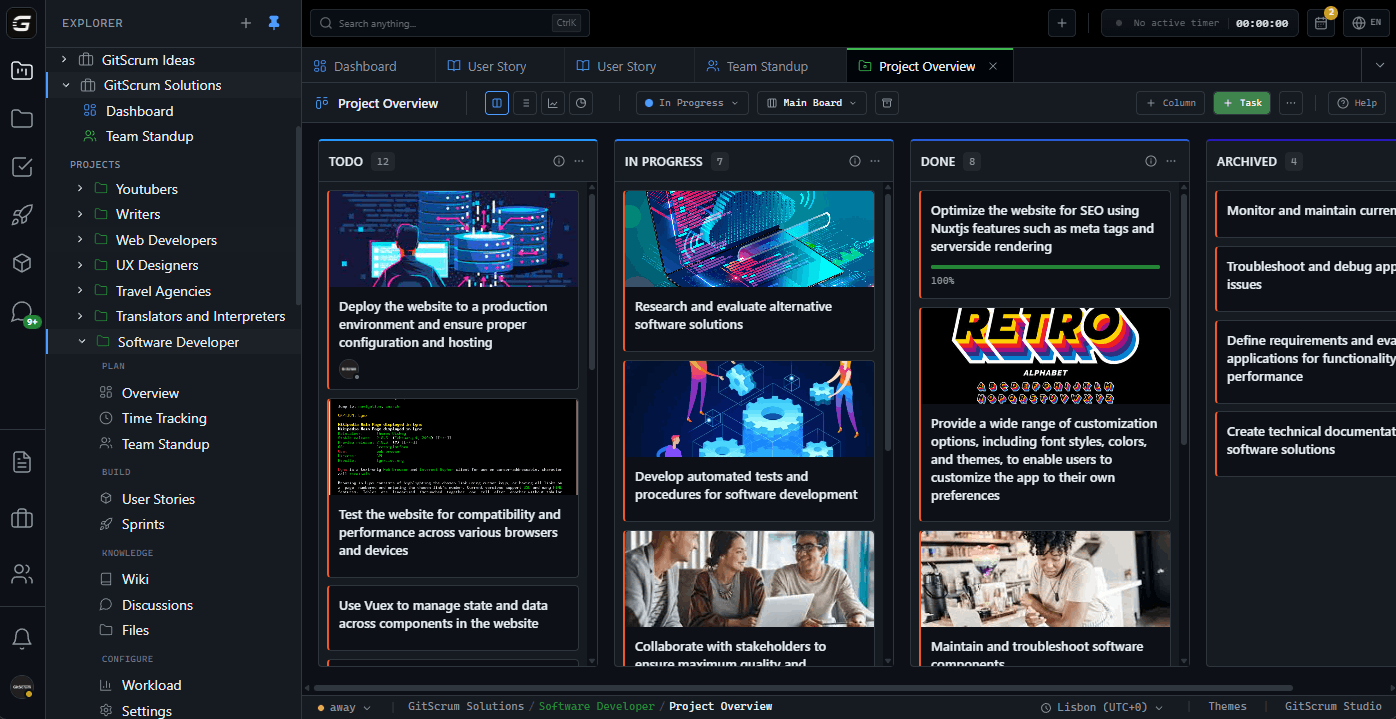
Connecting Roadmap to Reality Spring backlog feeds roadmap: ├─ Sprint 12 Done: │ └─ Onboarding wizard │ └─ Welcome emails │ └─ Sample project template ├─ Q1 Theme: Improve onboarding │ └─ Progress: 40% complete │ └─ Status: On track Automatic progress: ├─ Tasks complete → Theme progresses ├─ No manual updates ├─ Roadmap reflects reality Initiative-Based Roadmap Structure: ├─ Initiative: 'Better Onboarding' │ ├─ Epic: Onboarding Wizard │ │ ├─ Sprint 12: Setup wizard │ │ └─ Sprint 13: Template selection │ ├─ Epic: Welcome Sequence │ │ └─ Sprint 14: Email automation │ └─ Epic: First Success │ └─ Sprint 15: Guided project Rollup: ├─ Task → Epic → Initiative → Theme ├─ See big picture ├─ Drill into details Stakeholder Communication What stakeholders want: ├─ When will X be done? ├─ What's coming?
├─ Is project on track? How to answer honestly: ├─ 'X is planned for Sprint 14, about 4 weeks out' ├─ 'We're working on onboarding improvements' ├─ 'We've completed 60% of planned Q1 work' Not: ├─ 'X will be done March 15th' (false precision) ├─ 'Check the Gantt chart' (nobody understands it) ├─ 'We're on track' (without evidence) Now-Next-Later Board Visual roadmap: ├─ NOW (Sprint) │ ├─ Auth improvements │ ├─ Dashboard v2 │ └─ Payment bug fixes ├─ NEXT (Sprint +1) │ ├─ API v2 │ ├─ Mobile app MVP │ └─ Reporting features ├─ LATER (Quarter) │ ├─ Enterprise features │ ├─ International expansion │ └─ Platform integrations Simple.
Progress Tracking Measure real progress: ├─ Initiative: Better Onboarding │ ├─ Total tasks: 24 │ ├─ Completed: 10 │ ├─ In progress: 3 │ ├─ Progress: 42% │ └─ Velocity: 5 tasks/sprint │ └─ ETA: 3 sprints Data-driven estimates. Not wishful thinking.
Handling Change Roadmap changes are normal: ├─ New market opportunity → Reprioritize ├─ Customer feedback → Add feature ├─ Technical discovery → Adjust scope ├─ Resource change → Adjust timeline How to handle: ├─ Acknowledge change ├─ Explain why ├─ Show new roadmap ├─ Reset expectations Agile means embracing change. Not pretending it won't happen.
Quarterly Planning Instead of: ├─ 'What will we ship in Q2?' ├─ Long list of features ├─ Dates for everything ├─ False precision Try: ├─ 'What themes will we focus on?' ├─ High-level initiatives ├─ Capacity allocation ├─ Flexibility preserved Example: ├─ Q2 Focus: │ └─ 60% New features │ └─ 20% Technical debt │ └─ 20% Customer requests ├─ Top themes: │ └─ Mobile experience │ └─ API expansion Dependency Management Show connections: ├─ API v2 ← Mobile App depends ├─ Auth refactor ← Enterprise features depend ├─ Data pipeline ← Reporting depends Plan accordingly: ├─ Can't start mobile until API done ├─ Enterprise blocked on auth ├─ See bottlenecks early Multiple Teams Roadmap Organization view: ├─ Frontend Team │ ├─ NOW: Dashboard redesign │ └─ NEXT: Mobile web ├─ Backend Team │ ├─ NOW: API v2 │ └─ NEXT: Performance optimization ├─ Platform Team │ ├─ NOW: Auth refactor │ └─ NEXT: Third-party integrations See across teams. Coordinate work.
Public vs Internal Roadmap External (customers): ├─ Themes and directions ├─ No specific dates ├─ 'In the works', 'Planned', 'Exploring' ├─ Expectation management Internal (team): ├─ Sprint-level detail ├─ Task breakdown ├─ Dependencies and blockers ├─ Real progress data Two views, one system. Milestone Planning Key dates that matter: ├─ Milestone: 'Public Launch' │ ├─ Target: End of Q2 │ ├─ Required: Feature A, B, C │ ├─ Status: Feature A done, B in progress │ ├─ Risk: Feature C not started │ └─ Action: Prioritize Feature C Milestones drive urgency.
Features fill milestones. Reviewing Roadmap Health Weekly: ├─ Are we on track?
├─ Any blockers? ├─ Need to adjust?
Monthly: ├─ Theme progress ├─ Velocity trends ├─ Resource allocation Quarterly: ├─ Themes for next quarter ├─ Major initiatives ├─ Stakeholder alignment Roadmap is living document. Review regularly.
Getting Started 1. Sign up GitScrum ($8.90/user, 2 free) 2.
Create initiatives for current quarter 3. Break into epics and tasks 4.
Connect to sprints 5. Track progress automatically 6.
Communicate honestly Roadmaps show direction. Not fake precision.
The GitScrum Advantage
One unified platform to eliminate context switching and recover productive hours.