The Roadmap Reality Problem Product teams maintain roadmaps.
Development teams work in sprints. Code lives in GitHub.
Three separate systems. Three different stories.
The Traditional Roadmap Most roadmaps are built in: - PowerPoint/Google Slides - Confluence pages - Spreadsheets - Dedicated roadmap tools (ProductBoard, Aha!) They look beautiful. They're completely disconnected.
The Disconnect Roadmap says: 'Q1: Launch new dashboard' Jira says: 47 tasks across 3 sprints, 12 blocked GitHub says: 23 open PRs, 8 failing CI Which is the truth? The roadmap shows intent.
The work tracker shows effort. GitHub shows reality.
Nobody knows if Q1 dashboard will actually ship on time without checking all three. The Status Update Dance Every week: 1.
PM checks Jira for task status 2. PM asks dev lead about blockers 3.
PM updates roadmap manually 4. PM creates status report for leadership Time spent: 2-4 hours weekly Accuracy: Already outdated by time it's sent Why Roadmaps Lie Roadmaps lie because they're static while work is dynamic.
'Launch Q1' doesn't change when: - Half the tasks aren't even created yet - 3 engineers left the team - A critical dependency shipped late - Scope changed mid-sprint The roadmap still says Q1 because nobody updated it. Because updating means admitting the plan changed.
Because 'it's just the high-level view.' Until the CEO asks why Q1 slipped. GitScrum: Roadmaps Connected to Reality GitScrum builds roadmaps from actual work, connected to actual code.
Initiatives -> Sprints -> Tasks -> Code Roadmap items (Initiatives) contain: - Child sprints - Tasks with GitHub connections - Real-time progress from merged PRs Your roadmap updates automatically because it's built on work that's actually happening. How It Works 1.
Create Initiative (Roadmap Item) - 'New Dashboard - Q1 2025' - Add description, goals, stakeholders 2. Link Sprints to Initiative - Sprint 1: Dashboard infrastructure - Sprint 2: Core widgets - Sprint 3: Polish and launch 3.
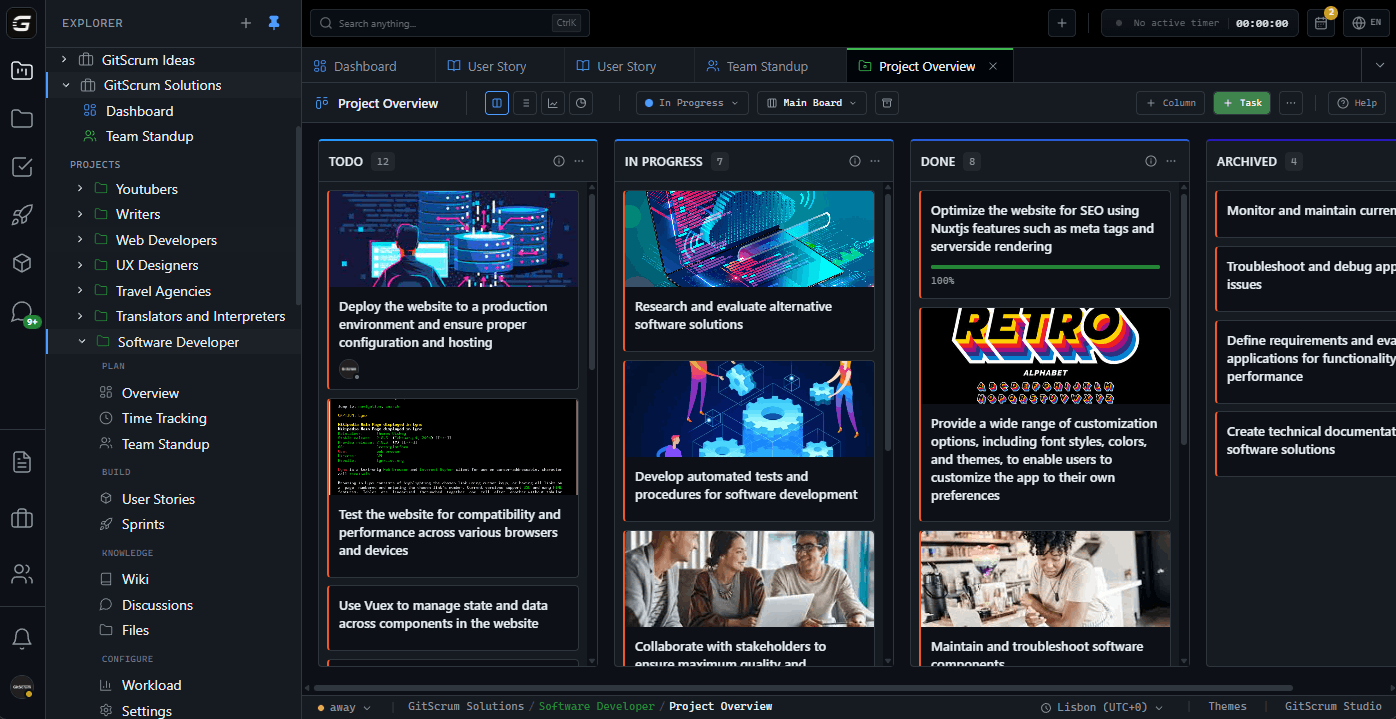
Tasks Connect to Code - Each task can link to GitHub PR - Task completion = code merged - Progress calculated automatically 4. Roadmap Shows Reality - Initiative progress = completed tasks / total - Status indicators from code activity - Risk flags when falling behind Roadmap Views Timeline View: - Gantt-style visualization - Initiatives as horizontal bars - Progress fill based on completion - Dependencies shown as connections Board View: - Now, Next, Later columns - Drag initiatives to reprioritize - Status indicators on each card List View: - Sortable table of initiatives - Columns: progress, status, owner, dates - Filter by team, quarter, status Progress Calculation Not arbitrary percentages.
Real progress. Option 1: Task-based Progress = Completed tasks / Total tasks Option 2: Point-based Progress = Completed story points / Total points Option 3: Time-based Progress = Logged time / Estimated time Choose what makes sense for your team.
Status Indicators Automatic risk detection: | Status | Meaning | Indicator | |--------|---------|----------| | On Track | Progress matches timeline | Green | | At Risk | Progress < expected for date | Yellow | | Blocked | Has blocked tasks | Red | | Complete | All tasks done, code merged | Blue | No manual status updates needed. Dependencies Roadmap dependencies actually mean something: 'Feature B depends on Feature A' In GitScrum: - Link initiatives with dependencies - See if dependency is complete - Get alerts when blocked by dependency - Timeline shows dependency chains Not just lines on a slide - actual blockers.
Quarterly Planning Quarter View: - See all initiatives by quarter - Capacity vs committed work - Rollover from previous quarter Planning Mode: - Drag initiatives into quarters - See team capacity - Balance workload - Lock committed items Stakeholder Communication Share roadmaps externally: - Public link (view only) - Customizable what's visible - Real-time updates - No login required Leadership sees the same roadmap you do - always current. Roadmap vs Execution Integration This is what makes GitScrum different: | Feature | Traditional | GitScrum | |---------|-------------|----------| | Roadmap location | Slides/separate tool | Same platform as tasks | | Progress | Manual percentage | Calculated from work | | Status | Opinion-based | Code-based | | Updates | Weekly manual | Real-time automatic | | Dependencies | Decorative lines | Actual blockers | | Accuracy | Snapshot in time | Always current | Scenarios Scenario 1: Board Meeting Prep Without GitScrum: - 3 hours gathering status from different systems - Reconcile conflicting information - Create slides showing 'best guess' - Hope nothing changes before meeting With GitScrum: - Open roadmap view - Progress is current as of right now - Share link to board members - Done Scenario 2: 'When Will Feature X Ship?' Without GitScrum: - Check roadmap: says Q2 - Check Jira: 60 tasks, 40 done - Check with dev: 'A few more weeks probably' - Answer: 'Q2...
probably late Q2' With GitScrum: - Open initiative - See: 67% complete, 3 weeks of work remaining - See: 2 blocked tasks need resolution - Answer: 'Mid-May, assuming we unblock the 2 issues' Scenario 3: Replanning After Change Without GitScrum: - Major change happens - Update roadmap slides - Update Jira sprints - Email stakeholders - Hope everyone sees updates With GitScrum: - Drag initiative to new quarter - Linked sprints adjust - Stakeholders with access see instantly - Done Integration with Sprint Planning Initiatives inform sprint planning: - See which initiatives need sprint work - Balance sprint across initiatives - Track sprint contribution to initiative progress - Prevent over-committing Reporting Built-in roadmap reports: - Initiative progress over time - Planned vs actual delivery - Velocity trends by initiative - Blocker analysis Export to PDF for presentations. Pricing - 2 users: FREE forever - 3+ users: $8.90/user/month - Roadmap planning included in all plans - Unlimited initiatives - Unlimited stakeholder sharing No separate roadmap tool needed.
No per-initiative pricing. One platform for planning and execution.
5-person team: $26.70/month - Roadmap connected to sprints - Reality-based progress - Stakeholder visibility 10-person team: $71.20/month - Multiple roadmaps - Cross-initiative dependencies - Executive dashboards Compared to: - ProductBoard: $20/maker/month (planning only) - Aha!: $59/user/month (planning only) - Jira + Confluence: $10+/user + manual sync GitScrum: Planning AND execution for $8.90. The Bottom Line Your roadmap should be your truth, not your wish.
GitScrum roadmaps: - Built on actual work - Connected to actual code - Updated automatically - Shareable in real-time Stop maintaining separate systems. Plan and execute in one place.
GitScrum: Roadmap planning that matches reality. 2 users free.
$8.90/user/month. Plan with data.
Ship with confidence.
The GitScrum Advantage
One unified platform to eliminate context switching and recover productive hours.