The Roadmap Problem Two types of roadmaps exist in most companies: 1.
The Pretty Roadmap - PowerPoint slides - Shown to executives/customers - Big boxes with initiative names - Optimistic timelines - Looks professional 2. The Reality - Sprint backlogs - What's actually being built - Usually different from the roadmap - Developers don't even look at the roadmap - PM hopes they align somehow The disconnect causes: - Executives think Feature X is coming in Q1 - Dev team hasn't even started - Surprise at quarterly review - Trust erosion - Fire drills to 'catch up' Why Roadmaps Disconnect 1.
Different Systems - Roadmap in slides/Productboard/Aha! - Execution in Jira/Asana/Trello - No automatic sync - Manual updates lag behind 2.
Abstraction Mismatch - Roadmap: 'Mobile App v2.0' - Execution: 50 separate tasks - How do 50 tasks map to one roadmap item? - Progress calculation is manual 3.
Update Fatigue - PM supposed to update roadmap weekly - Too many other priorities - Updates become monthly - Then quarterly - Then 'we'll update it for the board meeting' 4. Audience Difference - Roadmap is for executives/customers - Dev team looks at sprint backlog - Two audiences, two documents - Naturally drift apart What Roadmaps Should Do 1.
Communicate Vision - Where are we going? - What's the strategy?
- What's coming when? 2.
Reflect Reality - What's actually happening? - Are we on track?
- Where are the risks? 3.
Enable Decisions - Should we shift resources? - Should we cut scope?
- Should we change dates? Most roadmap tools handle 1.
Few handle 2. Almost none enable 3.
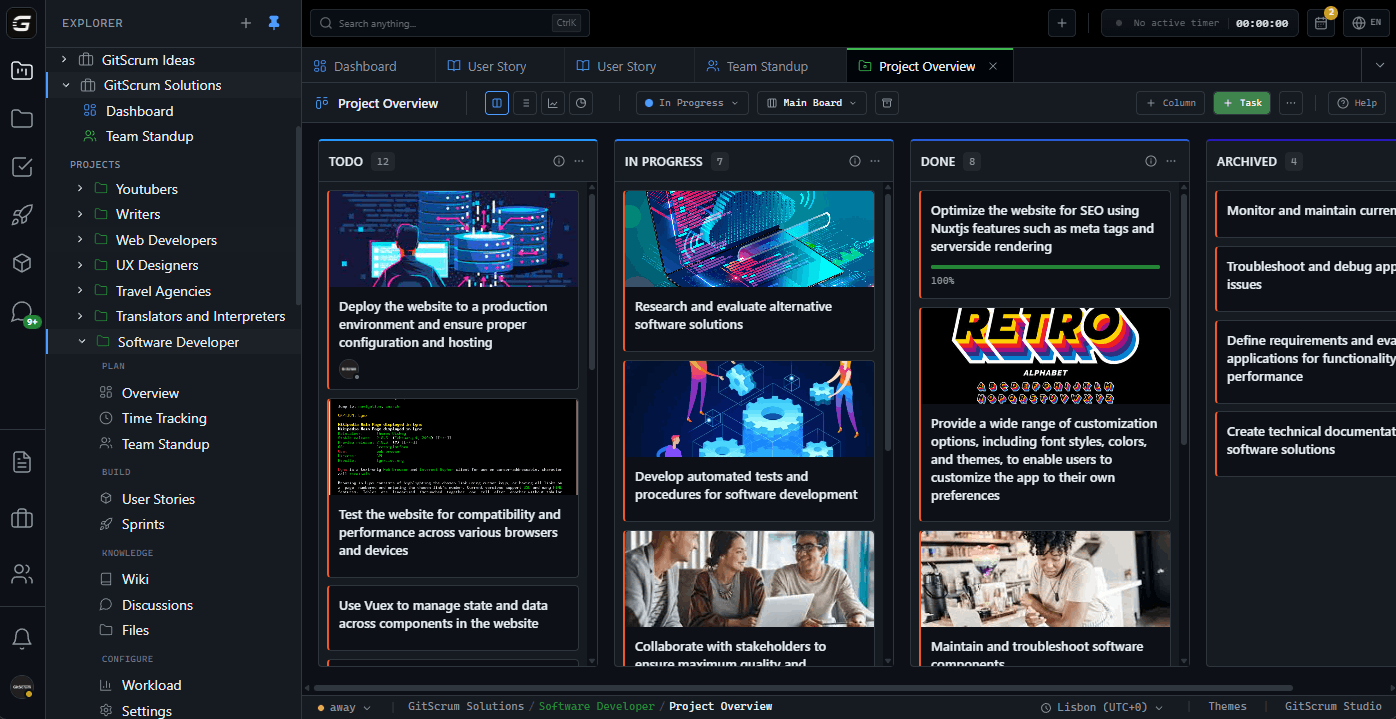
GitScrum Approach Principle: Roadmap connected to execution. How it works: 1.
Create Initiatives (Roadmap Level) - Big themes: 'Mobile App v2.0' - Timeline: Q1 2025 - Owner: Product team 2. Link Epics/Features - Initiative contains epics - Epics contain user stories - User stories have tasks 3.
Tasks Connect to Git - Tasks link to commits/PRs - Git activity = real progress - Progress bubbles up automatically 4. Roadmap Reflects Reality - Initiative shows % complete - Based on actual code shipped - Not estimates or self-reports Roadmap View 2025 Product Roadmap ═══════════════════ Q1 Q2 Q3 ──────────────────────────────────────────── [Mobile App v2.0]───[█████████░░░░░░░░░]─66% ├─ Auth Redesign ████████████ Done ├─ New Dashboard ████████░░░░ 75% └─ Offline Mode ████░░░░░░░░ 33% [API Platform]──────────[███████████████]──100% ├─ REST v2 ████████████ Done ├─ GraphQL Beta ████████████ Done └─ Rate Limiting ████████████ Done [Enterprise Features]───────────[████░░░]──40% ├─ SSO ████████████ Done ├─ Audit Logs ████████░░░░ 70% └─ Role Management █░░░░░░░░░░░ 10% This view: - Shows strategic initiatives - Drillable to epics and tasks - Progress from actual Git activity - Timeline reflects reality Initiative Structure Initiative (Strategic) └── Epic (Large Feature) └── User Story (Deliverable) └── Task (Work Item) └── Git Activity (Code) Example: Initiative: Mobile App v2.0 ├── Epic: Authentication Redesign │ ├── Story: Biometric login │ │ ├── Task: Add FaceID support │ │ │ └── PR 123 (merged) │ │ └── Task: Add fingerprint fallback │ │ └── PR 124 (in review) │ └── Story: Password reset flow │ └── Task: New reset email template │ └── PR 125 (merged) └── Epic: New Dashboard └── ...
Progress calculation: - Task done if PR merged (or manually marked) - Story done if all tasks done - Epic done if all stories done - Initiative done if all epics done Automatic. No manual rollup.
Timeline Planning Drag initiatives across timeline: | Jan | Feb | Mar | Apr | |──────────|──────────|──────────|──────────| | [Mobile App ─────────────] | | | | [API Platform ────────] | | | | [Enterprise ───────]| Set: - Start date - Target end date - Dependencies between initiatives - Milestones within initiatives Timeline adjusts as reality changes. Progress Tracking Initiative: Mobile App v2.0 Planned: Jan 1 - Mar 31 Progress: 66% Velocity: 8 stories/sprint Projected: Apr 15 (2 weeks late) Breakdown: ───────────────────────────────────────── Epics: 3 total, 1 done, 2 in progress Stories: 24 total, 16 done, 4 in progress Tasks: 52 total, 35 done, 8 in progress ───────────────────────────────────────── Projection based on: - Historical velocity - Remaining work - Sprint capacity Not guessing.
Math. Dependency Management Initiatives depend on each other: [API Platform] ───→ [Mobile App v2.0] │ [Design System] ─────────┘ Mobile App depends on: - API Platform (backend) - Design System (UI components) Dependency tracking: - Visualize dependencies - Alert when dependency at risk - Cascade impact analysis Milestones Within initiatives: Mobile App v2.0 │ ├─ ◆ Alpha Release (Feb 1) │ Status: ✅ Complete │ ├─ ◆ Beta Release (Feb 28) │ Status: 🔄 In Progress │ Progress: 80% │ └─ ◆ GA Release (Mar 31) Status: ⚪ Not Started Risk: ⚠️ At risk if beta slips Milestones as checkpoints.
Automatically assessed based on linked items. Stakeholder Views Different views for different audiences: 1.
Executive View - High level initiatives - Red/Yellow/Green status - Timeline view - No technical details 2. Product View - Initiatives with epics - Progress percentages - Dependency graph - Risk identification 3.
Engineering View - Full drill-down to tasks - Git activity visible - Sprint alignment - Capacity planning Same data, different presentations. Shareable Links Share roadmap externally: - Read-only link - No login required - Auto-updates as progress happens - Show/hide sensitive items - Embed in other tools Customers see what's coming without manual updates.
Roadmap vs Reality Report Quarterly review: Q1 2025 Roadmap Review ══════════════════════ Planned: ├─ Mobile App v2.0 Q1 → Delivered: Q1 ✅ ├─ API Platform Q1 → Delivered: Q1 ✅ └─ Enterprise Features Q1 → Delivered: 60% ⚠️ Unplanned Additions: ├─ Security Hotfix Added Feb 15, delivered Feb 20 └─ Customer Request X Added Mar 1, delivered Mar 15 Dropped: └─ Feature Y Deprioritized after customer feedback Velocity: ├─ Planned: 40 stories ├─ Delivered: 38 stories └─ Accuracy: 95% Historical comparison for continuous improvement. Integration with Sprints Roadmap connects to sprints: Initiative: Mobile App v2.0 │ ├─ Sprint 10 (Jan 1-14): 8 stories ├─ Sprint 11 (Jan 15-28): 8 stories ├─ Sprint 12 (Feb 1-14): 8 stories ├─ Sprint 13 (Feb 15-28): 6 stories ← Current ├─ Sprint 14 (Mar 1-14): Planned └─ Sprint 15 (Mar 15-28): Planned See how sprint work maps to roadmap.
Capacity planning informs roadmap dates. Theme Tagging Tag initiatives by theme: Themes: ├─ Growth: 40% of roadmap ├─ Platform: 30% of roadmap ├─ Tech Debt: 15% of roadmap └─ Customer Requests: 15% of roadmap Balance themes.
Report on investment by theme. Customer-Driven Roadmap Connect customer requests: - Feature request from Customer A - Links to User Story 234 - Story links to Initiative 'Enterprise Features' - Customer can see progress - Auto-notify when shipped Close the loop on customer feedback.
Vs Productboard Productboard: ✓ Customer feedback collection ✓ Prioritization frameworks ✓ Beautiful roadmap views ✗ No execution tracking ✗ No Git integration ✗ Expensive ($20+/user) GitScrum: ✓ Roadmap views ✓ Progress from execution ✓ Git integration ✓ $8.90/user ✗ Less customer feedback features Complementary: Use Productboard for feedback, GitScrum for execution. Vs Aha!
Aha!: ✓ Comprehensive roadmapping ✓ Strategy features ✓ Many integrations ✗ Complex ✗ Expensive ($59+/user) ✗ Jira sync often breaks GitScrum: ✓ Roadmap basics ✓ Native execution ✓ Git integration ✓ Simple ✓ $8.90/user For teams that want roadmap + execution in one tool. Vs Jira + Jira Roadmap Jira with Advanced Roadmaps: ✓ Same tool for execution and roadmap ✓ Powerful dependencies ✗ Complex configuration ✗ Expensive (Premium tier required) ✗ Slow interface GitScrum: ✓ Same tool for execution and roadmap ✓ Dependency tracking ✓ Simple setup ✓ $8.90/user ✓ Fast interface Vs Notion/Coda Notion/Coda: ✓ Flexible ✓ Good documentation ✗ No native Git integration ✗ Manual updates required ✗ Not built for engineering GitScrum: ✓ Git integration ✓ Auto progress updates ✓ Built for engineering ✗ Less document flexibility Pricing 2 users: $0/month (free forever) 5 users: $26.70/month 10 users: $71.20/month 25 users: $178/month Includes: - Roadmap views - Initiative tracking - Progress rollup - Shareable links - Git integration - Sprint planning - All PM features No 'roadmap tier'.
Everything included. Getting Started 1.
Sign up (30 seconds) 2. Create project structure 3.
Create initiatives for Q1/Q2 4. Link existing epics/stories 5.
Connect Git repository 6. Share roadmap link with stakeholders 7.
Watch reality update automatically $8.90/user/month. 2 users free forever.
Roadmaps that reflect what's actually shipping.
The GitScrum Advantage
One unified platform to eliminate context switching and recover productive hours.