The Sprint Planning Problem Traditional sprint planning is a ritual, not a process: The 3-Hour Ceremony: 1.
Gather entire team (1 hour of collective time burned just assembling) 2. Review backlog items one by one (30 minutes) 3.
Story point poker for each item (45 minutes of debate) 4. Calculate team capacity (15 minutes of spreadsheets) 5.
Negotiate what fits (30 minutes of politics) 6. Finally commit to sprint scope (15 minutes) 7.
Team disperses, exhausted (5 minutes) Total time: 3+ hours People involved: 6-10 Collective hours burned: 18-30 hours of engineering time Frequency: Every 2 weeks Annual cost: 450-750 hours of engineering time on planning alone Why Traditional Sprint Planning Fails 1. Estimation theater - Story points are arbitrary - Poker debates waste time - Estimates don't improve outcomes - Teams game points to look good 2.
Capacity calculation theater - Velocity is unpredictable - Yesterday's weather doesn't predict tomorrow - Holidays, sick days, meetings ignored - Commitments become promises that break 3. Commitment negotiation theater - PM wants more in sprint - Team wants buffer - Politics determines scope - Nobody believes the plan anyway 4.
Disconnection from execution - Sprint planned, then forgotten - Work happens in GitHub - Daily standups become the real planning - Sprint review reveals actual vs planned disconnect The GitScrum Approach: Planning That Respects Your Time 30-Minute Sprint Planning: 1. Review prioritized backlog (5 minutes) - Already ordered by priority - Already linked to GitHub issues - Already estimated (if you want) 2.
Drag items to sprint (10 minutes) - Visual drag-drop interface - See items as you add them - GitHub issues auto-linked 3. Check team availability (5 minutes) - Who's on vacation?
- Any known blockers? - Quick capacity sanity check 4.
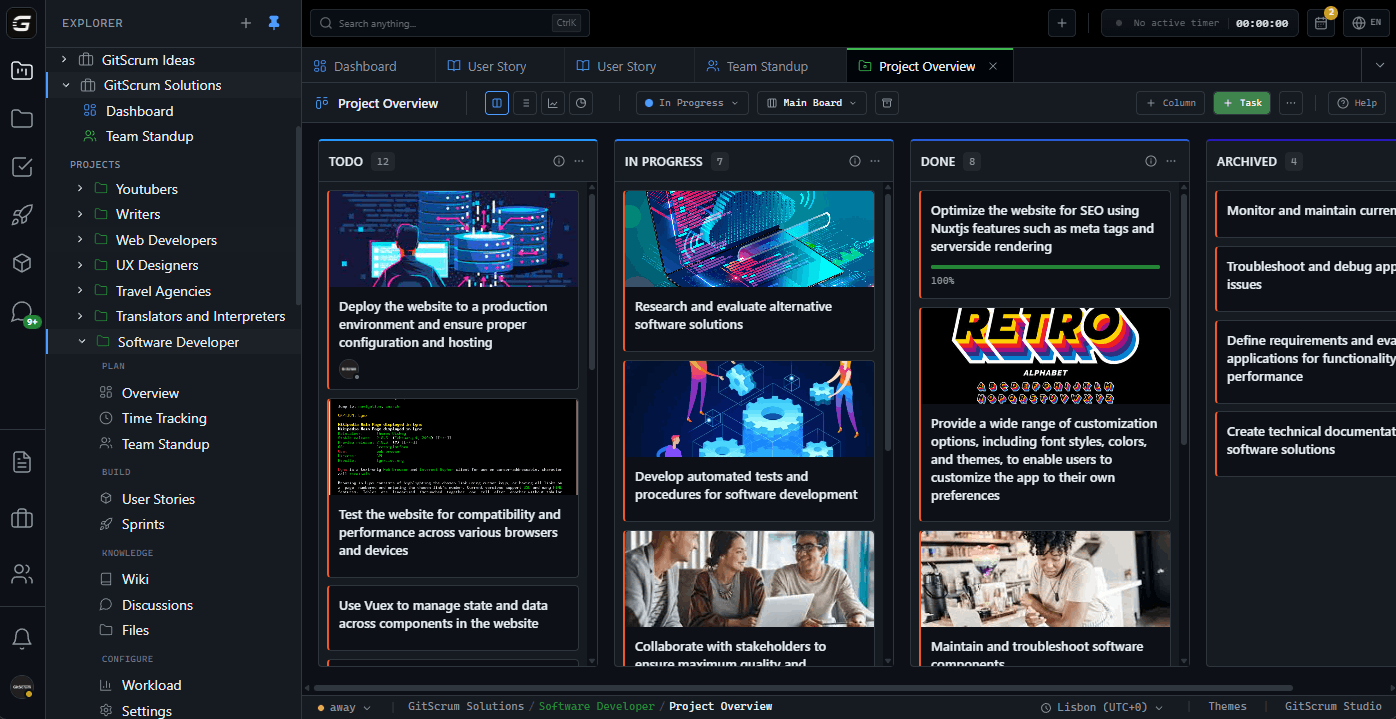
Start sprint (2 minutes) - One click to begin - Notifications sent to team - Sprint dashboard live 5. Get to work (8 minutes remaining) - Back to actually building software Total time: 30 minutes People needed: 1-3 (PM/Lead + optional stakeholders) Engineering time saved: 95% How GitScrum Sprint Planning Works Pre-Sprint: - Backlog already synced with GitHub issues - Items already prioritized - Team members already assigned to items - Dependencies visible Sprint Planning View: - Left panel: Prioritized backlog - Right panel: Current sprint - Drag items left to right - Running count of items/points - Team capacity indicator Starting the Sprint: - Set start and end dates - Optional: Set sprint goal - Click 'Start Sprint' - Team notified via preferred channels - Dashboard begins tracking During Sprint: - GitHub commits update task progress - PR merges complete tasks - Burndown updates automatically - Daily progress visible without standups Sprint End: - Incomplete items return to backlog - Velocity calculated from actual completion - Sprint retrospective data available - Next sprint planning starts from updated backlog Traditional vs GitScrum Sprint Planning | Aspect | Traditional | GitScrum | |--------|-------------|----------| | Planning time | 2-3 hours | 30 minutes | | People required | Entire team | 1-3 people | | Story point poker | Required ritual | Optional | | Capacity calculation | Spreadsheet guessing | Visual indicator | | GitHub connection | Manual linking | Automatic sync | | Progress tracking | Manual updates | From commits/PRs | | Ceremony fatigue | High | Low | Features for Sprint Planning Backlog Integration: - Prioritized backlog feeds sprint - Drag-drop from backlog to sprint - GitHub issues linked automatically - Bulk add multiple items Capacity Visualization: - Team member availability - Historical velocity reference - Point/item count per person - Over-allocation warnings Sprint Configuration: - Flexible sprint lengths (1-4 weeks) - Custom start/end dates - Sprint goals and descriptions - Carry-over handling Team Coordination: - Assign items during planning - Balance load across team - Identify dependencies - Flag blockers early Notifications: - Sprint start notifications - Assignment notifications - Daily digest optional - Slack/email integration Optional Estimation (If You Want It) GitScrum doesn't force estimation, but supports it: If you use story points: - Add points to backlog items - See point totals in sprint view - Track velocity by points - Compare to historical capacity If you skip estimation: - Track by item count - Focus on throughput - Measure cycle time - Ship faster by doing, not estimating The research: Estimation doesn't improve outcomes.
The reality: Teams without estimation often ship faster. GitScrum: Supports both approaches, judges neither.
Sprint Planning Best Practices (With GitScrum) 1. Keep backlog groomed - 10 minutes weekly, not 2-hour sessions - Top 20 items ready for sprint - Old items archived 2.
Plan in 30 minutes or less - Prioritized backlog eliminates debate - Drag-drop beats discussion - Trust the backlog order 3. Let GitHub drive progress - Commits = progress - PRs = near completion - Merged = done - No manual status updates 4.
Review at sprint end, not during - Daily standups optional with GitScrum - Check dashboard async - Sprint review for retrospective 5. Iterate on process - What worked?
- What didn't? - Adjust sprint length if needed - Adjust team composition Integration with Development Workflow Sprint start: 1.
Sprint created in GitScrum 2. Tasks linked to GitHub issues 3.
Developers see their assignments During development: 1. Developer creates branch for task 2.
Commits reference GitScrum task 3. PR created when ready for review 4.
GitScrum shows PR status 5. Merged PR = task complete Sprint end: 1.
Completed tasks marked done 2. Incomplete tasks return to backlog 3.
Sprint velocity calculated 4. Ready for next sprint planning Pricing for Scrum Teams - 2 users: FREE forever - 3+ users: $8.90/user/month - All sprint planning features included - Unlimited sprints - Full GitHub integration 5-person Scrum team: $26.70/month - Complete sprint management - Burndown charts - Velocity tracking - GitHub sync 10-person Scrum team: $71.20/month - Everything above - Multiple team views - Cross-team dependencies - Advanced analytics The Bottom Line Traditional sprint planning: 3-hour ceremony, entire team, estimation theater.
GitScrum sprint planning: 30 minutes, 1-3 people, connected to actual work. When sprint planning is simple: - Engineers spend time building - PMs spend time prioritizing - Sprints reflect reality - Teams ship faster GitScrum: Sprint planning that respects your time.
2 users free. $8.90/user/month.
30 minutes to plan, then get to work.
The GitScrum Advantage
One unified platform to eliminate context switching and recover productive hours.