Modern knowledge work increasingly relies on part-time contributors.
Consultants bring specialized expertise for specific phases. Subject matter experts contribute domain knowledge without full project commitment.
Contractors scale capacity during busy periods. Freelancers fill specialized skill gaps.
But a fragmented tool stack creates an insurmountable barrier for these valuable contributors. Before they can do any actual work, they must learn how the team uses Jira.
And Confluence. And Slack.
And GitHub. And Figma.
And whatever other tools the team relies on. Full-time employees learn these tools gradually over months.
Part-time contributors do not have months. They have days or weeks.
The tool learning curve consumes a disproportionate share of their limited engagement time. A consultant hired for strategic input spends half their time figuring out where to find information.
A subject matter expert gives up contributing because the tool overhead exceeds their available hours. The calculus becomes absurd: we need your expertise, but first you must spend 20 hours learning our tools to contribute 10 hours of actual value.
Many potential contributors simply decline engagements. Others contribute suboptimally, working around the tool stack rather than through it, creating coordination overhead for full-time staff.
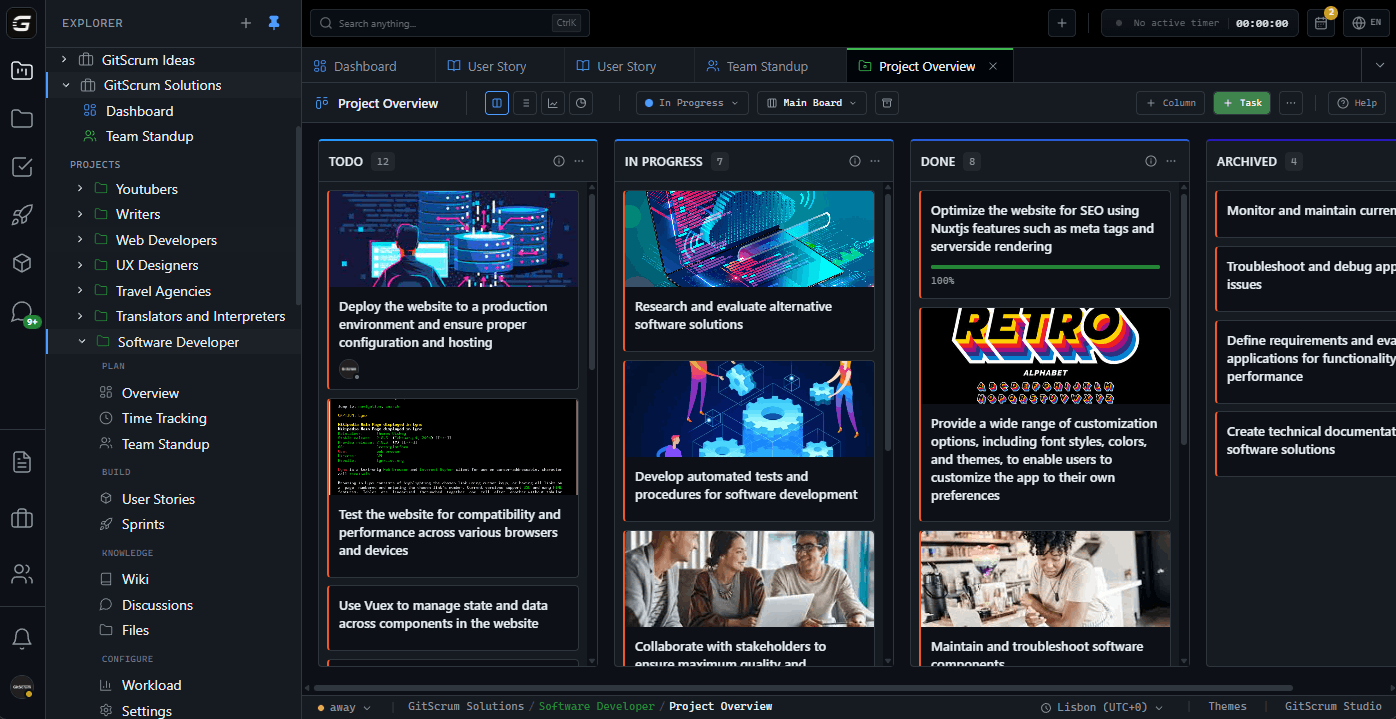
A unified platform dramatically lowers this barrier. One tool to learn.
One interface to navigate. Part-time contributors can become productive in hours instead of weeks.
Their limited time goes toward actual contribution rather than tool learning.
The GitScrum Advantage
One unified platform to eliminate context switching and recover productive hours.