Wrike: The Enterprise Workhorse Wrike serves: ├─ Marketing teams ├─ Professional services ├─ Operations teams ├─ Project management offices ├─ Creative agencies ├─ Enterprise resource planning └─ Cross-functional projects Wrike is powerful.
Wrike is comprehensive. But Wrike isn't built for software development.
What Wrike Does Well (Generally) Task management: Strong Gantt charts: Excellent Resource management: Good Time tracking: Built-in Proofing/approval: Good Custom workflows: Flexible Reporting: Comprehensive Enterprise features: Many What Wrike Lacks for Developers 1. No Git Integration Wrike + GitHub: ├─ Third-party connector needed ├─ Zapier or custom integration ├─ Links but doesn't automate ├─ No status updates from code ├─ Two separate systems GitScrum + GitHub: ├─ Native one-click connection ├─ Branch → In Progress (auto) ├─ PR → In Review (auto) ├─ Merge → Done (auto) ├─ One integrated system 2.
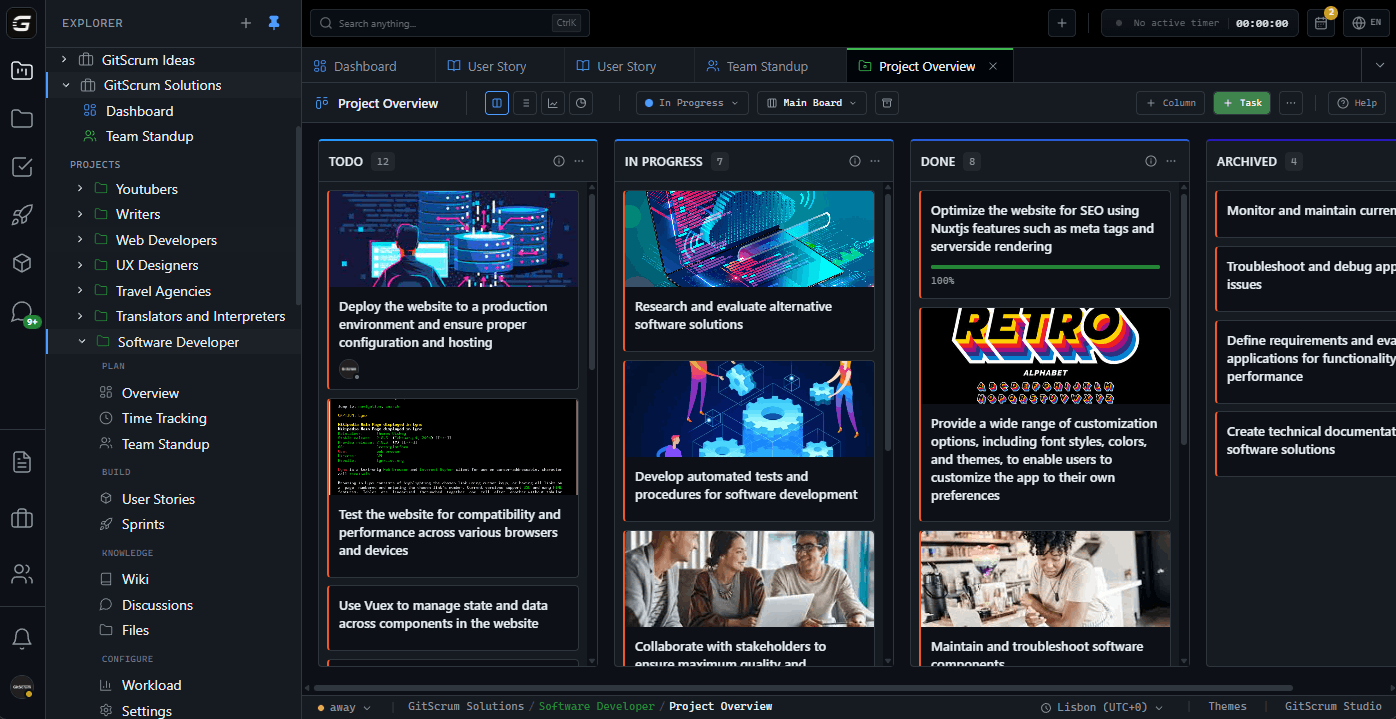
No Sprint Methodology Wrike approach: ├─ Task-based, not sprint-based ├─ Folders and projects ├─ Timeline view (Gantt) ├─ No sprint planning ├─ No velocity tracking ├─ No burndown charts ├─ Agile is afterthought GitScrum approach: ├─ Sprint-first design ├─ Sprint planning built-in ├─ Velocity automatic ├─ Burndown built-in ├─ Agile is core 3. No Developer Metrics Wrike provides: ├─ Generic project metrics ├─ Resource utilization ├─ Timeline tracking ├─ Budget vs actual └─ Good for PM offices Wrike doesn't provide: ├─ Story point velocity ├─ Sprint burndown ├─ Cycle time ├─ Lead time ├─ Code-connected metrics └─ What devs need 4.
Task Model Doesn't Fit Wrike tasks: ├─ Assignee ├─ Due date ├─ Status ├─ Description ├─ Subtasks ├─ Dependencies └─ Generic work tracking Dev tasks need: ├─ Story points ├─ Sprint assignment ├─ Branch name ├─ PR status ├─ Code review status ├─ Related commits └─ Code-connected tracking Price Comparison Wrike Pricing: ├─ Free: Very limited (5 users, basic) ├─ Team: $9.80/user/month ├─ Business: $24.80/user/month ├─ Enterprise: Custom ├─ Pinnacle: Custom └─ Note: Good features require Business tier For software teams, you'd need Business tier: ├─ Custom workflows ├─ Time tracking ├─ Resource management ├─ Advanced reporting GitScrum Pricing: ├─ Free Forever: 2 users, ALL features ├─ All users: $8.90/user/month ├─ All features included └─ No tier limitations For 10 developers: ├─ Wrike Business: $248/month ├─ GitScrum: $71.20/month (2 free) └─ Savings: $176.80/month ($2,121.60/year) Feature Comparison (For Dev Teams) | Feature | Wrike | GitScrum | |----------------------|---------------|------------------| | Task management | ✓ | ✓ | | Gantt charts | ✓ | Basic | | Git integration | Third-party | Native | | Auto status updates | ✗ | From Git events | | Sprint planning | ✗ | Built-in | | Story points | Custom field | Native | | Velocity tracking | ✗ | Automatic | | Burndown charts | ✗ | Built-in | | Time tracking | ✓ | Built-in + Git | | Resource management | ✓ | Basic | | Proofing/approval | ✓ | ✗ | | Dev-specific focus | ✗ | ✓ | When Wrike Makes Sense Stay with Wrike if: ├─ Multiple team types (marketing + dev + ops) ├─ Need Gantt charts heavily ├─ Resource management across teams ├─ Proofing and approval workflows ├─ Enterprise PMO requirements ├─ Already heavily configured ├─ Dev team is small portion └─ Compliance requires established vendor When GitScrum Makes Sense Switch to GitScrum if: ├─ Software development team ├─ Git-native workflow essential ├─ Sprint planning core need ├─ Want velocity and burndown ├─ Don't need Gantt complexity ├─ Don't need creative proofing ├─ Want simpler pricing ├─ Code should drive status └─ Developer experience matters The 'Use Both' Pattern Many organizations: ├─ Wrike: Marketing, ops, PMO ├─ GitScrum: Software development └─ Link: High-level milestones Each team uses the tool built for them. Don't force developers into marketing tools.
Migration Considerations From Wrike to GitScrum for dev team: 1. Export tasks (CSV) 2.
Map fields (story points custom → native) 3. Sign up GitScrum free 4.
Import tasks 5. Connect GitHub/GitLab 6.
Set up sprints 7. Configure team Time: 1-2 days for clean migration.
Keep in mind: - Wrike has features you'll lose (Gantt, proofing) - But gain features you need (Git, sprints) - Net positive for dev workflow Real Team Perspective 'Wrike was chosen company-wide by the PMO. It works great for marketing campaigns and client projects.
But for dev work? We were fighting it constantly.
No sprints, no Git connection, no velocity. Our board was always out of date because devs had to manually update everything.
We got approval to use GitScrum for the dev team specifically. Night and day difference.
The Git integration alone saved hours per week.' - VP Engineering, Digital Agency Vs Other Alternatives Jira: - Also enterprise-focused - Better Git integration than Wrike - Complex and expensive - For large dev orgs Asana: - Similar to Wrike market - No Git integration - No sprints Monday.com: - Similar to Wrike flexibility - No Git integration - Feature-rich but general GitScrum: - Developer-focused - Git-native - Sprint-first - $8.90/user (2 free) Pricing Summary 2 users: $0/month (free forever, all features) 5 users: $26.70/month 10 users: $71.20/month 20 users: $160.20/month All dev features included. No Business tier required.
Git integration native. Try Free 1.
Sign up (2 users free forever) 2. Connect GitHub/GitLab 3.
Create sprint 4. Experience dev-focused PM 5.
Compare to Wrike workflow $8.90/user/month. 2 users free forever.
The Wrike alternative built for developers.
The GitScrum Advantage
One unified platform to eliminate context switching and recover productive hours.