Scrum Done Wrong Calendar reality: - Monday: Sprint Planning (4 hours) - Tuesday-Thursday: Daily standup (45 min each) - Friday: Sprint Review (2 hours) - Friday: Retrospective (2 hours) Weekly ceremony time: 10+ hours Actual coding time: Shrinking Scrum became the work.
Not supporting the work. The Jira Problem Jira workflow: - 47 states - 23 custom fields - Nobody knows correct path - New developer training: 2 hours on workflow alone Scrum Master time: - 40% managing Jira - 30% answering 'how do I move this ticket?' - 20% creating reports - 10% actual facilitation Tool complexity killed agility.
Scrum Essentials What Scrum actually needs: 1. Product Backlog (prioritized work) 2.
Sprint Backlog (committed work) 3. Increment (working software) Artifacts: - Sprint Goal - Burndown/Burnup - Velocity Ceremonies (time-boxed): - Sprint Planning: 2 hours max - Daily Standup: 15 min max - Sprint Review: 1 hour max - Retrospective: 1 hour max Total: 5 hours/week, not 10+.
Sprint Planning Done Right Effective sprint planning: - Pre-work: Backlog groomed (async) - Planning: Pull from top of backlog - Commitment: Based on velocity - Time: 2 hours max Not: - 4-hour session - Re-estimating everything - Debating priorities (done in refinement) - Breaking down during planning (pre-work) Preparation makes planning fast. Daily Standup Done Right 15 minutes max: - What I did yesterday - What I'm doing today - Any blockers Round robin, standing up: - 8 people x ~1.5 min = 12 minutes - 3 minutes for blocker coordination - Done Not: - Problem solving (take offline) - Status report to manager - Laptop-open code reviews - 45-minute therapy session Standup is coordination, not meeting.
Async Standup Option Remote team alternative: - Post written update before work - Team reads async - Sync only if blockers need discussion Format: - Yesterday: [What you completed] - Today: [What you're working on] - Blockers: [What's in the way] Same information, no meeting. Sprint Review Done Right Demo working software: - Show increment to stakeholders - Gather feedback - Update backlog based on feedback - 1 hour max Not: - Slide presentations - Talking about what you did (show it) - Promising future features - 3-hour showcase Working software speaks louder.
Retrospective Done Right Team improvement: - What went well? (Keep) - What didn't?
(Stop) - What to try? (Start) - Pick ONE action item - Assign owner - 1 hour max Key: - One improvement per sprint - Actually implement it - Review next retro: 'Did our action help?' Not: - Venting session - 10 action items (none happen) - Same complaints every sprint Small, consistent improvement compounds.
Backlog Refinement Ongoing (not ceremony): - Top items always ready - Stories have acceptance criteria - Estimates done - Dependencies identified Done async or in short sessions: - 1 hour/week - Before sprint planning - By people who'll do the work Refined backlog = fast planning. User Stories Good story format: As a [user] I want to [action] So that [benefit] Acceptance criteria: - Given [context] - When [action] - Then [result] Definition of Done: - Code reviewed - Tests passing - Deployed to staging - Documented Clear stories = clear delivery.
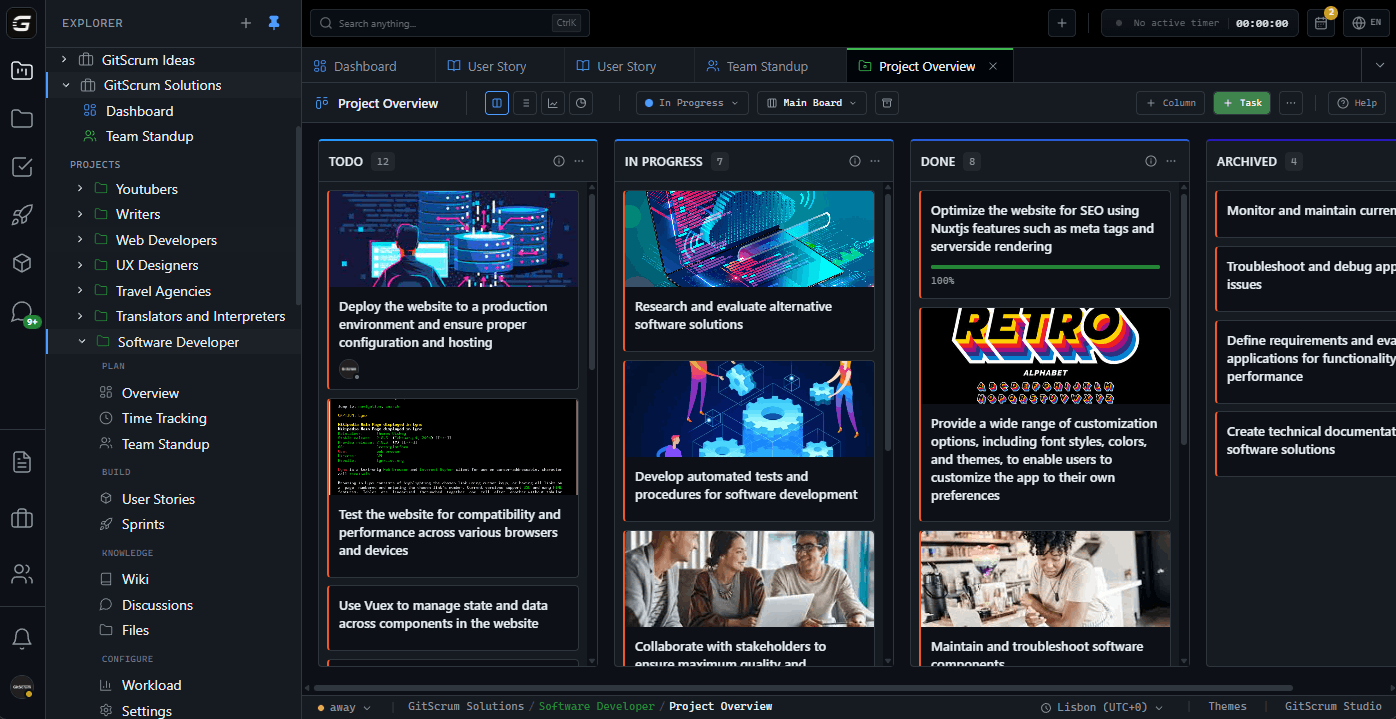
Sprint Backlog View Board shows sprint: - To Do: Committed, not started - In Progress: Being worked on - Review: Code review needed - Done: Meets Definition of Done Burndown shows: - Remaining work - Daily progress - Trend line - Forecast Visibility without asking. Velocity Tracking Velocity reality: - Average points completed per sprint - Trend over 5-6 sprints - Use for planning, not performance Healthy velocity: - Consistent (low variance) - Slightly improving (process better) - Never used for comparison Velocity is planning tool.
Not productivity measure. Sprint Goal Every sprint has goal: - 'Users can checkout with credit card' - Not: 'Complete 34 story points' Goal provides: - Focus - Trade-off guidance - Success measure Can drop tasks if goal achieved.
Cannot add tasks that don't serve goal. Product Owner Role PO responsibilities: - Owns product backlog - Prioritizes based on value - Writes/accepts stories - Available for questions Not: - Micromanaging developers - Changing sprint mid-flight - Absent until review - Another manager PO is bridge between business and team.
Scrum Master Role SM responsibilities: - Remove blockers - Facilitate ceremonies - Protect team from interruption - Coach process improvement Not: - Project manager - Tool administrator - Status reporter - Team babysitter SM is servant-leader. Development Team Team characteristics: - Cross-functional (all skills needed) - Self-organizing (team picks how) - Accountable for increment - 3-9 people Not: - Assigned work by manager - Specialists only working in silos - Waiting for others - 20+ people Small, capable, empowered.
Simplified Workflow GitScrum Scrum workflow: - Backlog -> Sprint Backlog -> In Progress -> Review -> Done 5 columns. Clear path.
Not 47 states. Customizable per team: - Add QA column if needed - Add Design if relevant - Keep minimal Process should be invisible.
Integration with Git Code-task connection: - Branch: gs-123-feature-name - Auto-links to task - PR shows in task - Merge updates status No manual ticket updates. Code flow = task flow.
Reports Scrum reports: - Burndown: Sprint progress - Velocity: Historical capacity - Cumulative Flow: Work distribution - Sprint Report: Summary for stakeholders Generated automatically. No Excel required.
Getting Started 1. Sign up GitScrum ($8.90/user, 2 free) 2.
Create product backlog 3. Set sprint length (2 weeks recommended) 4.
Plan first sprint (commitment from backlog) 5. Daily updates (async standup option) 6.
Demo at end (working software) 7. Retro: one improvement 8.
Repeat Scrum essentials. Without the overhead.
The GitScrum Advantage
One unified platform to eliminate context switching and recover productive hours.