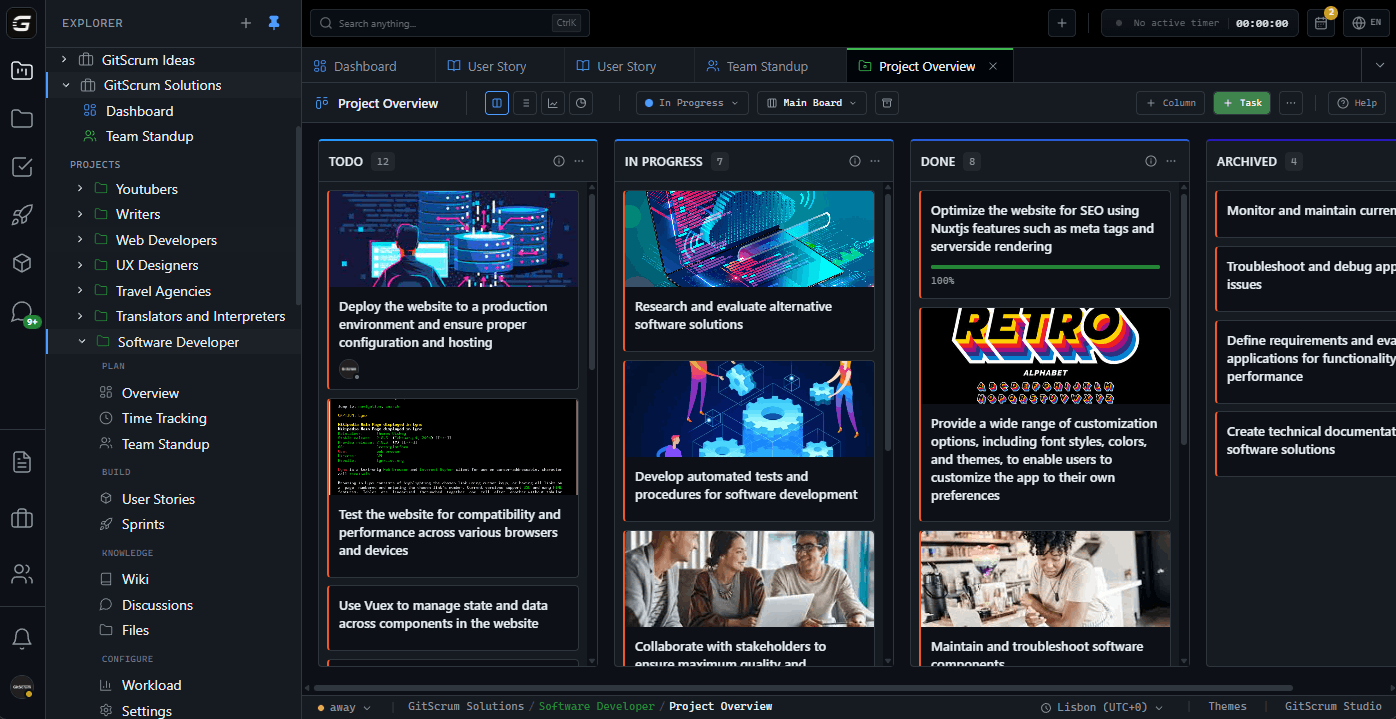
The Backlog Graveyard Every team has one.
247 items in the backlog: - Feature request from 2021 - Bug reported by someone who left - 'Nice to have' that nobody remembers why - Duplicate of something already done - Vague idea: 'improve performance' - Urgent 6 months ago, forgotten now The backlog becomes a graveyard. Things go in.
Nothing comes out. The Priority Problem Without real prioritization: 'What's next?' - CEO wants Feature A - Sales promised Feature B - Support says Bug C is urgent - Developer thinks Tech Debt D matters Who wins?
Loudest voice. Or: Last request in.
Or: Whatever stakeholder is in the meeting. No system.
Just politics. The Estimation Black Hole Backlog items without estimates: - 'How long will the sprint take?' - 'How much can we commit to?' - 'When will Feature X be done?' Answer: 'I don't know.' Can't plan without estimates.
Can't estimate 200 items. Nothing gets estimated.
Cycle continues. The Stale Item Problem Item added 8 months ago: - Requirements changed - Context lost - Original requester gone - Solution no longer valid But it sits in backlog.
'We should do that someday.' Someday never comes. GitScrum: Backlog That Works A real product backlog: 1.
Prioritized (ordered by importance) 2. Estimated (sized for planning) 3.
Groomed (ready for sprint) 4. Maintained (stale items removed) GitScrum provides structure for all four.
Priority Ranking Drag-and-drop ordering: - Most important at top - Least important at bottom - Position = priority Next sprint planning: - Pull from top - Top items already agreed as priorities - No debate during planning - Debate happened during grooming Backlog Grooming Support Grooming checklist: - Description complete? - Acceptance criteria defined?
- Estimated? - Dependencies identified?
- Small enough for sprint? 'Groomed' status indicates ready.
Ungroomed items can't enter sprint. Quality gate built in.
Estimation in Backlog Story points on backlog items: - Quick estimates during grooming - Planning poker if needed - T-shirt sizes for rough cuts When sprint planning: - Know backlog capacity - Pull items until sprint full - No over-committing Backlog Filtering Filter views: - By priority (High/Medium/Low) - By type (Feature/Bug/Tech Debt) - By component (Frontend/Backend/API) - By requester (Sales/Support/Internal) - By age (New/Old/Stale) - By status (Groomed/Needs Work) See what matters. Hide what doesn't.
Stale Item Management Automatic stale detection: - No updates in 90 days → flagged - Review: Still relevant? - Archive or delete if not Regular backlog cleanup: - Quarterly purge - Remove duplicates - Merge related items - Update outdated Living backlog, not a graveyard.
Backlog-to-Sprint Flow Seamless transition: 1. Item groomed and estimated 2.
Priority set high 3. Sprint planning happens 4.
Drag item from backlog to sprint 5. Item now in sprint board No copy-paste.
No recreating. Same item, different view.
Backlog Metrics Track backlog health: - Total items (growing or shrinking?) - Items added per week - Items completed per sprint - Average age of items - Groomed percentage - Estimated percentage Health dashboard: - Backlog too big? Address it.
- Grooming rate low? Schedule sessions.
- Old items accumulating? Time to clean.
Multiple Backlogs Some teams need: - Product backlog (features) - Bug backlog (defects) - Tech debt backlog (infrastructure) GitScrum supports: - Multiple backlog views - Filter by type - Separate prioritization - Unified sprint pull Backlog Collaboration Who can add: - Developers (tech needs) - Product owners (features) - Support (customer issues) - Stakeholders (business requests) All ideas captured. Product owner prioritizes.
Team estimates. Collaborative process.
Vs Chaotic Alternatives Spreadsheet backlog: - No connection to tasks - Manual sync required - Out of date instantly - No workflow integration Email backlog: - Scattered across inboxes - No priority - Lost in threads - Impossible to track Sticky notes: - Physical limitation - Remote teams can't use - No history - Falls off wall GitScrum backlog: - Connected to sprints - Prioritized and estimated - Accessible everywhere - Full history maintained Backlog Refinement Sessions Scheduled grooming: - Weekly or bi-weekly - Review top items - Estimate unestimated - Break down large items - Remove stale items Agenda from GitScrum: - Show items needing grooming - Show items without estimates - Show old items for review - Track grooming progress Backlog Search Find anything: - Full-text search - Search descriptions - Search comments - Search by any field 'Didn't we have a task for X?' Search. Find.
No more duplicate items because nobody could find the original.
The GitScrum Advantage
One unified platform to eliminate context switching and recover productive hours.