The Separate Bug Tracker Problem Typical setup: ├─ Feature work: Jira Project A ├─ Bug tracking: Jira Project B (or separate tool) ├─ Support tickets: Zendesk/Intercom ├─ Internal issues: Slack DMs ├─ Production alerts: PagerDuty/OpsGenie What happens: ├─ Same bug reported 3 places ├─ 'Is this known?
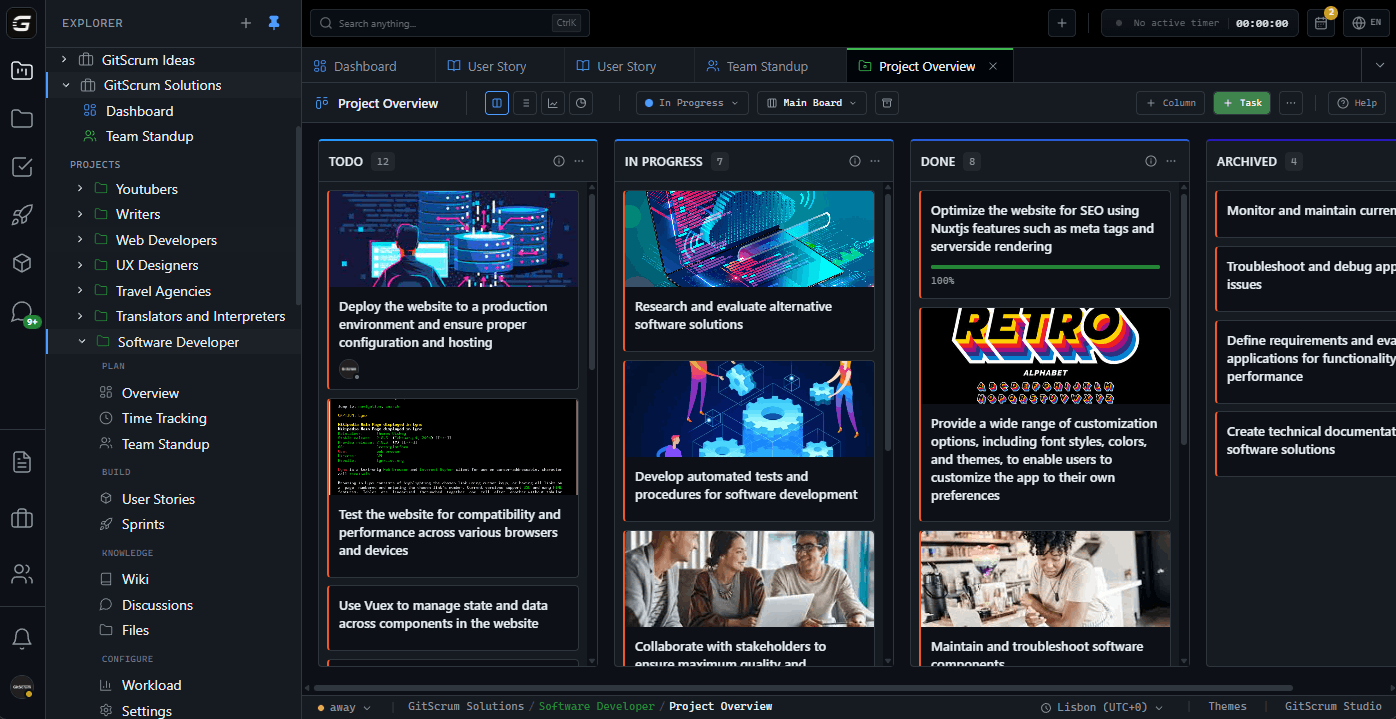
Work should be in one place. Why Bugs Get Lost Separate systems create problems: ├─ Different logins │ └─ Nobody checks the bug tracker ├─ Different workflows │ └─ Bugs don't fit sprint process ├─ Different priorities │ └─ Bugs compete with features unfairly ├─ No connection │ └─ Bug fix doesn't link to original report ├─ Duplicate reports │ └─ Same issue filed 5 times Result: ├─ Critical bugs sit for weeks ├─ Users report same issues repeatedly ├─ Support team frustrated ├─ Developers blind to user pain Bugs as Tasks Philosophy Simple approach: ├─ Bug = Task with bug label ├─ Same board as features ├─ Same sprint planning ├─ Same workflow: To Do → In Progress → Done ├─ Same assignees ├─ Same priorities Benefit: ├─ One place to look ├─ Bugs visible alongside features ├─ Sprint capacity includes bug fixes ├─ No forgotten bug backlogs Visual Workflow Board columns: ├─ Backlog │ ├─ [Feature] Add export │ ├─ [Bug] Login fails Safari │ ├─ [Feature] Dashboard redesign │ └─ [Bug] Slow search queries ├─ To Do (This Sprint) │ ├─ [Feature] User settings page │ └─ [Bug] Password reset email ├─ In Progress │ └─ [Bug] Payment timeout fix ├─ Done │ ├─ [Feature] Notification preferences │ └─ [Bug] CSV export encoding Features and bugs together.
Real picture of work. Bug Triage Process Weekly triage (30 min): ├─ Review new bugs ├─ Assess severity and priority ├─ Estimate effort (hours) ├─ Assign to sprint or backlog ├─ Close duplicates ├─ Request more info if needed Severity levels: ├─ Critical: System down, data loss │ └─ Action: Stop sprint, fix now ├─ High: Feature broken, workaround exists │ └─ Action: Next sprint priority ├─ Medium: Annoying but functional │ └─ Action: Scheduled fix ├─ Low: Cosmetic, edge case │ └─ Action: When time permits Bug Report Template Good bug reports: ├─ Title: Clear, searchable │ └─ 'Login fails on Safari iOS 16' ├─ Steps to Reproduce: │ └─ 1.
Open Safari on iPhone │ └─ 2. Navigate to login │ └─ 3.
Enter credentials │ └─ 4. Click submit ├─ Expected: Logged in, redirect to dashboard ├─ Actual: Page refreshes, stays on login ├─ Environment: Safari 16.2, iOS 16.1, iPhone 14 ├─ Screenshots/Video: Attached ├─ Frequency: Always / Sometimes / Once ├─ Impact: 15% of users on Safari Good reports = Faster fixes.
Connecting Support to Development Support team workflow: ├─ Customer reports issue ├─ Search: 'Is this known?' ├─ Found: Link to existing bug │ └─ Subscribe to updates ├─ Not found: Create new bug │ └─ Include customer context ├─ Customer notified when fixed Developers see: ├─ 'This bug affects 47 customers' ├─ Customer context in bug description ├─ Support agent as reporter ├─ Link to original conversation Customer impact visible. Priorities make sense.
Git Integration for Bugs Branch naming: ├─ bugfix/123-safari-login ├─ Fix: Login fails on Safari ├─ Closes 123 Automatic updates: ├─ Branch created → Bug moves to In Progress ├─ PR opened → Bug moves to Review ├─ PR merged → Bug moves to Done ├─ Link: Bug → PR → Commits No manual status updates. Git does the work.
Bug Metrics That Matter Track: ├─ Bug creation rate: Are we creating more bugs? ├─ Bug fix rate: Are we fixing faster than creating?
├─ Time to fix: Average days from report to resolution ├─ Bug age: How long do bugs sit? ├─ Severity distribution: Mostly low or mostly critical?
├─ Bug ratio: Bugs vs features in sprints Healthy team: ├─ Bug fix rate > creation rate ├─ Critical bugs: < 48 hours ├─ No bugs older than 90 days ├─ Bug ratio: 20-30% of sprint capacity Prioritizing Bug Fixes Priority matrix: ├─ High Impact + Easy Fix │ └─ Do immediately ├─ High Impact + Hard Fix │ └─ Schedule for next sprint ├─ Low Impact + Easy Fix │ └─ Quick wins when available ├─ Low Impact + Hard Fix │ └─ Consider not fixing Focus on user impact. Not every bug needs fixing.
Zero Bug Policy (Optional) Strict approach: ├─ No new features until bugs resolved ├─ Sprint starts with bug backlog at zero ├─ Forces prioritization ├─ Prevents bug accumulation Alternative - Bug Budget: ├─ Max 20 open bugs allowed ├─ Over 20? Next sprint is bugs only ├─ Sustainable pace ├─ Realistic balance Choose what works for your team.
Labeling and Categorization Useful labels: ├─ Area: auth, payments, dashboard, api ├─ Source: customer, internal, monitoring ├─ Platform: web, ios, android, api ├─ Root cause: regression, edge-case, third-party ├─ Fix type: code, config, data Filtering: ├─ All bugs in 'payments' ├─ All customer-reported bugs ├─ All iOS bugs Patterns emerge. Systemic issues visible.
Regression Tracking Regression = Previously working, now broken. Tag regressions: ├─ [Regression] Search broken after v2.4 ├─ Investigation: What changed?
├─ Root cause: Commit abc123 ├─ Prevention: Add test coverage Regressions are high priority. Users expect working features to stay working.
Bug to Post-mortem Critical bugs deserve analysis: ├─ What happened? ├─ When did it start?
├─ How many users affected? ├─ How was it discovered?
├─ How was it fixed? ├─ How do we prevent similar?
├─ Action items from analysis Document in wiki. Learn from failures.
Comparing Bug Tracking Approaches Separate bug tracker: ├─ Pros: Specialized workflows ├─ Cons: Visibility gap, context switching ├─ Best for: Large organizations with dedicated QA Bugs in same project: ├─ Pros: One place, full visibility ├─ Cons: Can clutter boards ├─ Best for: Most development teams GitHub Issues for bugs: ├─ Pros: Close to code ├─ Cons: No sprint planning, limited workflows ├─ Best for: Open source projects GitScrum - bugs as tasks: ├─ Pros: Unified view, same workflow ├─ Price: $8.90/user (2 free) ├─ Best for: Teams wanting simplicity Getting Started 1. Sign up GitScrum ($8.90/user, 2 free) 2.
Create 'Bug' label/type 3. Set up bug report template 4.
Add bugs to same board 5. Include bugs in sprint planning 6.
Track bug metrics Bugs are work. Track them where work happens.
The GitScrum Advantage
One unified platform to eliminate context switching and recover productive hours.