Compliance risk is perhaps the most serious hidden danger of tool fragmentation.
When departments independently adopt tools without central governance, they create unvetted data processing relationships. Customer data, employee data, financial data, and other regulated information flows into tools that may not meet security requirements, may retain data inappropriately, may be located in jurisdictions that violate data residency requirements, or may share data with third parties without proper agreements.
The problem is systemic rather than incidental. In fragmented environments, there is no mechanism to ensure new tools meet compliance requirements before adoption.
By the time compliance or security teams discover the tool is in use, data has already been processed through it. Remediation is reactive and disruptive rather than preventive.
The organization is always playing catch-up with its own compliance posture. A unified platform transforms compliance from reactive to structural.
When all work happens in a vetted, governed platform, compliance is built in rather than bolted on. Data flows through systems that have been properly assessed, that have appropriate agreements in place, that meet regulatory requirements.
IT and compliance maintain visibility and control over how data is processed. The organization can confidently assert its compliance posture because the infrastructure enforces it.
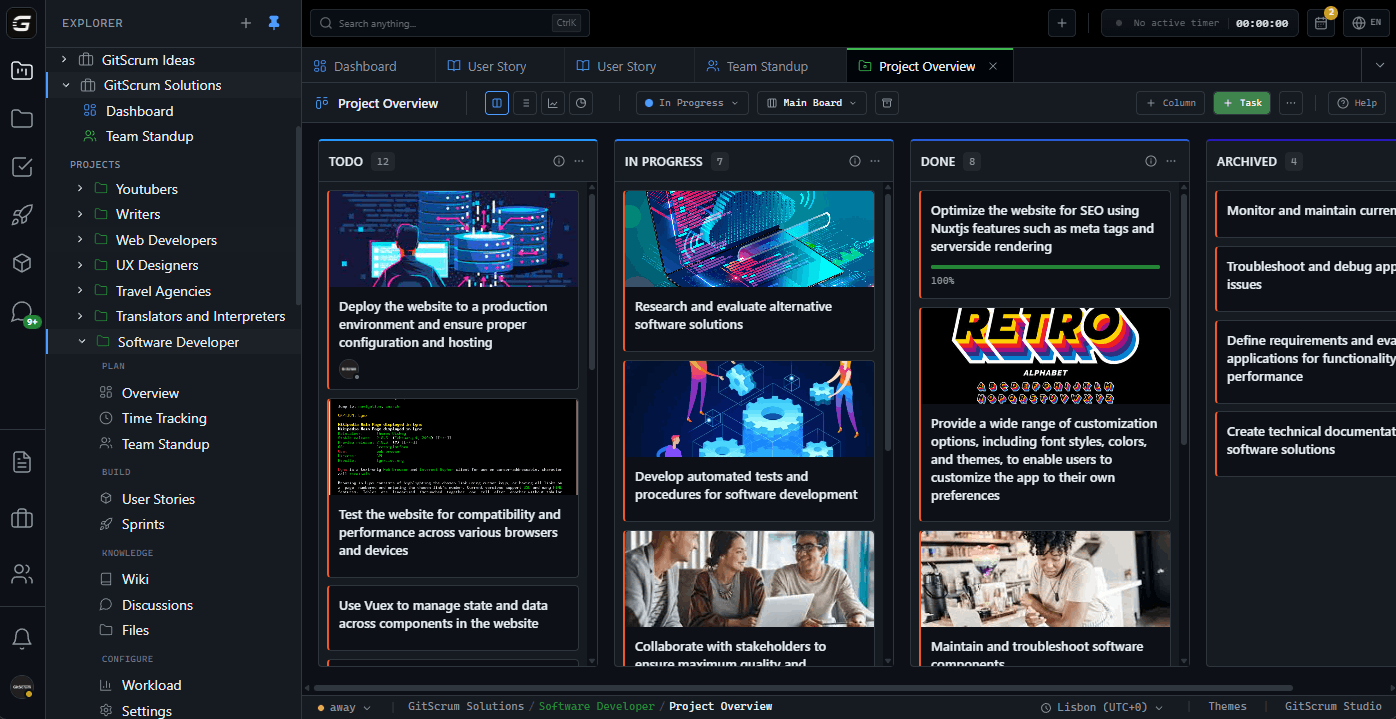
The GitScrum Advantage
One unified platform to eliminate context switching and recover productive hours.