The pattern is predictable: Sales promises a feature by a specific date.
The date gets communicated to the customer. Only then does the development team learn about it—and the 'deadline' is already locked.
Scope hasn't been defined. Requirements are vague.
But the date? Immovable.
Teams try to explain that they can't estimate what isn't defined. They're told to 'make it work.' So they do what they can: cut testing, skip code reviews, defer refactoring, work overtime.
Sometimes they hit the date. More often they don't—but the death march along the way has already damaged morale and code quality.
The technical debt from rushed work becomes the next project's burden. This cycle repeats until good developers leave.
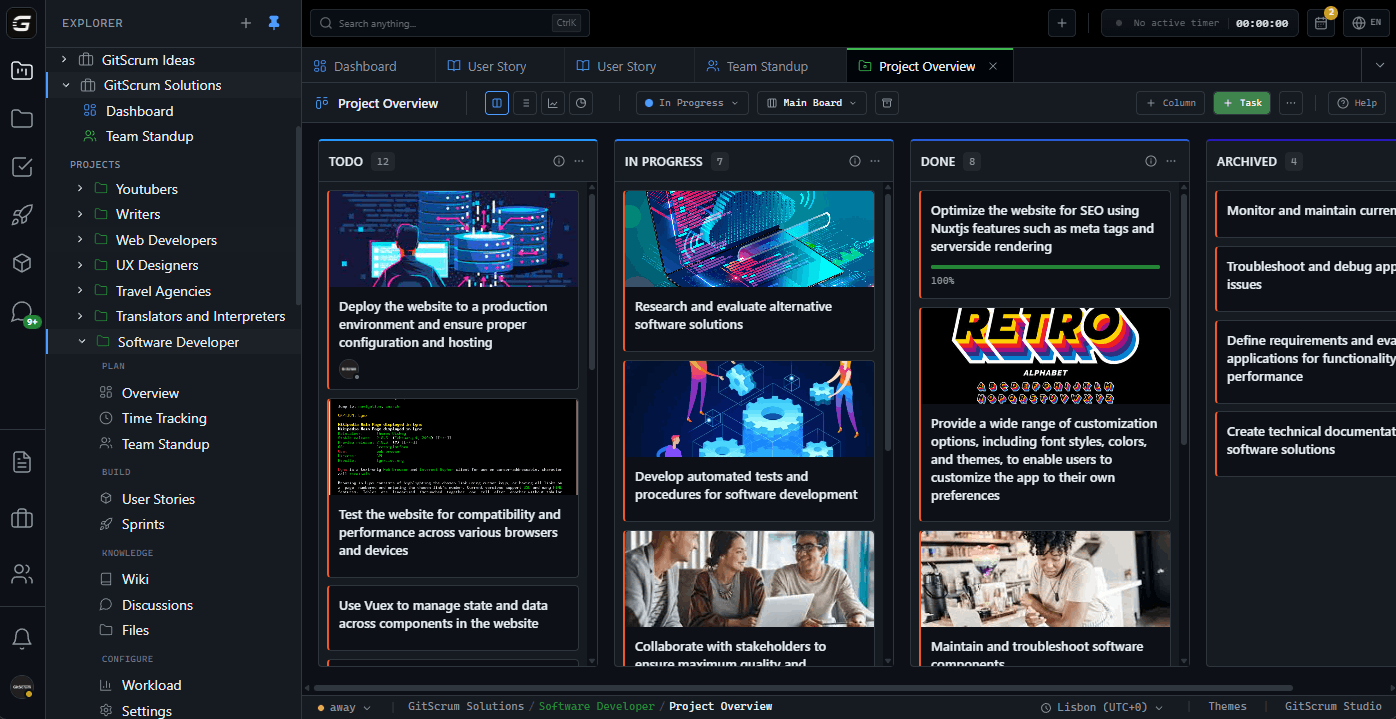
GitScrum breaks this pattern by making velocity data visible. Historical delivery speed isn't debatable—it's data.
When everyone can see what the team actually delivers per sprint, deadline negotiations become grounded in reality. Scope can be adjusted, or timelines can be extended, but at least the conversation starts from facts.
The GitScrum Advantage
One unified platform to eliminate context switching and recover productive hours.