GitScrum PRO Annual — 2,500+ SaaS apps via MCP

GitScrum logo
Solution

Sprint Retro Tool Dev Teams 2026 | Data-Driven Retros

Same complaints every sprint? GitScrum: sprint metrics in retro, feelings validated by facts, actions auto-tracked as tasks. $8.90/user. 2 free forever. Free trial.

Sprint Retro Tool Dev Teams 2026 | Data-Driven Retros

The Retro Problem Standard retrospective: - What went well?

- What didn't go well? - What to improve?

Sounds useful. Usually isn't.

Why Retros Fail 1. No Context Team sits in room (or call).

Tries to remember two weeks of work. Memory is unreliable.

Recent events dominate. 2.

Same Complaints "Communication could be better" "We need clearer requirements" "Too many meetings" Same list every sprint. Nothing changes.

3. No Accountability Action items created.

Nobody owns them. Next sprint arrives.

No Data Feelings vs. facts.

"Sprint felt slow" - was it? "We shipped a lot" - did you?

No way to verify. The Retro Disconnect Problem: Retros happen in separate tool from work.

- Sprint happens in project tool - Retro happens in Miro/sticky notes - Action items go to... nowhere - No connection between feedback and data Result: Retros become ritual, not improvement.

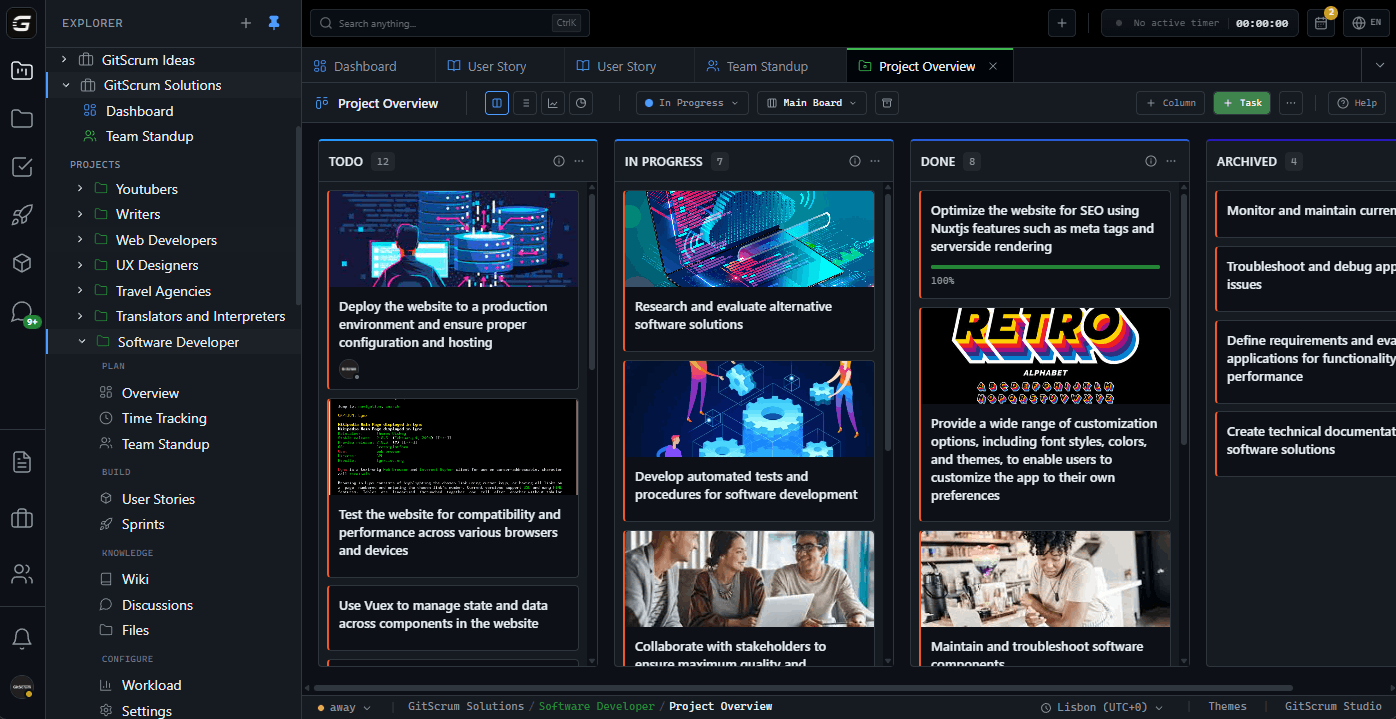
GitScrum: Connected Retrospectives 1. Sprint Data Available During retro: - Tasks completed visible - Velocity calculated - Time tracking data present - Scope changes documented Feelings validated by facts.

2. Context Preserved Retro in same system as sprint.

Team sees what actually happened. Discussions tied to real work.

No memory required. 3.

Actions Become Tasks Action item from retro? Create task immediately.

Assign owner. Schedule in next sprint.

Accountability built-in. 4.

Track Improvement Compare sprints over time. See if actions had impact.

Measure what matters. Real improvement loop.

Retro Within GitScrum How it works: 1. Sprint ends 2.

Open retro view 3. See sprint data summary: - Planned vs.

completed - Velocity trend - Blockers logged - Scope changes 4. Discuss with real context 5.

Create action items as tasks 6. Tasks auto-assigned to next sprint 7.

Track completion Not Another Tool Most teams: - Project management in Tool A - Retros in Tool B (Miro, etc.) - Action items copied manually - Connection lost GitScrum: - Sprint work in GitScrum - Retro in GitScrum - Actions in GitScrum - Context preserved Retro Patterns That Work With connected data: "Sprint felt slow" → Check velocity: Down 20% from average → Check blockers: 3 external dependencies → Action: Reduce external dependencies next sprint → Create task: Identify dependencies early "We shipped a lot" → Check: 15% above velocity average → Check: Zero scope changes → Action: Maintain scope discipline → Document what worked Data turns feelings into insights. For Dev Teams Developers appreciate: - Data over opinions - Actions that actually happen - Less time in retro meetings - Real improvement visible GitScrum delivers: - Sprint metrics in retro view - One-click action item creation - History of past improvements - Trends over time Pricing GitScrum with integrated retros: - 2 users FREE forever - Sprint metrics included - Action item tracking - Improvement history - $8.90/user/month for larger teams Retros that actually improve things.

The GitScrum Advantage

One unified platform to eliminate context switching and recover productive hours.

01

problem.identify()

The Problem

No context in retros - Team tries to remember weeks of work. Memory unreliable. Recent events dominate discussion.

Same complaints loop - Communication could be better. Clearer requirements needed. Same list every sprint. Nothing changes.

No accountability - Action items created enthusiastically. Nobody owns them. Next sprint arrives. Items forgotten.

Feelings over facts - Sprint felt slow - was it? We shipped a lot - did you? No data to validate perceptions.

Disconnected tools - Sprint in Jira. Retro in Miro. Action items in... nowhere. No connection between work and feedback.

Ritual without improvement - Retros happen because supposed to. Teams go through motions. Actual improvement rare.

02

solution.implement()

The Solution

Sprint data in retro - See completed tasks, velocity, time data. Real context for discussion. No memory required.

Data-driven insights - Sprint felt slow? Check velocity numbers. Turn feelings into facts. Actionable conclusions.

Actions become tasks - Action item from retro creates real task. Assigned owner. Scheduled in sprint. Tracked completion.

Single system - Sprint work and retro in same tool. Context preserved. No manual copying between tools.

Improvement tracking - Compare sprints over time. See if actions had impact. Measure real progress. Continuous improvement.

Efficient retros - Less time remembering, more time improving. Focused discussions. Meaningful outcomes.

03

How It Works

1

Sprint Ends with Data

Sprint completes. GitScrum compiles data: tasks completed, velocity, time spent, scope changes, blockers. All visible in retro view.

2

Context-Rich Discussion

Team reviews actual sprint data together. Validate feelings with facts. Identify real patterns vs. perception. Focus discussion on evidence.

3

Actions Become Tasks

Improvement identified? Create task directly from retro. Assign owner. Set priority. Task appears in next sprint backlog automatically.

4

Track Over Time

Compare sprint metrics over time. See if improvement actions had impact. Build on what works. Stop what doesn't. Real continuous improvement.

04

Why GitScrum

GitScrum addresses Sprint Retrospective Tool for Dev Teams - Retros That Actually Improve through Kanban boards with WIP limits, sprint planning, and workflow visualization

Problem resolution based on Kanban Method (David Anderson) for flow optimization and Scrum Guide (Schwaber and Sutherland) for iterative improvement

Capabilities

  • Kanban boards with WIP limits to prevent overload
  • Sprint planning with burndown charts for predictable delivery
  • Workload views for capacity management
  • Wiki for process documentation
  • Discussions for async collaboration
  • Reports for bottleneck identification

Industry Practices

Kanban MethodScrum FrameworkFlow OptimizationContinuous Improvement

Frequently Asked Questions

Still have questions? Contact us at customer.service@gitscrum.com

How does GitScrum help with retrospectives specifically?

Sprint data available during retro: tasks completed, velocity metrics, time tracking data, scope changes, blockers logged. Feelings validated by facts. Action items become real tasks assigned to next sprint. One system, complete context.

Can action items from retros become tasks?

Yes. Identify improvement in retro, create task immediately. Assign owner, set priority. Task appears in next sprint backlog. No copying to separate system. No lost action items.

How do we track if improvements actually work?

Compare sprint metrics over time. Created action to reduce scope creep? Check scope change metrics next sprints. Data shows if improvements had impact. Real measurement, not guessing.

What's the pricing for sprint and retro features?

2 users FREE forever with full sprint management, retro context, action item tracking, historical comparison. All features included. $8.90/user/month only for teams larger than 2.

Ready to solve this?

Start free, no credit card required. Cancel anytime.

Works with your favorite tools

Connect GitScrum with the tools your team already uses. Native integrations with Git providers and communication platforms.

GitHubGitHub
GitLabGitLab
BitbucketBitbucket
SlackSlack
Microsoft TeamsTeams
DiscordDiscord
ZapierZapier
PabblyPabbly

Connect with 3,000+ apps via Zapier & Pabbly